
About a century ago, the meatpacking industry was one of the main engines of Chicago’s economy, and the Fulton Market district was at the heart of it. The distinct smell of raw meat and truck exhaust fumes were once an integral part of the local atmosphere. But today, the picture has drastically changed: former meatpacking plants and factories have been replaced by the offices of global corporations, McDonald’s headquarters, and upscale hotels. Read more at chicago-future.
One of Chicago’s most popular neighborhoods has made an astonishing leap that will go down in modern urban history. In this article, we’ll explore how an abandoned industrial wasteland transformed into a high-tech IT hub.
Neighborhood Architecture in the Late 19th and Early 20th Centuries
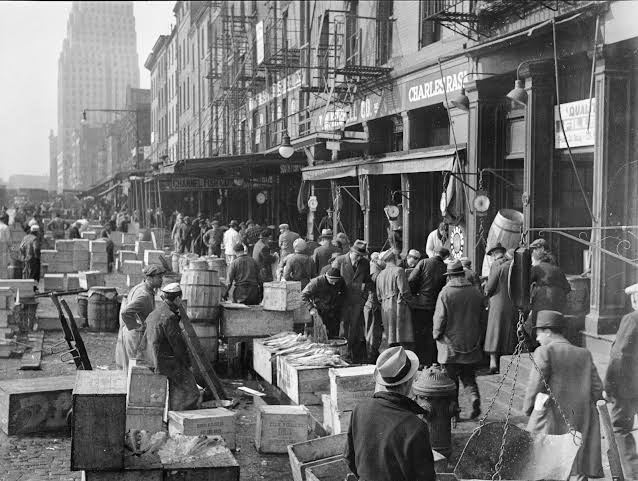
Even before the Civil War, meatpacking had become one of the key industries in Chicago. Wholesale meat trading thrived specifically in Fulton Market. The scale of industrial production was so impressive that the renowned American poet Carl Sandburg famously dubbed the city the “Hog Butcher for the World.”
Initially, Fulton Market was mostly home to small, independent meatpacking plants and wholesale warehouses. Over time, however, major corporations like Swift and Armour also opened their branches here.
Businessmen primarily chose this neighborhood for its prime location. Just a few blocks from the meatpacking plants ran Randolph Street, which once housed Chicago’s largest food market.
It is worth noting that Fulton Market was a popular gathering spot for merchants and locals long before the first slaughterhouses appeared. For instance, in 1850, the West Market Hall was built on Randolph Street—a massive building that took up a large part of the roadway. By the 1920s, this street had evolved into Chicago’s premier destination for fresh produce.
How the Invention of Refrigerators Reshaped Fulton Market
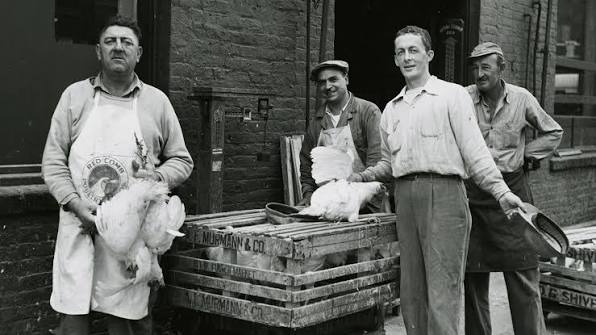
In the early 20th century, restaurants and grocery stores tended to open near slaughterhouses or wholesale bases. This ensured the quick delivery and sale of meat before it could spoil. However, this well-oiled market system was disrupted by two factors: the Great Depression that hit the US in the 1930s and the widespread adoption of refrigeration.
This technological breakthrough gave eateries independence, allowing them to operate anywhere in the city. As a result, most warehouses relocated outside Chicago, closer to major highways. Meatpacking facilities also shifted their operations, moving south where union influence was minimal.
Over time, the once-bustling, massive warehouses emptied out. Keeping stockyards in the city no longer made sense, as animals were now raised and processed directly on farms. In the 1950s, industry giants like Swift and Armour finally left Fulton Market, and by the 1970s, the former slaughterhouses were being converted into industrial parks.
Restaurants Instead of Slaughterhouses: How the District Came Back to Life
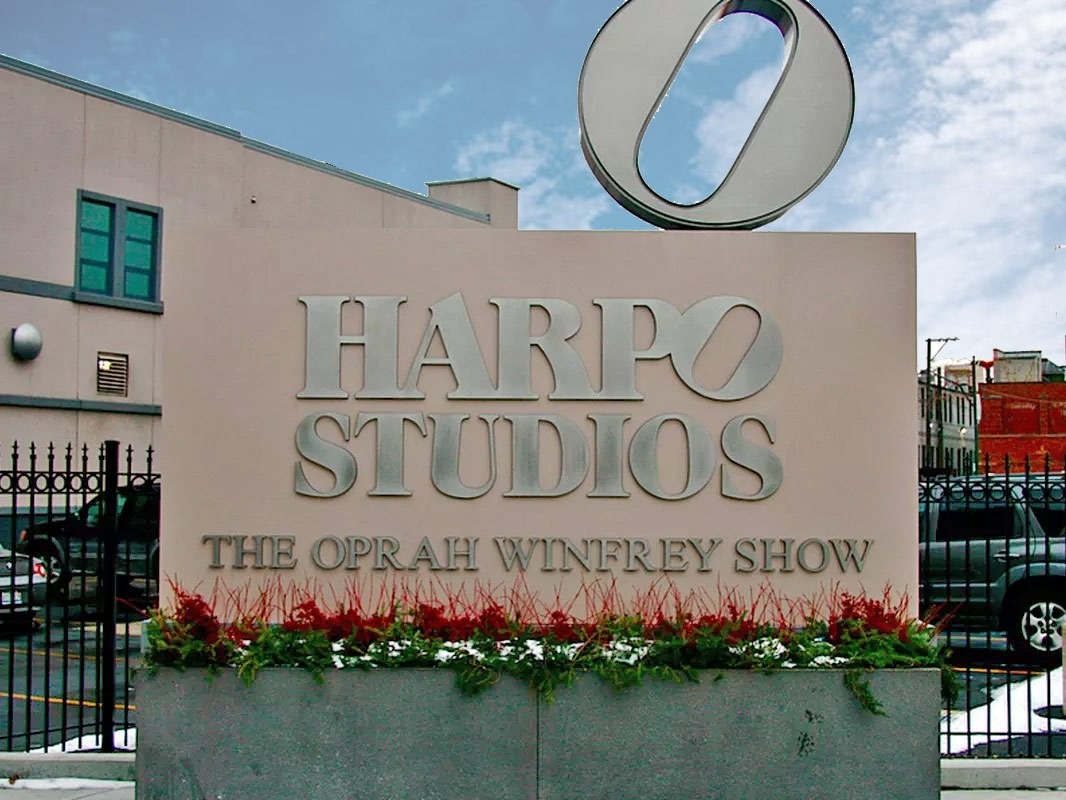
As soon as the industrial buildings became vacant, rent prices plummeted. This instantly attracted Chicago’s creative class, and art galleries began flocking to Fulton Market. In 1989, Oprah Winfrey opened her own television studio here—Harpo Studios.
The revitalization of the neighborhood and the emergence of art spaces caught the attention of other entrepreneurs. Soon, upscale restaurants started opening in Fulton Market. The main draw of these new establishments was their open kitchens and the raw, industrial vibe of the former meatpacking warehouses.
Exquisite cuisine paired with unique aesthetics attracted foodies and thrill-seekers alike. That is how a once-neglected industrial area blossomed into one of the trendiest spots in the city.
The Tech Boom: Google and McDonald’s Open Their Doors
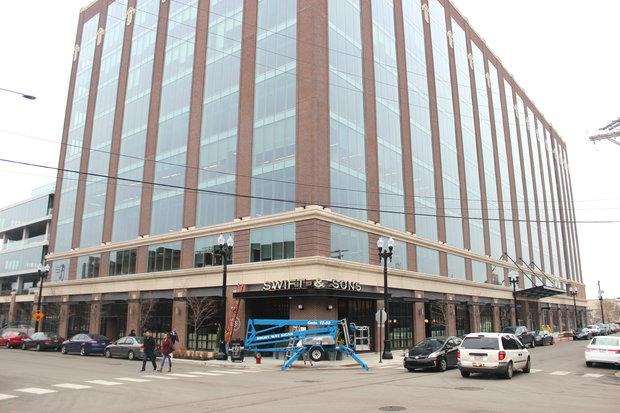
A new phase of Fulton Market’s architectural evolution took place in the 2010s. In just a few years, the former industrial zone transformed into one of the most innovative tech hubs in the US. Two global corporations, Google and McDonald’s, decided to move their headquarters here.
In November 2015, Google officially opened its new Chicago office. The project, named 1K Fulton, took up residence at 1000 W. Fulton Street. Prior to this, the company was based in the River North neighborhood, but the tech giant’s rapid growth demanded much more space to operate comfortably.
Instead of building from scratch, Google’s management decided to renovate the former Fulton Cold Storage Building. The massive windowless structure was transformed into a high-tech, eco-friendly complex featuring a six-story atrium and rooftop terraces. The new headquarters spans roughly 350,000 square feet (about 33,000 square meters).
The opening of the office drew hundreds of highly skilled developers, engineers, and marketers to the neighborhood. Following the tech giant’s lead, McDonald’s opened its Fulton Market headquarters in June 2018. The new corporate campus is located at 10 N. Carpenter Street.
Fun fact: the very first McDonald’s corporate office opened right here in Chicago in 1955. However, from 1971 to 2018, the company’s main headquarters was based in the suburb of Oak Brook. The leadership made a strategic decision to return to the heart of the metropolis to be closer to their consumers.
Unlike Google, McDonald’s opted to build its office from the ground up on the site of Oprah Winfrey’s former Harpo Studios. The result is a modern nine-story building covering over 500,000 square feet (more than 50,000 square meters). The campus also houses the corporation’s educational center—Hamburger University.
The headquarters accommodates around 2,000 employees. The true pride of the complex is the “Experience of the Future” restaurant, where anyone can try exclusive McDonald’s menu items sourced from around the globe.
A New Era for Fulton Market: What Lies Ahead for Chicago’s Main Innovation Hub
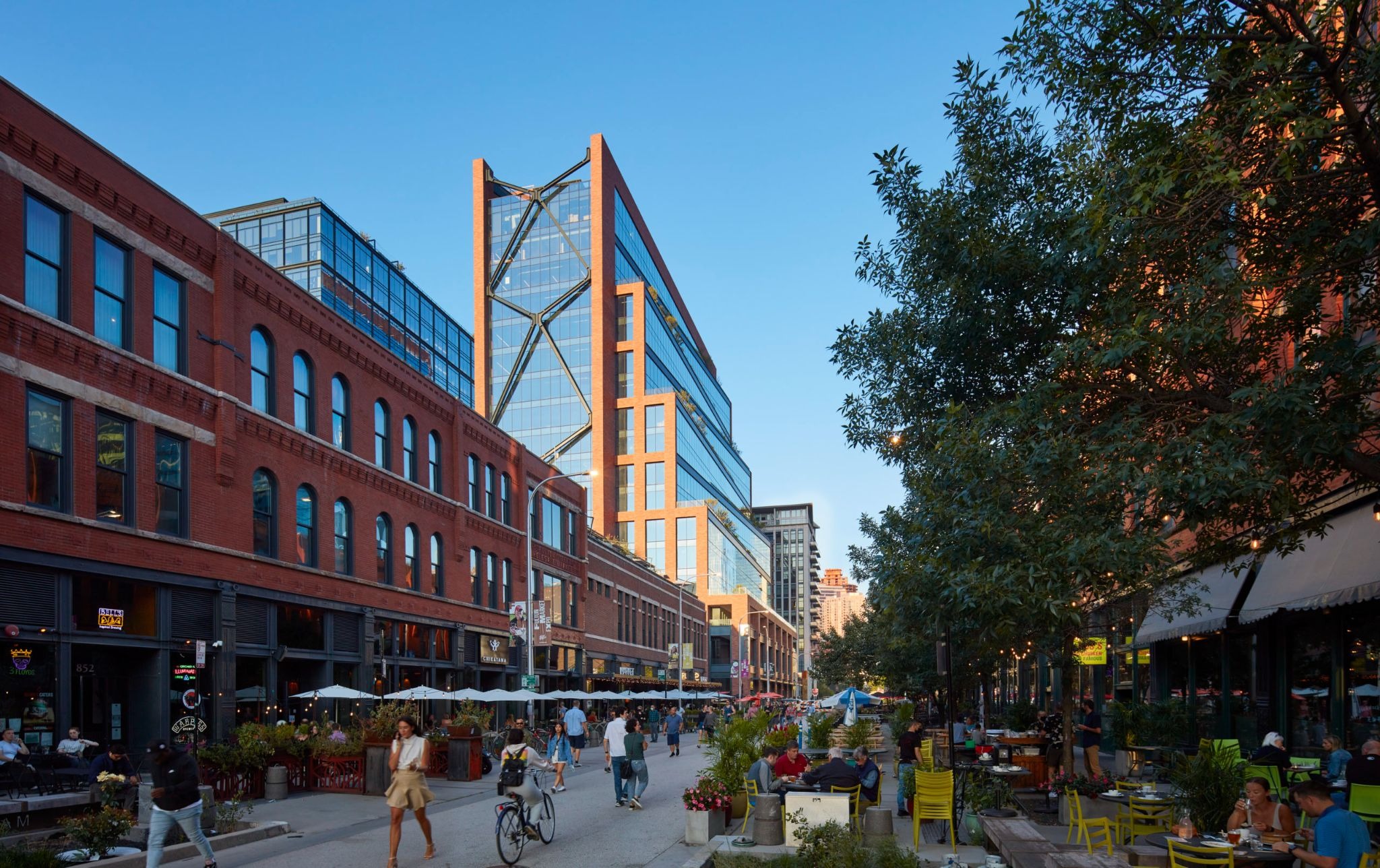
Just a couple of decades ago, the name Fulton Market was exclusively associated with meatpacking and wholesale warehouses. Today, it stands as one of Chicago’s most progressive and modern neighborhoods.
With the arrival of global corporate giants, the area has become a powerful magnet for tech companies and startups. Old factories are making way for contemporary high-rises boasting high-tech office spaces and luxury residential complexes.
Fulton Market is seamlessly weaving itself into the urban fabric, becoming a true epicenter of city life. New art spaces, boutique hotels, and restaurants open regularly, cementing the neighborhood’s reputation as Chicago’s culinary capital.
At the same time, city officials strive to preserve the historical heritage, striking a balance between the old and the new. Interestingly, despite massive gentrification, meatpacking companies like Pioneer Meatpacking Company and Cougle Commission Company have continued to operate in the area for decades. They still specialize in the wholesale trade of veal, lamb, and poultry.
That is exactly why the main challenge for the future development of Fulton Market remains the harmonious blending of its rich industrial past with the progressive architecture of tomorrow.

