

Modern life is unimaginable without television, our favorite shows, and binge-worthy series. Yet, the development of the television network was a decades-long journey. Thanks to its prime geographic location, Chicago rapidly transformed into a major broadcasting hub on the U.S. East Coast. Chicago-future takes a look at how television first emerged in one of America’s largest cities.
June 12, 1928: A Milestone in Chicago’s Broadcasting History
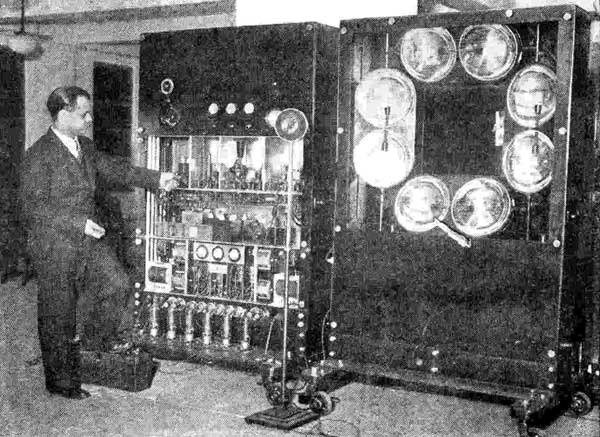
Television experiments in Chicago began in 1925, following the first demonstration of television silhouettes in Washington, D.C. A young enthusiast named Ulysses Sanabria, with initial sponsorship from media mogul William Randolph, set up a television laboratory in the heart of Chicago.
It is worth noting that in the 1920s, Scottish engineer John Baird was widely considered the pioneer of television. However, Sanabria was convinced that this innovative invention was an American breakthrough, as the U.S. team and the Scottish engineer were working on television development independently.
The experimenters spent years refining the invention before the first broadcast took place. By 1926, images on the screen were still blurry silhouettes, but Sanabria continued to push for improvements.
The engineer developed a special device for clearer image transmission. The unit featured a mechanical system consisting of a disk with 24 holes. A neon lamp was placed behind the disk, and the image size did not exceed one square inch. The device also utilized a shortwave transmitter. Later, a series of experiments with Kodak lenses were conducted for color television.
Launching the Television Station
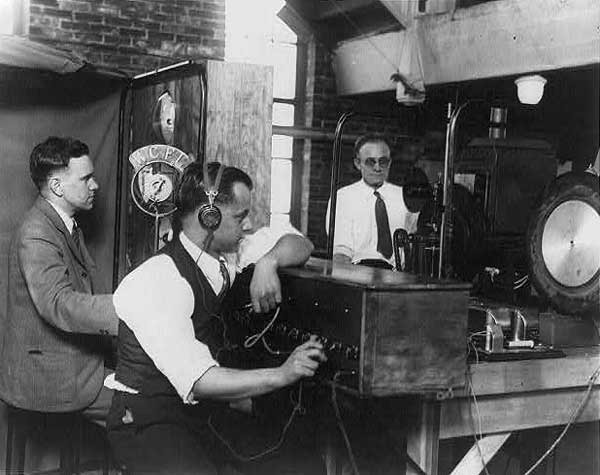
Chicago’s first television station, managed by Ulysses Sanabria, was named W9XAO. Its debut broadcast took place on June 12, 1928, with transmissions originating from Navy Pier.
Significantly, Sanabria was the first to successfully transmit both image and sound simultaneously on the same wavelength. A year later, construction began on a television transmitter for the W9XAO studio.
The studio wall was equipped with a block of 40 photoelectric cells featuring a special hole in the middle, through which a scanning beam passed. These broadcasts were experimental and largely scheduled. They featured several stars of the era, including Marcella Lally and Don Ameche.
Official Opening and Operations of W9XAO
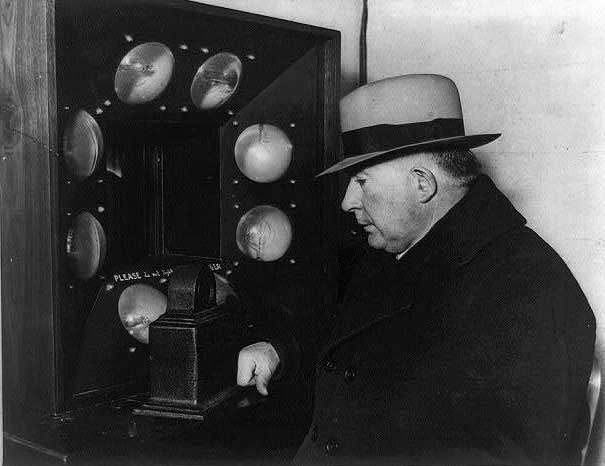
The Chicago television station officially began operations in 1930. W9XAO was owned by the Chicago Federation of Labor, which also operated local radio station WCFL.
Initially, the station used a mechanical system to transmit images and sound. The scanning disk contained 45 small holes arranged in three interlaced spirals. The assembly was mounted on a motor shaft operating at 900 rpm, allowing for a successful scan rate of 15 frames per second.
As a light spot moved across the subject, light reflected into the photoelectric cells, converting the data into electrical signals. However, the resulting video quality on the receivers was quite low with poor resolution, and viewers needed a special device to tune into the programs.
The programs aired regularly and were frequently mentioned in local newspapers. Marcella Lally became the station’s first TV star as her performances were broadcast on home receivers.
Another milestone in Chicago television history was the broadcast of the play “The Dream Maker” in early 1931, starring Winton Haworth, Ireene Wicker, and Douglas Hope.
Station W9XAO was crucial for the future of television, as it served as a testing ground for various broadcast formats, ranging from faces and scenes to short-form performances.
A few years later, electronic technology gradually phased out mechanical image transmission systems. Nevertheless, it was the work of W9XAO that earned Chicago the title of “Television Pioneer.”
Electronic Broadcasting Station
The first electronic station to launch in 1939 was W9XBK. It was owned by Balaban and Katz, a media company that also operated several local movie theaters and aimed to expand its business through innovative technology.
The station utilized an electronic transmission system, providing viewers with a higher-quality signal and improved resolution. Furthermore, this innovation allowed for a significant expansion in content, including interviews, show highlights, and short musical numbers.
While W9XBK couldn’t reach a massive audience due to the limited number of television receivers available at the time, it served as another stepping stone toward modern television.
Remarkably, W9XBK did not cease operations during World War II. Simultaneously with standard broadcasts, the station trained Navy technicians, and news reporters used on-screen maps to demonstrate enemy troop movements.
The war also shifted the station’s staff demographics. With nearly all male personnel deployed overseas, women had to take over all technical support roles.
In September 1946, W9XBK was granted commercial status, becoming the sixth commercial station in the United States. Its broadcast of the NFL Championship game between the Philadelphia Eagles and the Chicago Cardinals on December 28, 1947, was a massive success with viewers.
The Rise of TV in the 1950s and 1960s
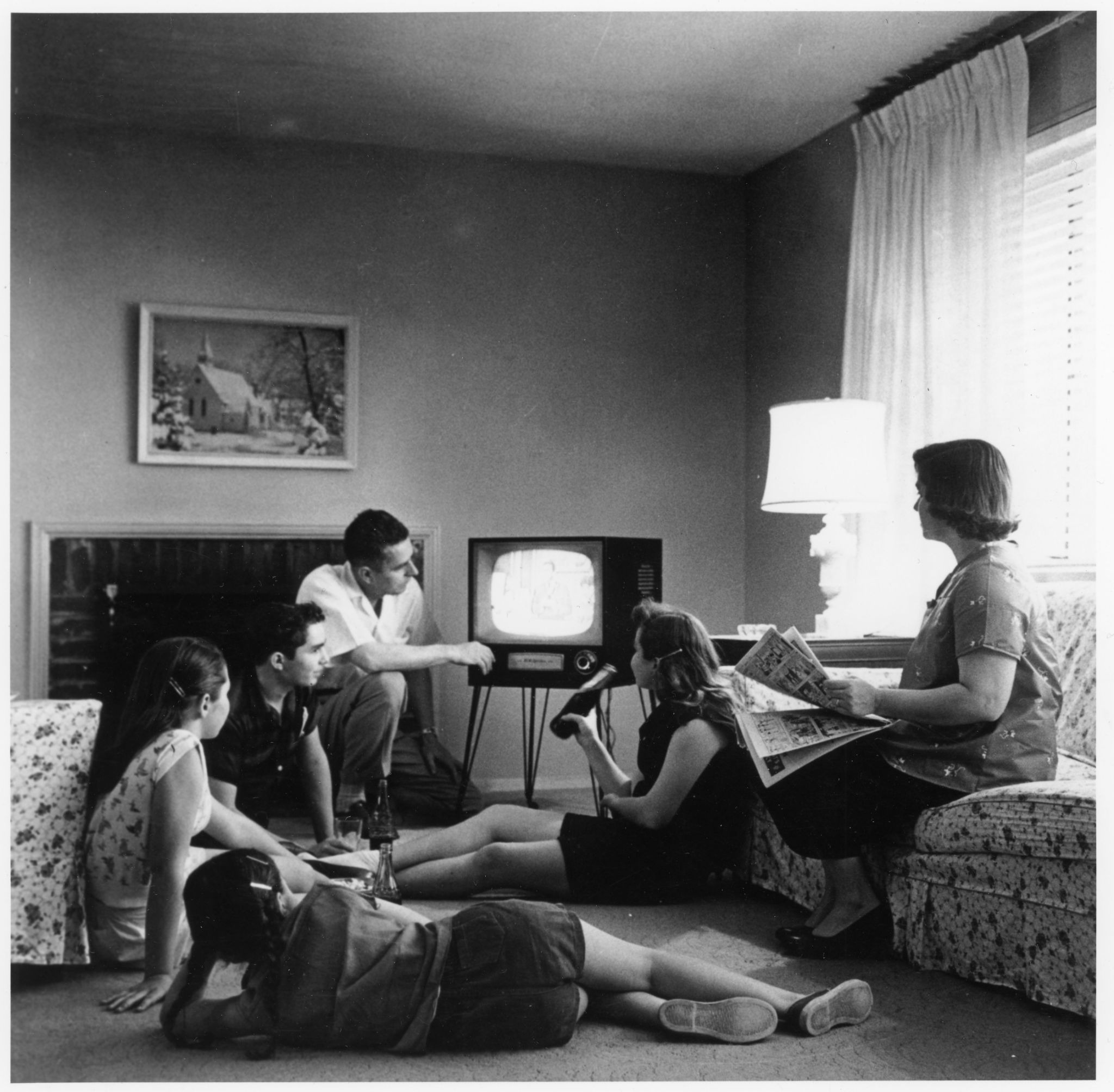
Driven by the rapid adoption of commercial broadcasting, Chicago quickly became one of the first television production hubs in the U.S. The style of Chicago’s TV stations even earned its own name: the “Chicago School of Television.”
TV programs were primarily based on improvisation, highlighting the cameraman’s skill and creative use of costumes, sets, and props. Shows like “Kukla, Fran and Ollie,” “Studs’ Place,” and “Garraway at Large” achieved high ratings.
The 1950s also marked the beginning of public broadcasting in Chicago. Edward Ryerson and Ralph Lowell founded a non-profit organization that received a license to broadcast an educational channel. The new channel, WTTW-TV, officially went on the air in September 1955.
Initially, the channel operated out of the downtown Bank Building, later moving to a space in the Museum of Science and Industry funded by the community. In its first year, WTTW-TV broadcast 43 hours of educational programming per week. It wasn’t until the 1960s that the public broadcaster moved into its own dedicated facility with headquarters and studios.
Fascinating Facts About Television History
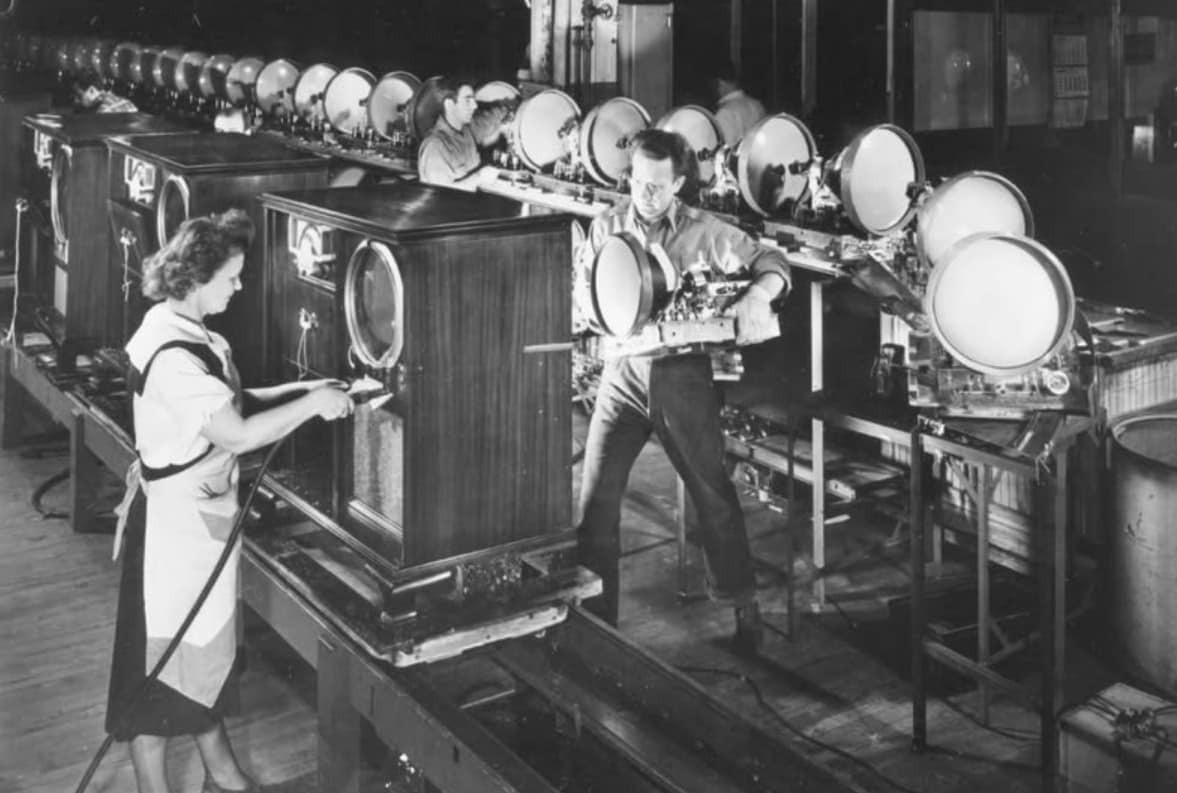
The development of television in the city was a challenging process, requiring decades of work from inventors, engineers, and technicians. Here are several interesting facts about how the TV, without which modern life is unimaginable, was formed:
- In April 1956, Chicago’s WMAQ became the first channel in the world to switch entirely to color broadcasting.
- One of the early inventors of the electronic television system, Philo Farnsworth, forbade his own children from watching TV, explaining that there was nothing useful on it and that it wouldn’t aid their intellectual development.
- While the vast majority of people dream in color, generations who grew up during the dawn of television often dream in black and white.
- The average American teenager between the ages of five and fourteen will have witnessed approximately 13,000 scenes of character deaths on screen.