

Chicago is home to a vast number of telecommunications companies. Among them, WGN-TV stands out as a channel that has delighted city residents with compelling programs and shows for many years. We’ll delve deeper into its history and unique characteristics on chicago-future.com.
The Founding of a TV Powerhouse
On April 5, 1948, WGN Television went on the air on Channel 9, broadcasting from its studios in the Tribune Tower. Colonel Robert McCormick, who led the company, believed that with television, the city had embarked on one of its most exciting adventures.
Starting in 1948, WGN-TV began airing baseball games for the famous Chicago Cubs and White Sox teams. It also made its first forays into producing entertainment series. Initially, WGN-TV was an affiliate of the DuMont and CBS television networks. However, it soon decided to better serve the Chicago audience and became an independent station. In 1957, WGN was one of the first local television stations to offer viewers a robust schedule of live color broadcasts. A year later, the channel produced several first-time broadcasts, including former President Truman’s TV appearance in Chicago and coverage of General MacArthur’s arrival in the city.
Growth and Innovation
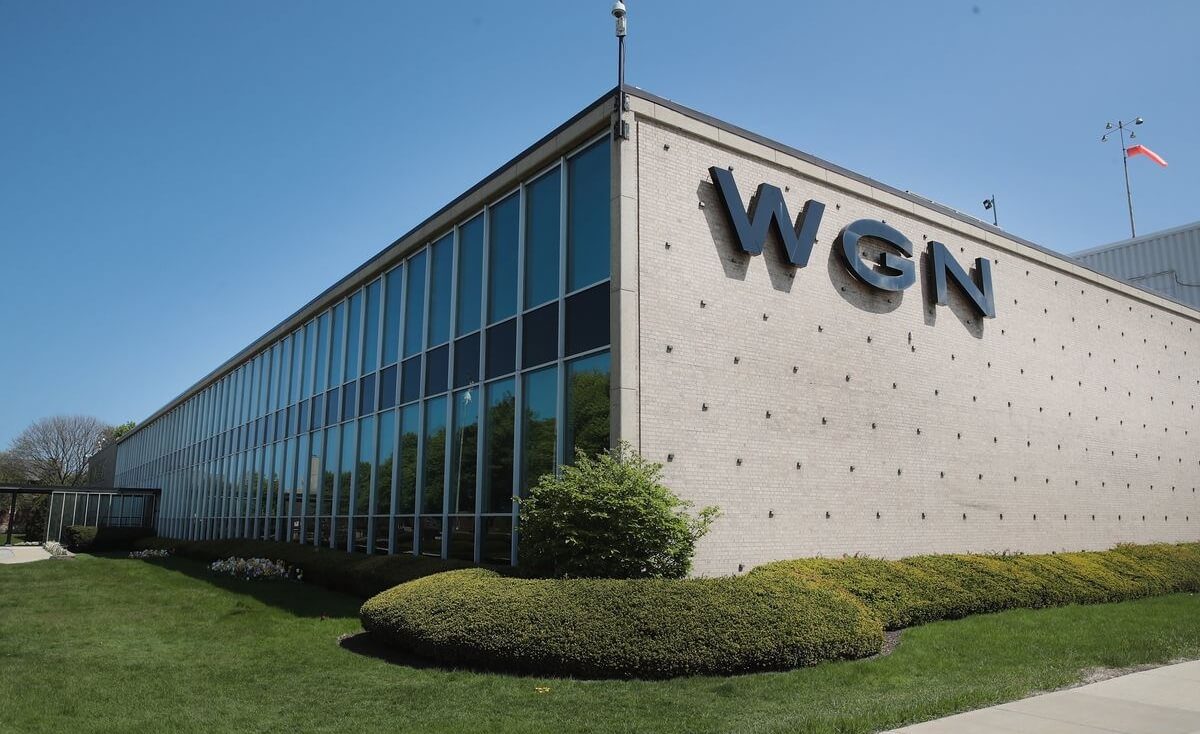
In 1961, WGN-TV began broadcasting from new facilities at 2501 West Bradley Place on Chicago’s northwest side. At the same time, it introduced its own version of “Bozo’s Circus,” which became a popular, locally produced children’s series. In the 1960s, WGN became the first Chicago TV channel to increase the length of its late-night newscast to half an hour. During this period, it produced various shows and sports broadcasts, and built a large film library. In 1965, WGN premiered Chicago’s first co-anchored TV news program. Just a year later, WGN President Ward Quaal received an award for developing the best independent television station in the United States.
In the 1970s, Phil Donahue moved his groundbreaking talk show, “Donahue,” from Dayton to the WGN-TV studios. Its unique format included discussions of controversial social issues, celebrity guests, and audience participation. The channel also recognized the importance of the agricultural sector, launching the weekly series, “U.S. Farm Report.” During this era, new technologies gradually transformed the TV industry with the arrival of lighter, more sophisticated cameras, as well as cable television and satellites. In the fall of 1978, WGN-TV became a massive station, distributing its broadcasts to cable and satellite providers across the U.S. and beyond.
The 1980s saw the premiere of the Midwest’s first hour-long news program in a primetime sports slot. Thus, the “NewsNine” broadcast was moved to 8:00 PM and expanded to an hour. In 1983, WGN-TV adopted its promotional slogan, “Chicago’s Very Own,” which underscored the channel’s philosophy and its connection to the community. Indeed, many WGN-TV staff believe that the most crucial factor ensuring the channel’s continued success is its strong relationship with the public. In 1984, Bob Bell retired as the host of “The Bozo Show” while the program was ranked number one in its time slot. In 1988, WGN officially became the first Chicago TV station to add closed captions to its late-night news broadcasts for viewers with hearing impairments.
The 1990s brought major successes for WGN-TV, thanks to the return of the Chicago Bulls as a broadcast partner in 1989 and the subsequent six NBA World Championship seasons with Michael Jordan. 1990 also marked the return of the Chicago White Sox baseball team to WGN. In 1994, the morning news program, “WGN News,” premiered, airing for an hour on weekdays; its duration was increased to three hours in 1996. In 1995, WGN-TV became a primetime affiliate of The WB Television Network and the first Chicago TV channel to launch its own website. Also in the 1990s, WGN-TV launched its charitable foundation. Since its inception, it has allocated over $31 million in grants to Chicago charitable organizations.
Transitioning into the New Millennium
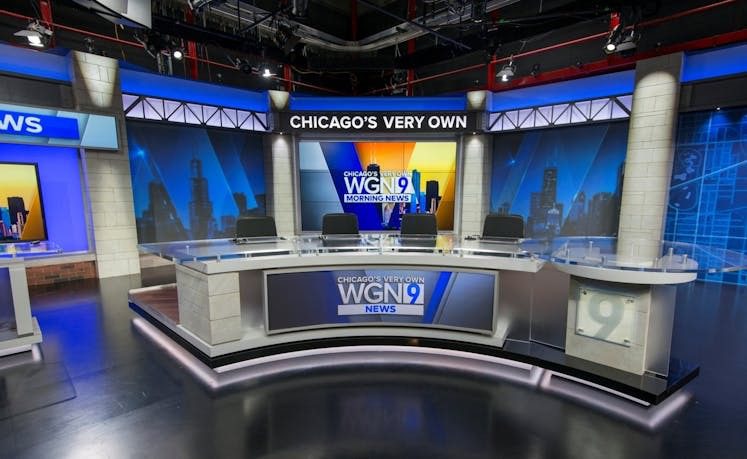
In 2000, WGN-TV built a modern, 9,000 sq. ft. news studio and upgraded its digital equipment. By 2004, all Chicago Cubs, White Sox, and Bulls home games on WGN-TV were broadcast in high definition (HD) on the WGN 9.1 digital multichannel. This made WGN-TV a leading provider of HD sports programming.
In 2008, the company showcased its digital broadcasting capabilities and was rebranded as WGN America. In 2009, the full transition of American television stations from analog to digital signal was completed.
In 2010, WGN-TV became the first Chicago TV channel to offer iPhone owners live streams of its news broadcasts. In 2016, WGN-TV returned to its roots as an independent station, ending its affiliation with The CW Television Network.
Throughout its history, WGN-TV has received numerous awards for excellence in programming and public service. The station is proud of its many contributions to television and is recognized as a leader in creativity, innovation, quality programming, and overall operational integrity.