

One of Chicago’s most famous bridges, the DuSable Bridge crosses the main branch of the Chicago River, linking the city’s North and South Sides. This structure is more than just infrastructure for cars and pedestrians; it stands as a historical, architectural, and engineering symbol of Chicago. In this chicago-future article, we explore the bridge’s history, engineering, art, and modern significance.
Historical Context
The concept of a bridge across the Chicago River at Michigan Avenue emerged in the early 20th century as a critical component of a grand urban vision: the creation of a continuous boulevard connecting the parks and districts of Chicago’s North and South Sides. This ambitious idea was a cornerstone of the influential 1909 Plan of Chicago.
Due to legal and financial hurdles, construction only began on April 15, 1918. The path was challenging, but thanks to the persistence of city engineers and architects, the bridge was officially opened to traffic on May 14, 1920. Its opening was a vital step in realizing the Plan of Chicago—the bridge forged the connection between the city’s North and South, kickstarting the development of the prestigious area now known globally as the Magnificent Mile. The bridge’s decorative elements were finalized in 1928, when all the historical bas-reliefs were installed.
In 1978, the bridge became part of the Michigan–Wacker Historic District, which was added to the U.S. National Register of Historic Places. Then, in 1991, the bridge, along with its operator houses, achieved the status of an official landmark: a Chicago Landmark.
Although it was long known as the Michigan Avenue Bridge, it was officially renamed DuSable Bridge on October 15, 2010. The name honors Jean Baptiste Point Du Sable, recognized as Chicago’s first permanent non-indigenous settler. This renaming holds symbolic significance: the bridge connects the very parts of the city where Du Sable once operated his trading post, underscoring his pivotal historical role in the city’s founding.
Design and Mechanism
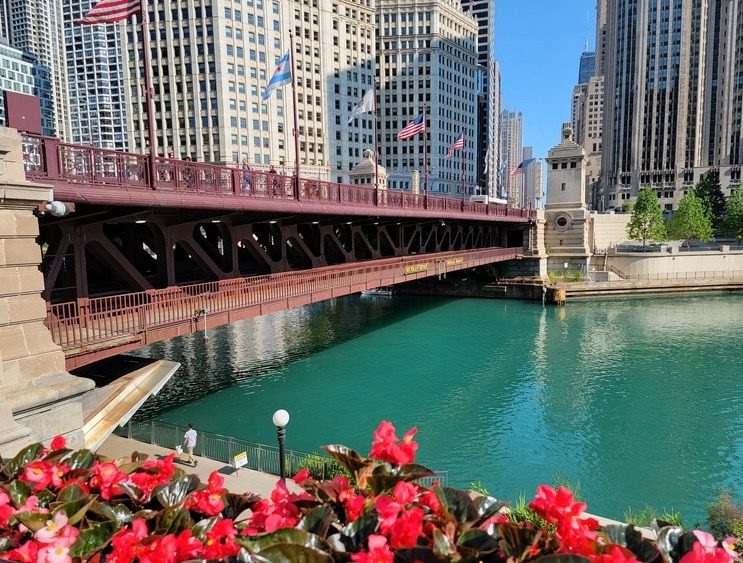
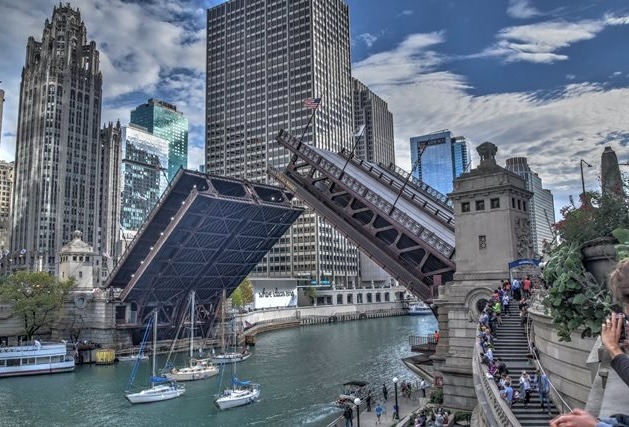
The DuSable Bridge is a double-leaf, multi-level bascule bridge, featuring two separate spans, one for each direction of traffic.
Its design employs a counterweight system to balance the massive spans. When the bridge is raised, the counterweight descends into a special pit—an extremely efficient engineering scheme. To lift each “leaf,” only a single 108-horsepower motor is required; this incredible energy efficiency is made possible by the perfect balance and precise engineering calculations.
The bridge has two levels: the upper level for fast-moving traffic and the lower level for slower or commercial traffic. When initially built, it was considered the first of its kind—a double-decker bridge with traffic moving on both levels. Furthermore, the structure was engineered as “two bridges side-by-side,” meaning each half-leaf can operate independently. This capability was designed to allow traffic to continue even if one span were damaged.
In the past, the bridge was raised over 3,000 times a year, but the frequency has significantly decreased over time. Today, the bridge is raised only a few times annually, primarily to minimize disruption to vehicular and pedestrian traffic.
Bridge Architecture
The bridge’s architectural style is Beaux-Arts, which lends it an elegant, almost “Parisian” appearance. The design was conceived by architect Edward H. Bennett, while the mechanical components were developed by engineers from the city’s Bureau of Engineering.
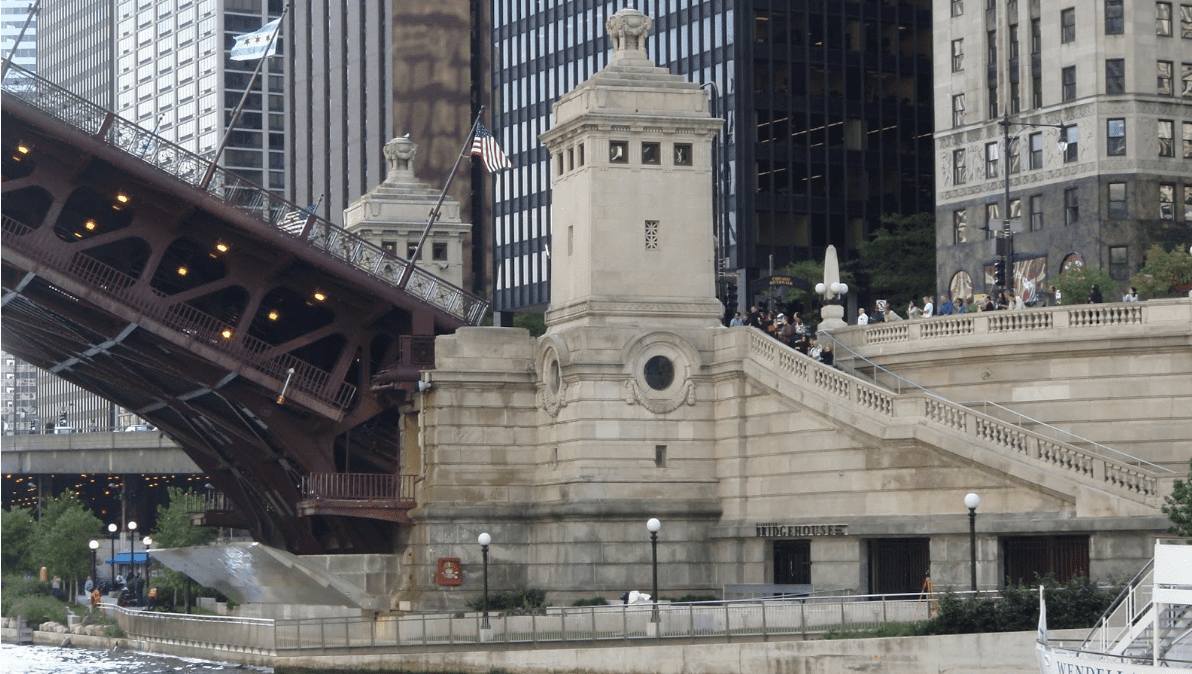
The four bridgehouses are adorned with reliefs symbolizing key stages in Chicago’s history: the arrival of French explorers, the settlement of the first Europeans, the tragedy of Fort Dearborn, and the city’s rebirth after the Great Fire of 1871. These artistic elements transformed the bridge from a mere transportation artery into a cultural and historical monument.
The Museum and Living Mechanism
In 2006, one of the bridgehouses (the southwest one) was converted into the McCormick Bridgehouse & Chicago River Museum. The museum offers visitors a unique glimpse into how this engineering marvel operates: one can view the lifting mechanisms and learn details about the history of the river and Chicago itself.
On days when the bridge is raised (primarily in the spring and fall to allow yachts and other tall boats to pass), museum visitors can witness the lift directly from inside the bridgehouse. This spectacular event is a rare chance to see the massive, century-old mechanisms in action. The DuSable Bridge has long transcended its function as mere infrastructure; it has become an icon of Chicago. The bridge is featured in countless films, TV shows, and photoshoots, often portrayed as the “gateway to downtown” with its classic view of the skyscrapers, the river, and Michigan Avenue’s pavement. The bridge is also a central feature in many civic celebrations—for instance, parades, lighting festivals, and sometimes sports victory celebrations start or pass over it.
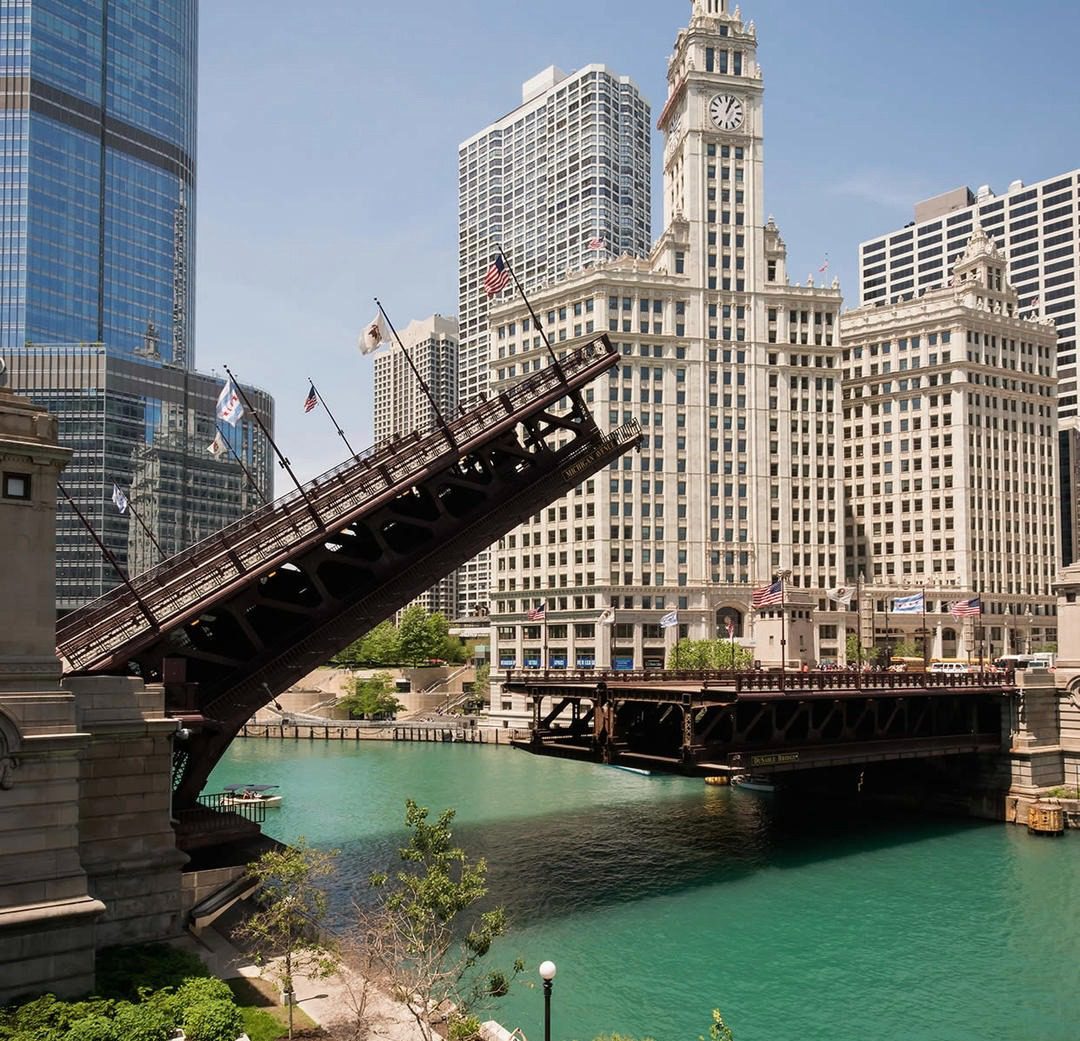
The DuSable Bridge remains not just a structural element but a powerful symbol that continues to shape Chicago’s identity and cultural landscape. It symbolizes the unity of Chicago’s North and South Sides—a layer of history reflecting the narratives of explorers, first settlers, city fires, and rebirth. Its architectural harmony, technical perfection, and prominent location make it one of the city’s most recognizable landmarks, easily identifiable in photos and films. Its status as an architectural and historical monument guarantees its preservation for future generations. Everyone who crosses this arch over the Chicago River’s waters is simultaneously moving into the present and connecting with the past. And the museum inside the bridgehouse invites visitors to look behind the facade, to see not only the beauty but also the mechanics that allow that beauty to endure.