

The Chicago Museum of Science and Industry (MSI), now officially the Kenneth C. Griffin Museum of Science and Industry, stands as one of the world’s largest science museums. Its history traces back to 1893, when the building was constructed as the Palace of Fine Arts for the World’s Columbian Exposition. The museum draws visitors with its sheer scale, diverse exhibits, and interactive displays that allow a deep dive into technological evolution, historical milestones, and contemporary scientific breakthroughs. In this article on chicago-future, we offer a detailed look at the museum’s history, its essential exhibits, recent updates, and the vital educational and cultural mission it fulfills.
Building History
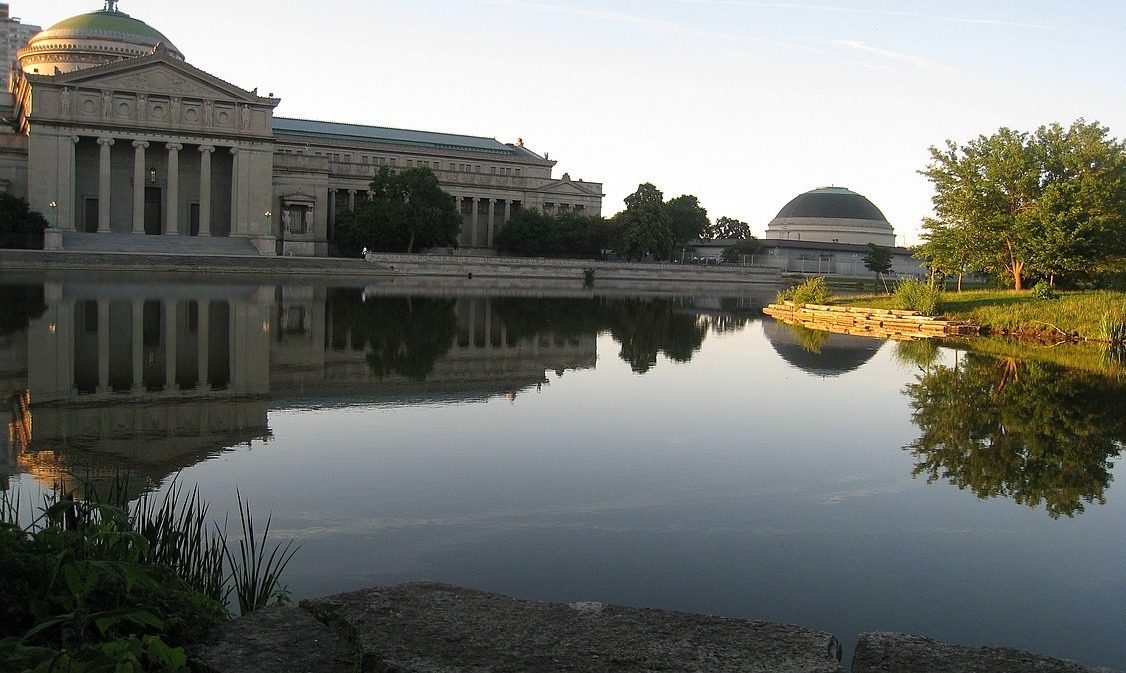
The Palace of Fine Arts building was designed by Charles Atwood for D. H. Burnham & Company. It distinguished itself from the other temporary structures of the “White City” because it had a permanent brick foundation. During the Exposition, it showcased paintings, sculptures, graphic arts, and metalwork from around the globe. After the fair, it temporarily housed a museum that would eventually become the Field Museum of Natural History. When the Field Museum moved to its new location in the 1920s, the building was left mostly vacant.
The idea to establish a museum of science and industry originated with philanthropist Julius Rosenwald. After visiting a German science and technology museum, he was inspired to create a similar institution in Chicago. Organizational work began in 1926, and the museum officially opened its doors to the public on June 19, 1933. Its first interactive exhibit was the “Coal Mine”—a walk-through mining tunnel display. This institution became North America’s first interactive science museum.
Over the years, the museum expanded its collections, incorporating themes from aviation and space exploration to agriculture and transportation. The building itself underwent reconstructions and interior updates to accommodate new needs: the museum required space for large-scale and highly interactive exhibits. In 2024, the museum was officially renamed the Kenneth C. Griffin Museum of Science and Industry, following a major donation from the philanthropist. Its organizational structure and exhibits were inspired by the Deutsches Museum in Munich, the Science Museum in London, and the Technical Museum in Vienna.
Architecture and Renovations
The MSI has retained the Beaux-Arts style of the Palace’s facade. The central dome was clad in Ludowici tile in 1930, and later, during 1990s renovations, a three-level underground parking garage and a new subterranean entrance were added beneath the museum.
In 2019, the museum announced a name change to the Kenneth C. Griffin Museum of Science and Industry following a record-breaking $125 million donation, which secured funding for digital galleries and renovated public spaces. The new name was officially presented on May 19, 2024.
Key Exhibits
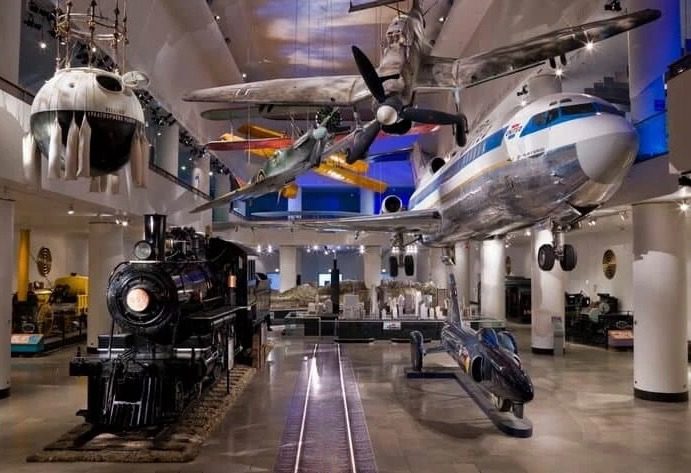
The museum boasts over 2,000 exhibits housed in 75 major halls, many of which are permanent or semi-permanent. The most famous include:
- Pioneer Zephyr — the first stainless steel diesel passenger train;
- German Submarine U-505 — the only captured World War II submarine in the Western Hemisphere;
- Henry Crown Space Center — space artifacts, including the Apollo 8 Command Module and the Mercury-Atlas 7 capsule;
- FarmTech — modern agricultural technologies, featuring tractors, a greenhouse, and demonstrations of the food cycle;
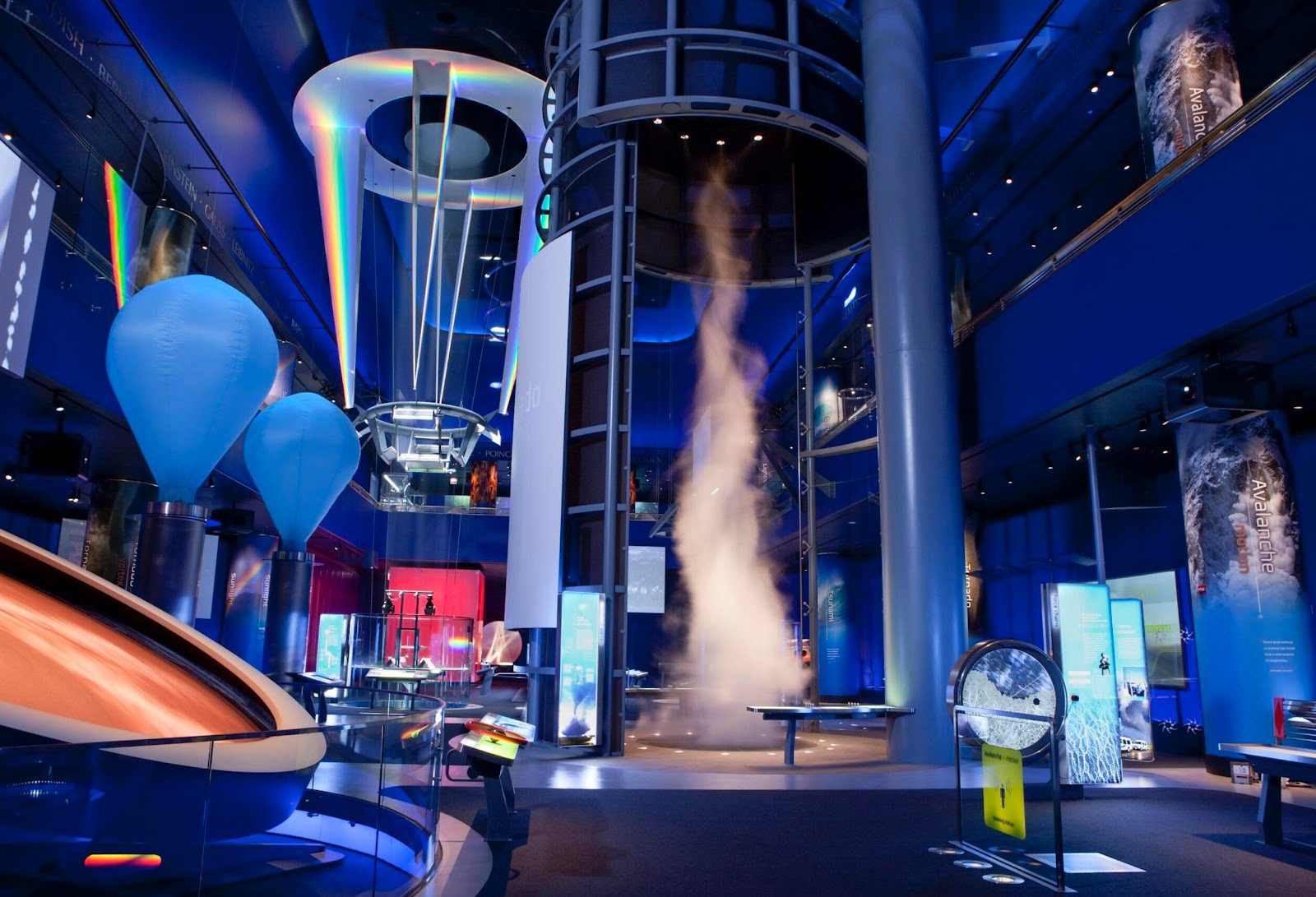
- Science Storms — interactive exhibits on natural phenomena, including a tornado, tsunami, Foucault pendulum, and Tesla coil;
- Coal Mine — a recreated mine featuring original equipment from the Old Ben #17 mine;
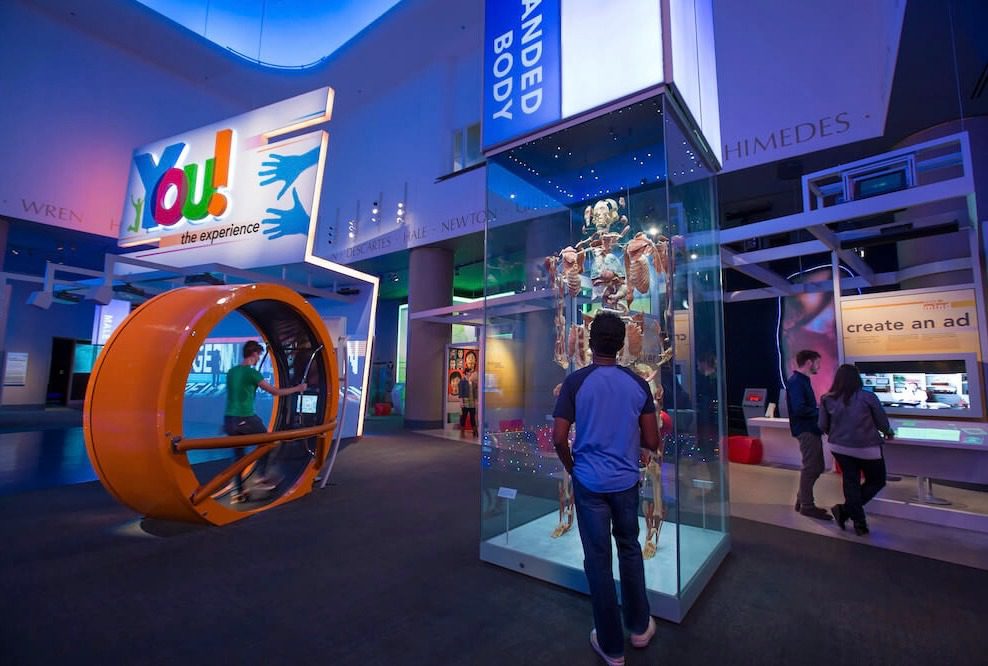
- YOU! The Experience — anatomical and biomedical interactive exhibits;
- Numbers in Nature: A Mirror Maze — a demonstration of geometric and natural patterns;
- The Blue Paradox — focusing on the issue of ocean plastic waste.
Among the most significant exhibitions are:
- U-505 Submarine Exhibit — a unique collection for a museum in the West: a submarine captured by the U.S. during World War II. It is the only surviving German U-boat of its type viewable in a North American museum;
- The Great Train Story — a large-scale model of the railway route from Seattle to Chicago. It illustrates the landscape, nature, industrial, and urban scenes, showing how U.S. transportation and logistics evolved;
- Industry, Science, Technology, Agriculture, Medicine, Space — the museum spans topics from aviation and space exploration to medicine, farming, time, and communications;
- Interactive demonstrations and “live” exhibits — for example, workshops where visitors can observe experiments or interact with models;
- Interactive displays;
- Exhibitions that make science visible and accessible.
There are halls dedicated to nature, science, technology, energy, and materials—featuring interactive exhibitions, scientific demonstrations, shows, and educational programs. The museum also periodically hosts temporary or traveling exhibitions, which allows it to supplement the permanent collection with new themes, respond to current scientific trends, or address cultural demands. MSI conducts temporary exhibitions such as:
- Titanic: The Exhibition, Body Worlds, Harry Potter: The Exhibition, Science Behind Pixar, 007 Science, and others;
- The annual themed exhibitions Christmas Around the World and Holidays of Light showcase the holiday traditions of various nations.
Educational Role
The Griffin MSI is more than just a museum. It serves as an active educational platform: the institution conducts tours, educational programs for schoolchildren and students, interactive demonstrations, and public events that help foster interest in science, technology, and history. Through its diverse collection and interactive formats, the museum promotes science, technology, and engineering, inspiring visitors to pursue new scientific or technical interests. By blending history, science, technology, and culture, the museum preserves artifacts of the past, showcases modern scientific achievements, and creates a platform for future exploration and learning. The Griffin MSI also plays a crucial role in preserving cultural and technological heritage, allowing visitors to see firsthand how technology has evolved, how society has changed, and how this impacts the present day.
The museum actively engages visitors in hands-on activities and experiments. The Wanger Family Fab Lab allows work with 3D printers and laser cutters, while the ToyMaker 3000 shows the toy manufacturing process. Interactive flight simulators and exhibits dedicated to ecology and space make the museum an educational platform for both children and adults. With its massive and diverse exhibits, the museum demonstrates how science, industry, technology, and development are an inseparable part of the modern world. This serves to inspire careers in engineering, technology, and science. For tourists and visitors to Chicago, it is one of the city’s main attractions, offering not just a chance to admire historical artifacts but also to immerse oneself in technological achievements and learn about the evolution of transport, industry, and space exploration.
The Chicago Museum of Science and Industry is a unique cultural and scientific hub that combines historical architecture, technical achievements, and educational programs. Its exhibits reflect the evolution of human science, technology, and culture, providing visitors with an interactive and captivating experience. The museum continues to update its halls, implement innovative technologies, and host temporary exhibitions, remaining one of Chicago’s premier tourist and educational destinations.