

Like residents of most other cities before the 19th century, Chicagoans once lived by their own local time. However, as the city grew, the need to reduce chaos and synchronize daily life became unavoidable. City dwellers increasingly sought ways to adhere to strict work schedules and adapt to the demanding rhythm of the industrial age, as reported by chicago-future.
Solar Time and the Chicago Astronomical Society
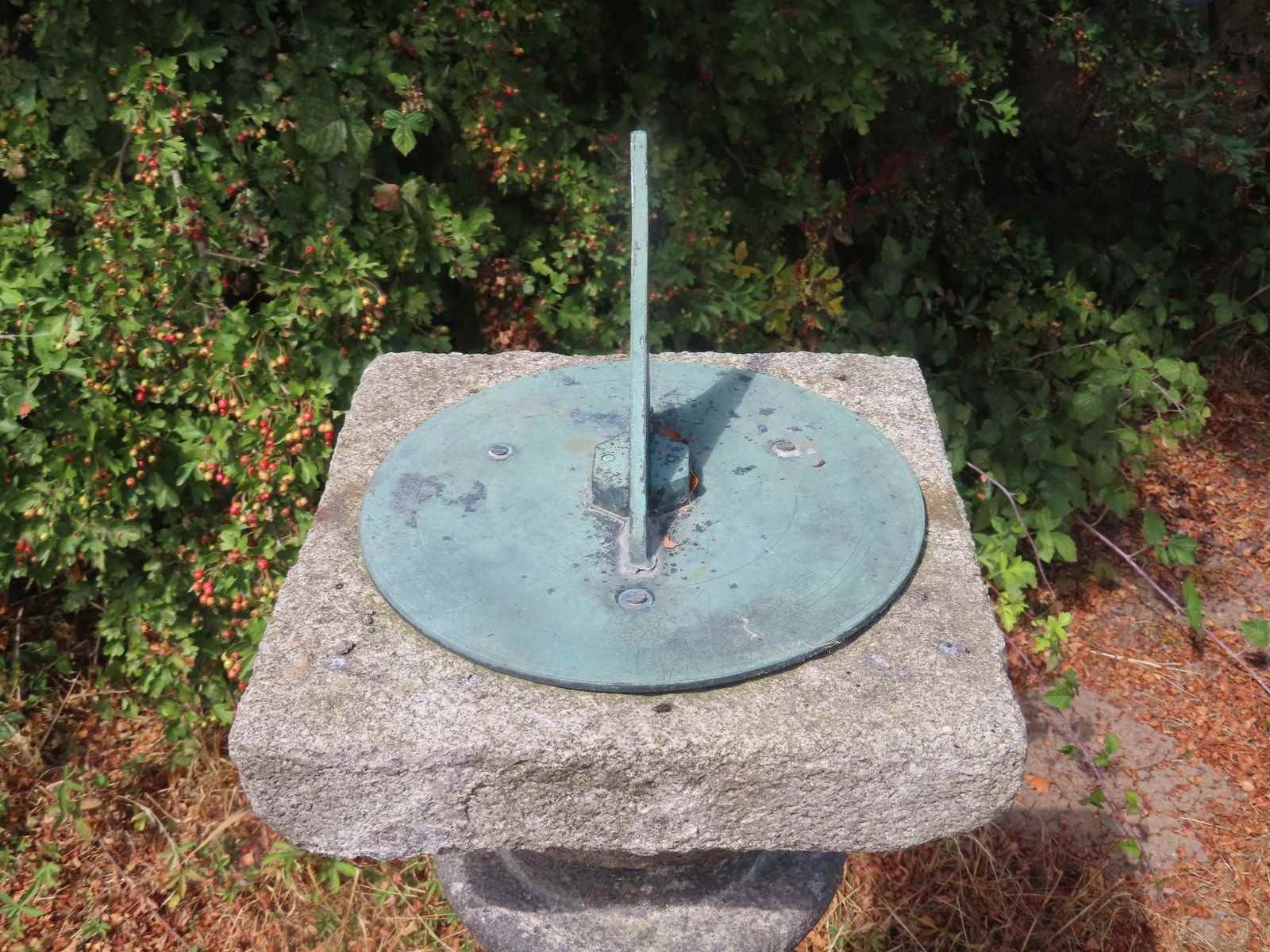
Until the 1870s, Chicagoans—like most Americans—relied primarily on sundials to keep track of their day. Noon occurred simply when the sun reached its highest point in the sky.
As Chicago established itself as the nation’s primary railway hub, time synchronization became a logistical nightmare. By the end of the 19th century, while the number of time zones had decreased, the situation remained fragmented; a single railroad could operate using as many as 50 different time standards simultaneously.
In 1862, the city contracted with the Chicago Astronomical Society. The Dearborn Observatory was used to measure and transmit time, sending signals via dedicated wires to police stations, fire departments, the railroads, and jewelry stores.
Still, train scheduling remained complex. Changing a timetable often required officials from different railroads to meet for consultations, meetings that frequently devolved into so-called “speed wars.” Eventually, these railroad negotiations turned into more formal conventions, culminating in the 1883 General Time Convention held right here in Chicago.
The Shift to Standard Time
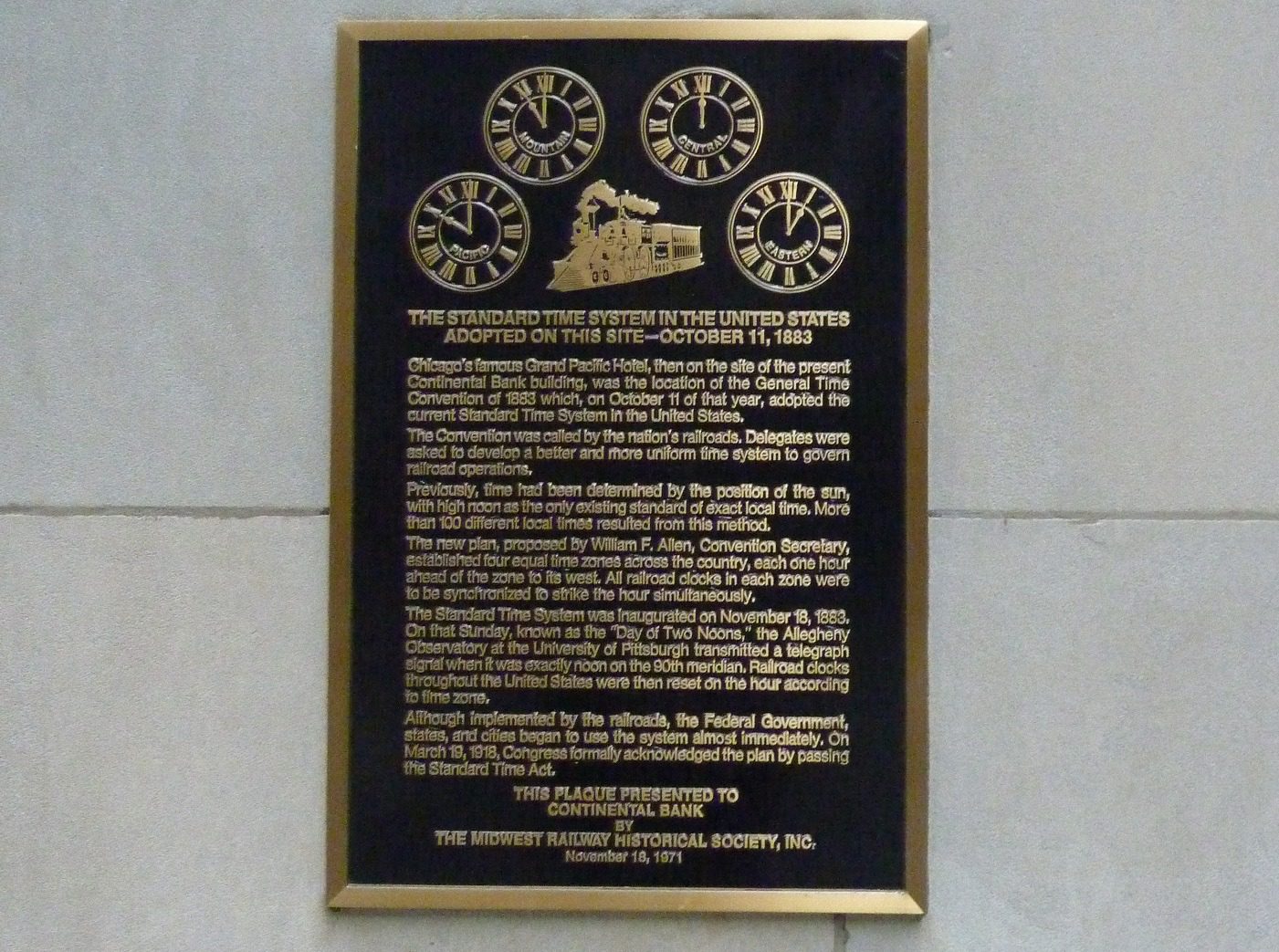
During the General Time Convention, participants voted to adopt standard time, dividing the country into four zones and setting the stage for the adoption of the Greenwich Meridian-based system.
Chicago officially switched to Central Standard Time on November 19, 1883—then known as the “90th Meridian Time.” The transition happened rapidly, taking just a few days. Many locals mistakenly believed the change would only affect the railroads; some jewelers even prepared watches with dual sets of hands to accommodate both “railroad time” and local time.
Chicago’s First Public Clocks
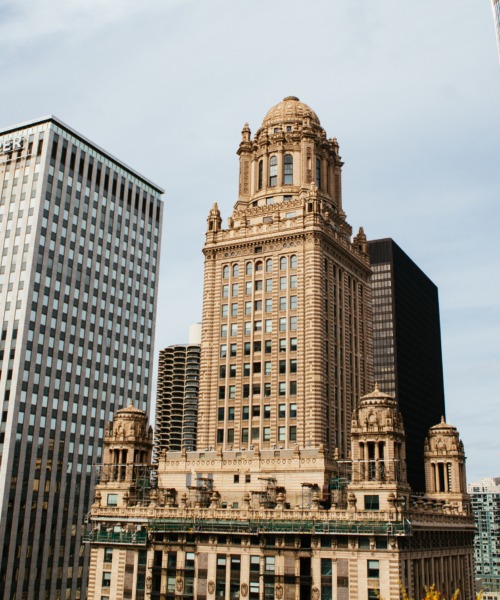
Chicago began installing public clocks well before the Great Chicago Fire leveled the city’s infrastructure. Historical records indicate that the first Courthouse Clock Tower appeared in the 1850s, serving as a primary timekeeper for residents and merchants. However, the mechanism was strictly mechanical and required constant manual adjustment.
One of the few structures to survive the Great Fire was the Chicago Water Tower, built in 1869. Beyond its role in the city’s water system, it also housed a clock. After the city’s reconstruction, the Water Tower evolved into a symbol of resilience.
It’s also worth noting the clock at Chicago City Hall, which was among the first to run on Standard Time. As the city’s primary infrastructure hub, it became indispensable for aligning trade and transportation schedules.
The City’s Most Famous Timepiece
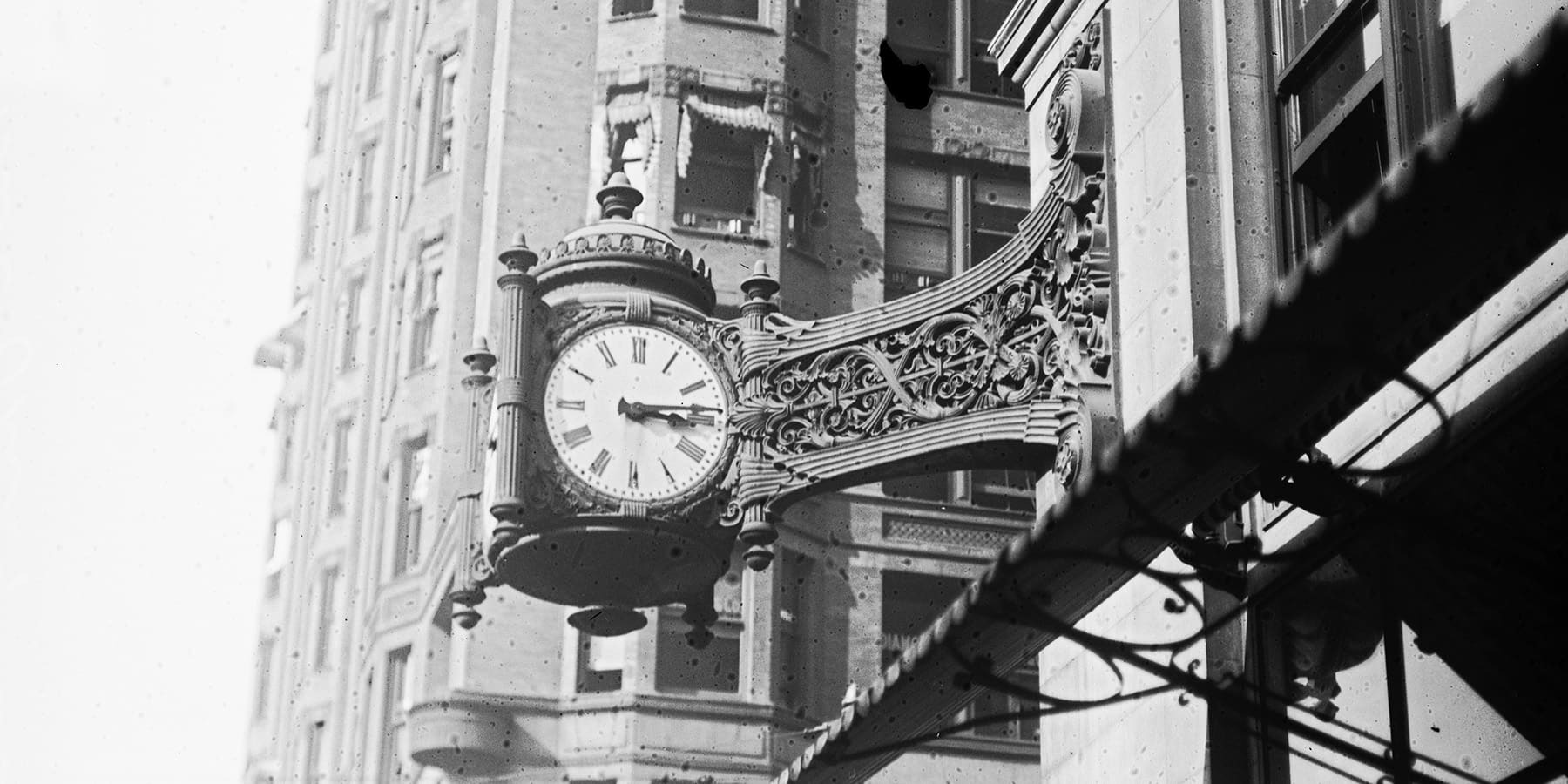
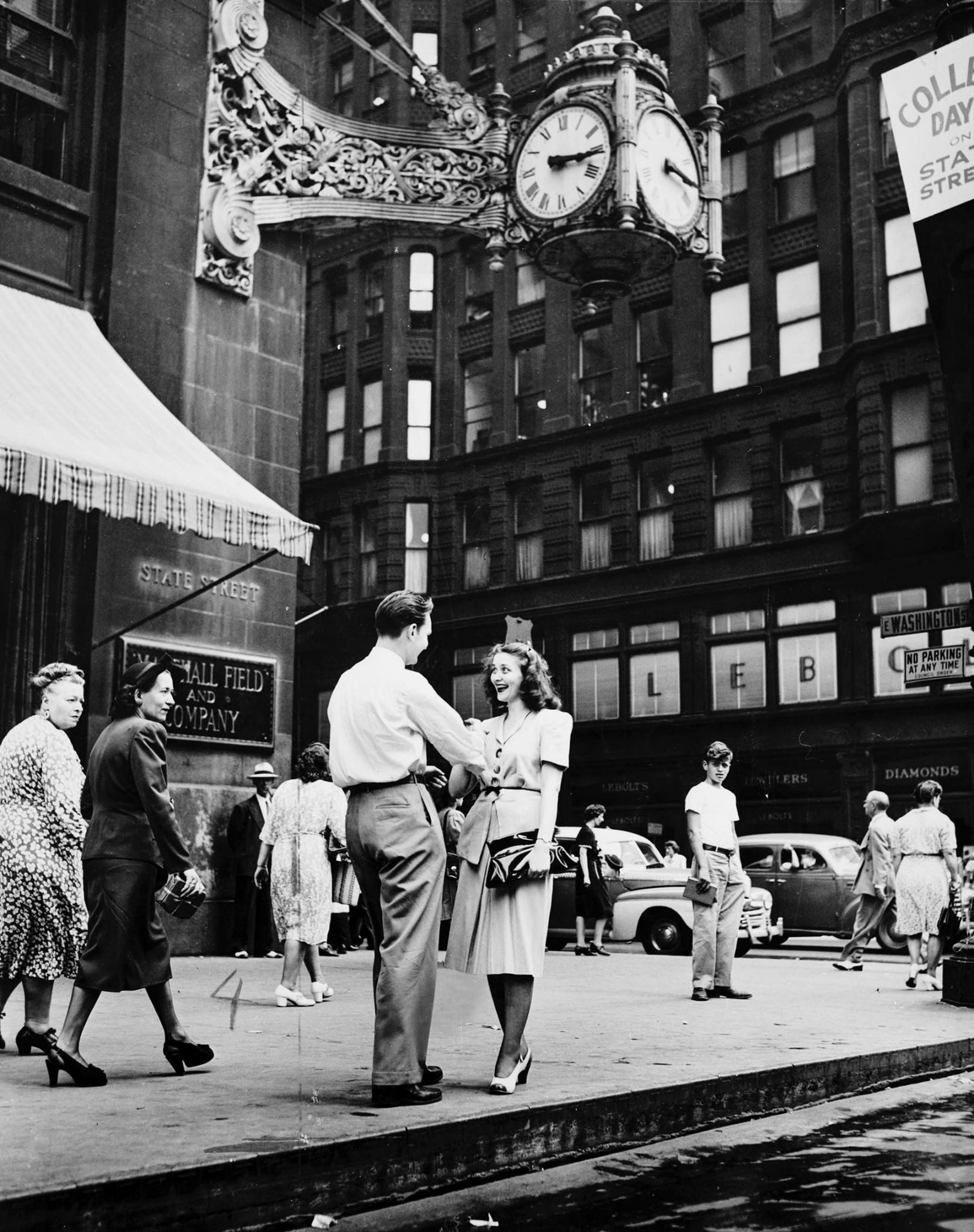
The Marshall Field and Company Clock became an iconic landmark and the go-to meeting spot for 19th-century Chicagoans. Its origins are tied to a simple business problem.
In the 1890s, merchant Marshall Field noticed that people were leaving notes on his storefront window if they missed a scheduled meeting. He devised a brilliant solution: install a massive clock on his building so everyone could synchronize their day. In 1897, he installed a clock weighing nearly 500 pounds.
“From that day on, people said, ‘Let’s meet under the clock.’ It became a very popular Chicago symbol,” local history and business educator Sarah Sullivan explained in an interview with Chicago Stories.
A few years later, Field expanded his store to cover an entire city block. In 1904, a second, seven-ton clock was installed. Because they didn’t run in sync, the first clock was replaced in 1907. These massive timepieces featured wooden hands and faces measuring 45 inches in diameter, designed by Ernest Graham and Pierce Anderson.
These clocks became such an integral part of Chicago’s identity that in 1945, artist Norman Rockwell painted his famous “The Clock Mender,” depicting a man on a ladder checking his pocket watch against the face of the Marshall Field clock.
How Public Clocks Transformed Chicago
Chicago’s early public clocks were more than just architectural decorations; they were essential tools that organized urban life, boosted trade, and provided central hubs for social and civic interaction.
Key contributions of Chicago’s first public clocks:
- The Introduction of Standard Time: Before standardization, Chicago relied on sundials managed by the Dearborn Observatory and announcements from fire stations or the courthouse bells. Establishing a unified time allowed workers to adhere to consistent schedules, moving the city past the era of local solar time.
- Urban Wayfinding: Beyond displaying time, these clocks served as landmarks for residents across different neighborhoods. The phrase “Meet me under the clock” became a social staple—a reliable place for friends, lovers, and colleagues to connect. While it started with Marshall Field’s, the concept eventually applied to prominent clocks citywide.
- Technological Progress: Clocks like “Father Time” were among the first to synchronize with the United States Naval Observatory, the most accurate time source available. This accuracy was vital for travelers, the business community, and the coordination of rail traffic.
Ultimately, Chicago’s early clocks were symbols of precision, growth, and a new urban rhythm. During an era of rapid industrialization, they acted as the city’s metronome. Today, these timepieces remain vital parts of the metropolis’s architectural heritage, serving as reminders of the era when Chicago transformed into one of the most important centers in the United States.