

The name George Ferris is known worldwide. This is because he is the creator of the engineering marvel that has become a favorite pastime for many Americans. We’ll discuss the invention of this great man in more detail on chicago-future.com.
Childhood and Youth
George was born on February 14, 1859, in Illinois, to George and Martha Ferris. He was the second child in the family. When George was five, the family moved to Nevada and settled on a dairy farm, where he spent his entire childhood. The boy’s father was a successful agronomist and horticulturist who made a significant contribution to Chicago’s greening efforts in the 1870s by importing trees from the East that were planted throughout the city.
The future inventor graduated from high school in California. In 1875, he left Nevada and became a student at the military academy in Oakland, graduating in 1876. He then studied engineering at the Rensselaer Polytechnic Institute (RPI) in New York. It is important to note that this institution had, by that time, produced a large number of America’s leading engineers. At RPI, Ferris was a member of the local chapter of the Chi Phi fraternity and the Rensselaer Society of Engineers. In 1881, after earning a degree in engineering, Ferris began working in civil engineering in Pittsburgh, where he specialized in the construction of steel frameworks for bridges and tunnels. He soon founded the company G.W.G. Ferris & Co. in Pittsburgh, which focused on testing and inspecting metal for railways and bridge construction.
An Engineering Marvel and Its Features
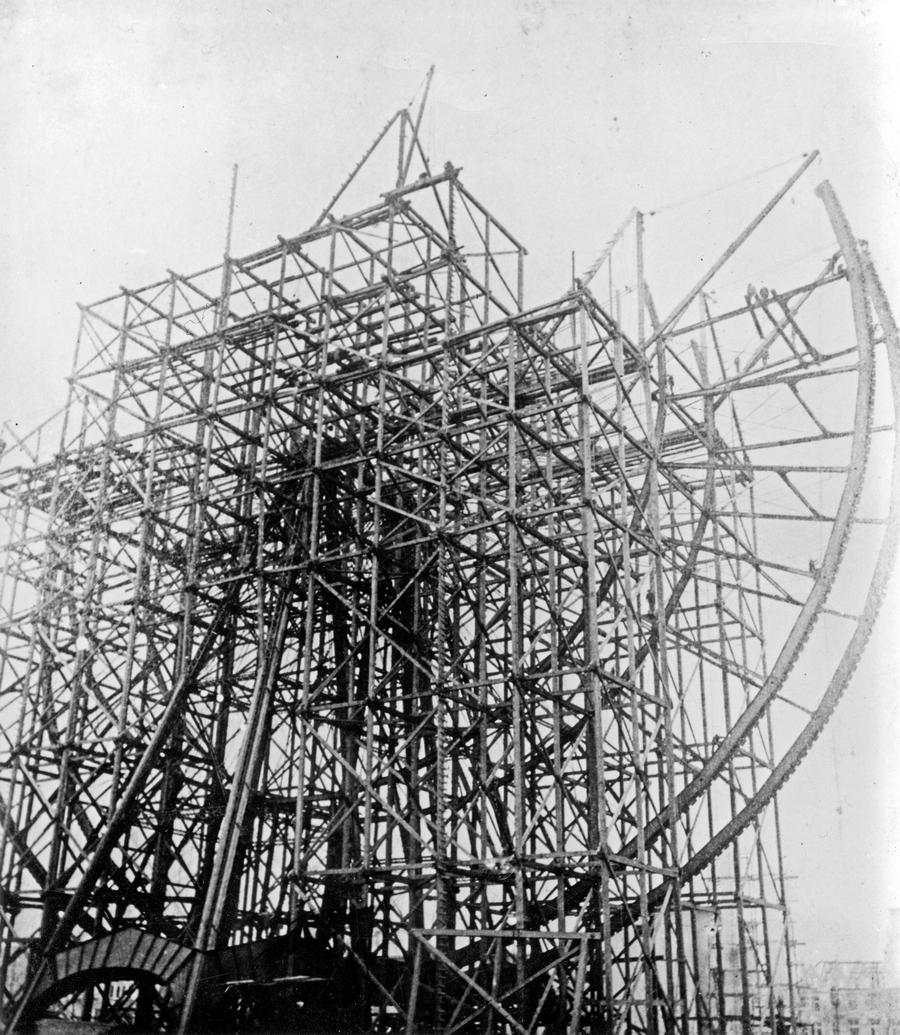
In 1893, Ferris learned that the World’s Columbian Exposition would take place in Chicago. In 1891, the exhibition organizers challenged American engineers to design a structure for the fair that would surpass the Eiffel Tower, the highlight of the 1889 Paris International Exposition. Determined to outperform all competitors, the 33-year-old George came to Chicago. Inspired, he sketched a large observation wheel on a piece of paper overnight. The next day, he presented his project to the committee. Its representatives had previously heard about the small wooden wheels that had started appearing five years earlier, but upon seeing the enormous size of Ferris’s wheel, the committee deemed his idea pure absurdity.
However, the man did not give up. Within a few days, he returned to the committee. He managed to convince a couple of fellow engineers to approve the structure as buildable and—more importantly—safe for use. Furthermore, he quickly secured local investors to cover the $400,000 construction cost. Thanks to the inventor’s persistence and diligence, the commission finally approved his project.
George modeled the wheel after a bicycle wheel. He used heavy steel beams as spokes, which perfectly maintained its shape and balance. The fork-like towers supporting the axle consisted of two steel-beam pyramids. The wheel’s height was 264 feet, and the support towers were 140 feet tall. Just imagine: 100,000 separate parts went into creating this giant. Its axle—the largest piece of steel ever forged in the U.S.—weighed 89,320 pounds and was 45 feet long. To carry passengers, Ferris installed 36 glass and steel cabins the size of railway cars, each seating 40 people comfortably. The total capacity of the wheel was 2,160 passengers. It was powered by a power plant with two reversible 1,000-horsepower engines, connected to a 20,000-pound sprocket chain that rotated the structure. To stop the engineering marvel and hold it motionless, Ferris used a custom-made pneumatic brake.
From a height of 264 feet, the wheel offered stunning views of Chicago. George’s innovative design was an example of efficiency, easily withstanding Chicago’s infamous winds while being five times heavier than 1,200 tons when fully loaded. Thanks to it, George became America’s most famous engineer almost overnight. His design thrilled people and caused a sensation. Incredibly, Ferris managed to raise the funds, order the steel, build the foundation, and launch the wheel by June 11, 1893.
The Opening of the Observation Wheel
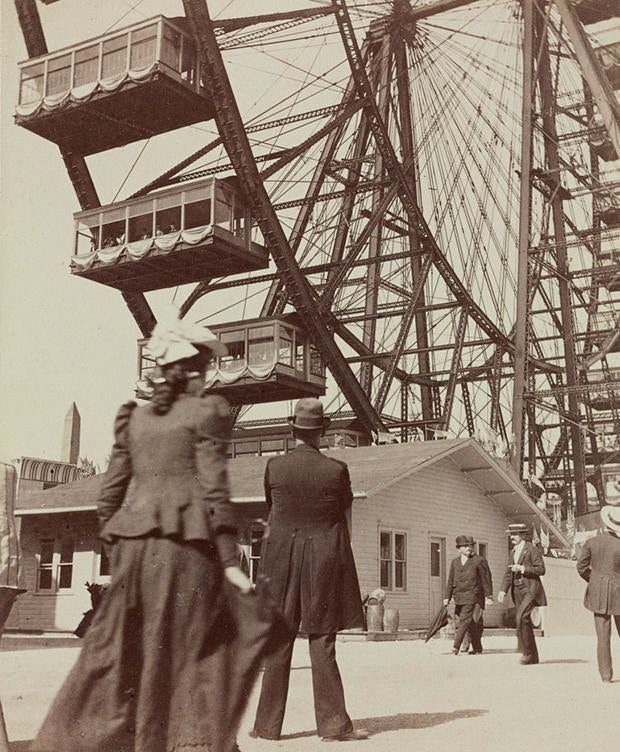
The observation wheel officially opened on June 21, 1893. At that time, local and national dignitaries and a 40-musician orchestra performing the song “America” rode the wheel for the first time. Margaret Ferris raised a glass to her husband’s achievement. Thus, the wheel became the enchanting centerpiece of the Exposition. Importantly, over 1.5 million people rode it over 19 weeks, each paying 50 cents. It is equally amazing that the wheel operated perfectly, with no accidents during its entire run. After the fair ended, owners of resorts like Coney Island stole Ferris’s idea. Worse, the inventor believed that the Exposition management deprived him and his investors of their rightful share of the profits, amounting to about $750,000, which the wheel generated.
The Tragic Fate of George Ferris and His Invention
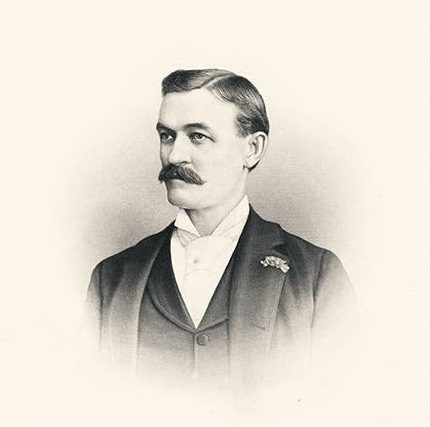
Tragically, George Ferris, the creator of this unique structure, spent the next two years in lawsuits, but circumstances did not favor him. In 1896, the inventor died of typhoid fever at the age of 37.
Before Ferris’s death, the observation wheel was dismantled and reassembled near Lincoln Park for the Chicago North Clark Street Fair, where a new group of investors hoped to develop the site as a tourist attraction. Lincoln Park residents successfully campaigned for the wheel’s demolition, calling it useless. Investors resold the wheel for $1,800 to a new group. In 1904, it was installed in St. Louis for the Pan-American Exposition, where another 3 million spectators enjoyed Ferris’s invention. When that fair ended, the wheel was destroyed with dynamite and sold for scrap. It was an inglorious end to an engineering marvel.
Although the original observation wheel was destroyed, its idea, as everyone knows, endured. Thousands of similar structures, smaller and more portable, were soon built across the country, utilizing advanced engineering designs and technology. Eventually, Ferris found some semblance of immortality. Though it is notable that the two largest modern observation wheels, the only ones to surpass the scale of the 1893 wheel, declined the name “Ferris.” In reality, vertical passenger-carrying observation wheels had existed for over 200 years. In early 1893, William Somers received the first U.S. patent for a “carousel,” from which he built three wooden fifty-foot wheels in 1892. However, George Ferris was the first to build a steel wheel on such a massive scale. Importantly, in 2022, the 45-ton axle was discovered underground by metal detectors in St. Louis. It was located nearly next to where the observation wheel stood in 1904.
It is difficult to overestimate George Ferris’s invention and his aspiration to make people’s lives around the world more interesting and fulfilling. For his great service to society, Ferris was inducted into the Rensselaer Polytechnic Institute Alumni Hall of Fame in 1998.