

Since its founding, Chicago has been closely associated with business. Successful entrepreneurs in the “Windy City” developed a huge number of innovations. The main reason was that they wanted to promote Chicago and boost its economy. We will tell you more information about how all of this happened at chicago-future.com.
The “father” of the meat processing industry
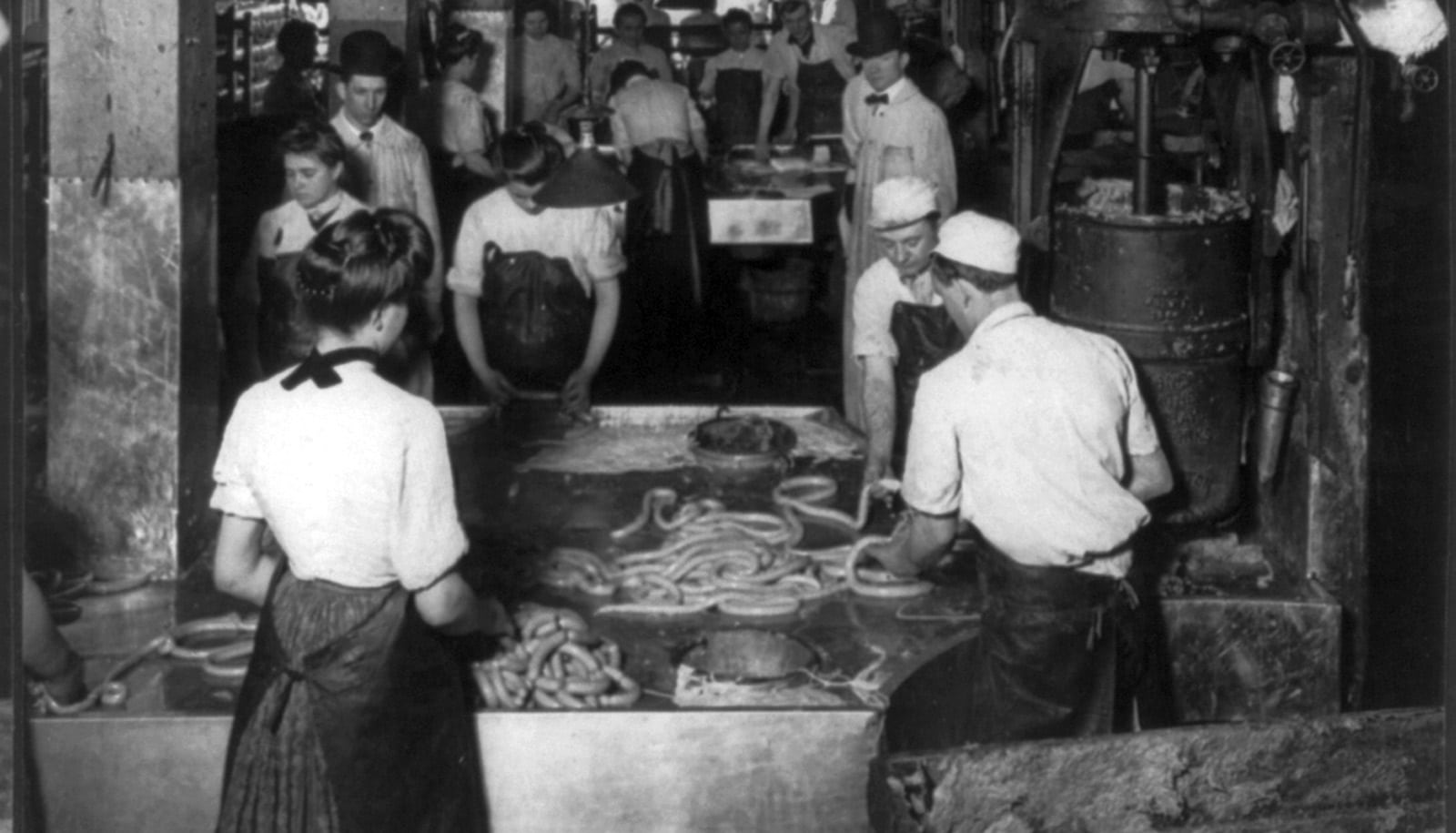
There was an active fur trade in Chicago at the time of its establishment. Fur traders included early businessmen John Kinzie, Gurdon Saltonstall Hubbard and John Clark. They anticipated that something more substantial than a government port and merchant huts would soon arise at the mouth of the Chicago River. The first innovator, George Dole, arrived in Chicago from Detroit in 1831. In the summer of 1832, his company, Newberry and Dole, established a slaughterhouse in the city. Although livestock slaughter for local consumption had been practiced in Chicago for some time, Newberry and Dole were the first to pack meat for export. In 1839, the company started shipping wheat from the first Chicago grain elevator, which was situated at the north end of the Rush Street bridge. As a result, George Dole became the “father” of Chicago’s meat processing business, as well as transportation networks, warehouses and grain elevators. He introduced changes in market systems that transformed the city into a significant transshipment hub.
The great Ogden
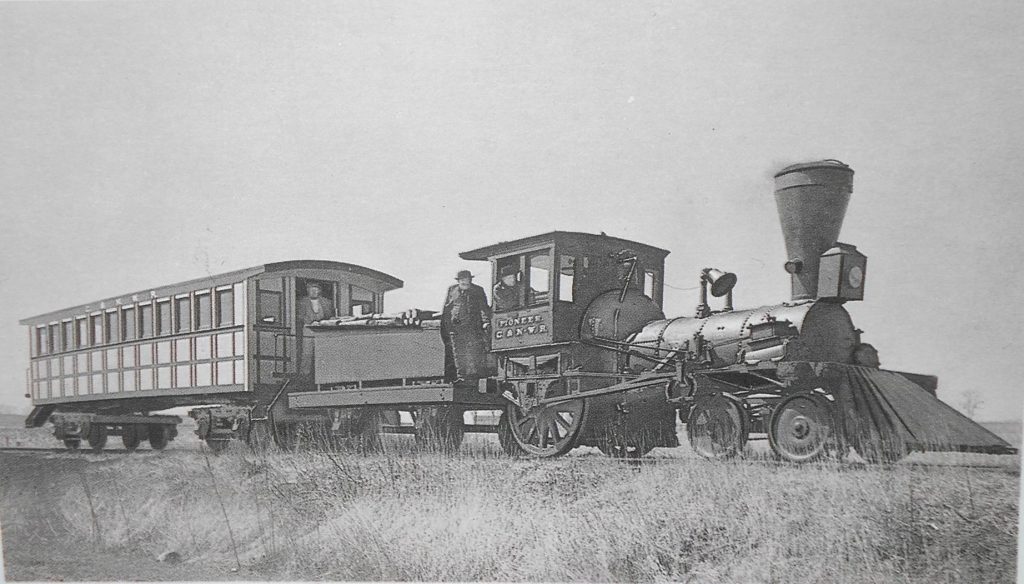
William Butler Ogden was another innovative businessman. In 1835, he traveled to Chicago to manage the property that his brother-in-law had acquired. After selling around a third of his inherited property for a large profit, he took up the transport business. Ogden contributed significantly to the completion of the Illinois & Michigan Canal. He was president of the Galena & Chicago Union Railroad as well as several other important railroads that later merged to form the Chicago & North Western Railroad. In addition, Ogden served as the first president of the Union Pacific Railroad Company, mayor of Chicago and president of the Chicago branch of the State Bank of Illinois.
William was instrumental in establishing the McCormick Reaper and Mower Works in Chicago, which produced reapers. The reaper was invented in 1830 by Robert McCormick. His son Cyrus continued to improve his father’s invention. In 1845, he relocated to Cincinnati. In 1847, Ogden invited him to Chicago to establish a company in the heart of the city and begin production. A year later, McCormick negotiated a contract with Ogden to supply reapers to Illinois, Indiana and Michigan. The company has pioneered a number of creative business practices and introduced prairie farmers to novel machinery. It is worth noting that the company was one of the first to provide written guarantees to its consumers for each item. Also, people were offered a free trial period, during which they could evaluate all of the equipment’s benefits.
As more people and goods arrived in Chicago to contribute and benefit, Ogden and other entrepreneurs founded the Chicago Board of Trade in 1848 to support the city’s trade development. In 1855, Ogden and other members of the newly formed Board of Sewerage Commissioners devised a plan for a coordinated sewage and drainage network. As a result, Chicago soon became the first North American city to develop a comprehensive sewer system.
Engineering marvels and advancements in meat transportation
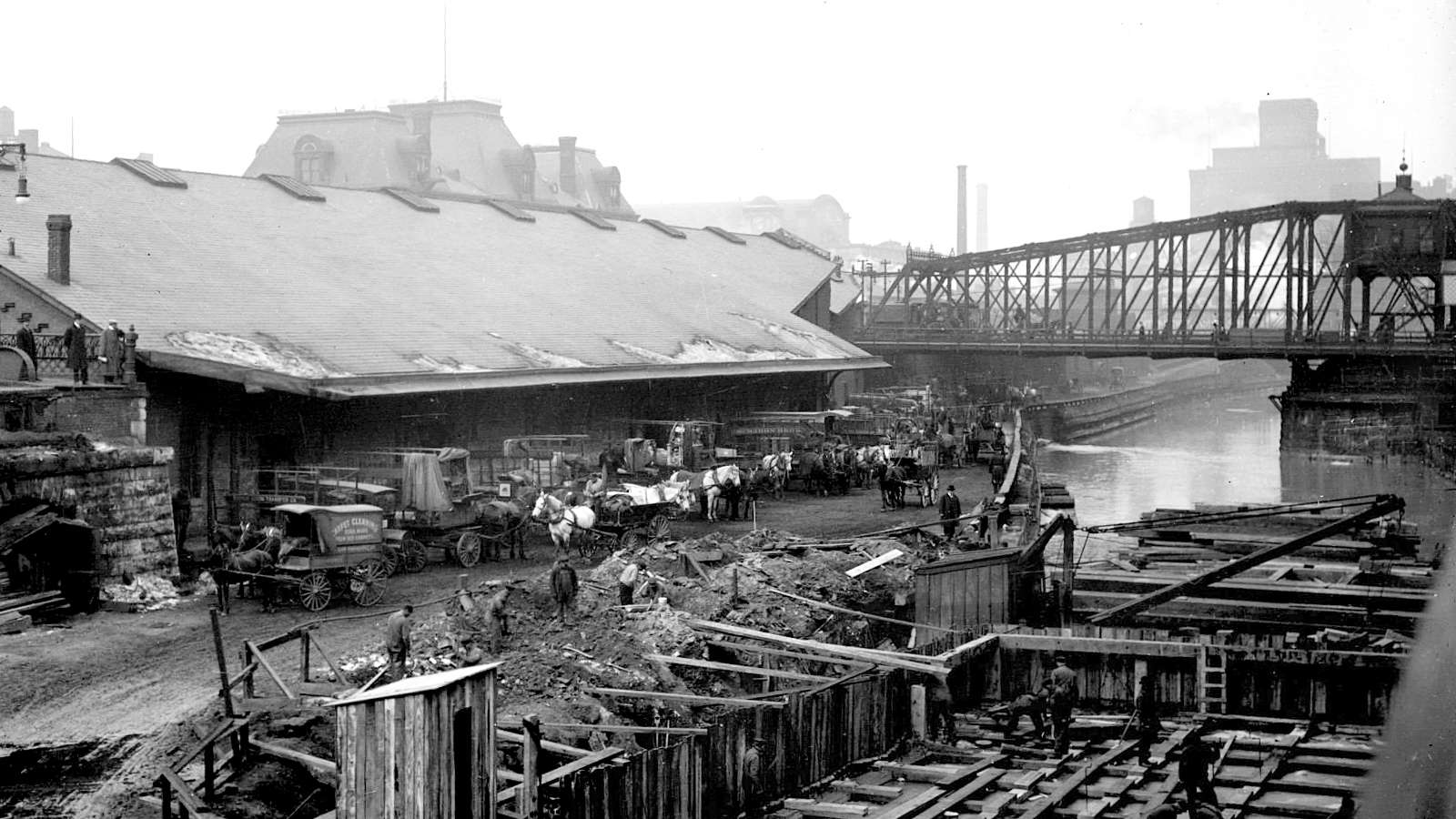
The Chicago River split the city into three sections, prompting many residents to become pioneering inventors in bridge technology. In 1832, the first fixed-span bridge was constructed in Chicago. As a result, it was positioned so that it would not interfere with the section of the river that served as a harbor. Finally, it was replaced by a number of adjustable and pontoon structures. At the beginning of the 20th century, engineers came to the conclusion that a trunnion bridge based on the seesaw principle would be an ideal solution to Chicago’s bridge issue. It is worth noting that this principle was incorporated into the Tower Bridge in London. It was soon changed, and bascule bridges in the “Chicago style” began to be built.
The railway contributed significantly to the city’s economic development. By the late 1860s, Chicago had access to both the Atlantic and Pacific oceans. Because of its excellent position, the city has developed into a major livestock market. Initially, cattle were sold alive in eastern markets since that was the only way to ensure clients received fresh meat.
In 1864, the meat industry became extremely active. The biggest innovation that changed the livestock business was refrigeration technology. It converted meat processing plants from a seasonal local trade to a national one, with a focus on Chicago. The scale of corporate activities has increased. In 1868, George Hammond of Detroit sent 8 tons of beef in a refrigerated wagon meant for transporting fruit. Despite minor issues, Hammond was entirely confident in the technology’s potential and eventually relocated production to Chicago.
Gustavus Swift was the one to solve the main marketing difficulties associated with the distribution of processed beef. In 1877, he transported several lots of beef in regular wagons with open doors. As a result of this experiment, Swift discovered the advantages of shipping processed beef in refrigerated wagons and concluded that the factory needed to be expanded and equipment changed. When railcar manufacturers refused to produce such cars, Swift began producing them on his own.
Electrification accessible to everyone
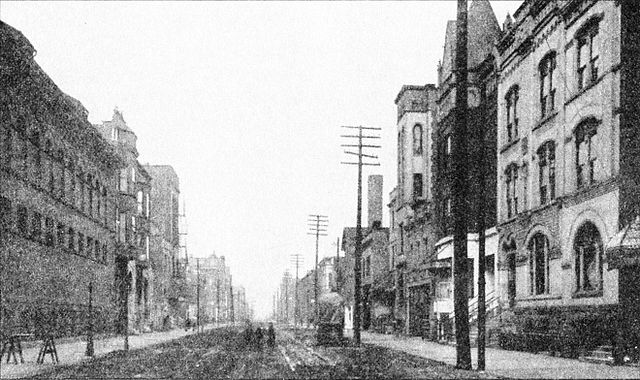
Another series of business innovations aided the expansion of electricity throughout the Northwest. Samuel Insull viewed electricity as a modern monopoly. In 1907, he purchased a huge number of Chicago enterprises. Insull took over entire areas and established holding companies. At the height of its popularity, his Middle West Utilities Company controlled up to one-eighth of the country’s electricity and supplied it to 5,000 cities in 32 states. The first to benefit from electricity were Charles Tyson Yerkes, who commissioned electric trams, and Essanay Studios, which produced films in Chicago.
Other companies did not stand away but also contributed to the development of the electronics industry. In 1928, Paul Galvin established a small company, Galvin Manufacturing Co., which was engaged in the production of battery compartments for home radios. When this industry collapsed, the entrepreneur went on to become a renowned car radio manufacturer. After Paul died, his son Robert took over the company’s management and development. It was soon renamed Motorola. In the 1950s, it pioneered the rapidly emerging field of mobile phones. The company also manufactured two-way radios, pagers and microchips.
Analyzing all of the above, we can conclude that behind the great achievements of businessmen is a tremendous amount of work and a desire to succeed in a specific sector. In today’s Chicago, entrepreneurs continue to develop and implement new initiatives and tools to improve their companies and drive them forward.