

Chicago is a city of magnificent architecture. Its pioneering structures include the world’s first skyscraper, a UNESCO World Heritage site designed by Frank Lloyd Wright, and a skyline composed of some of the world’s most iconic buildings. In our selection on chicago-future.com, you can get acquainted with beautiful buildings that boast a fascinating history.
The Rookery Building
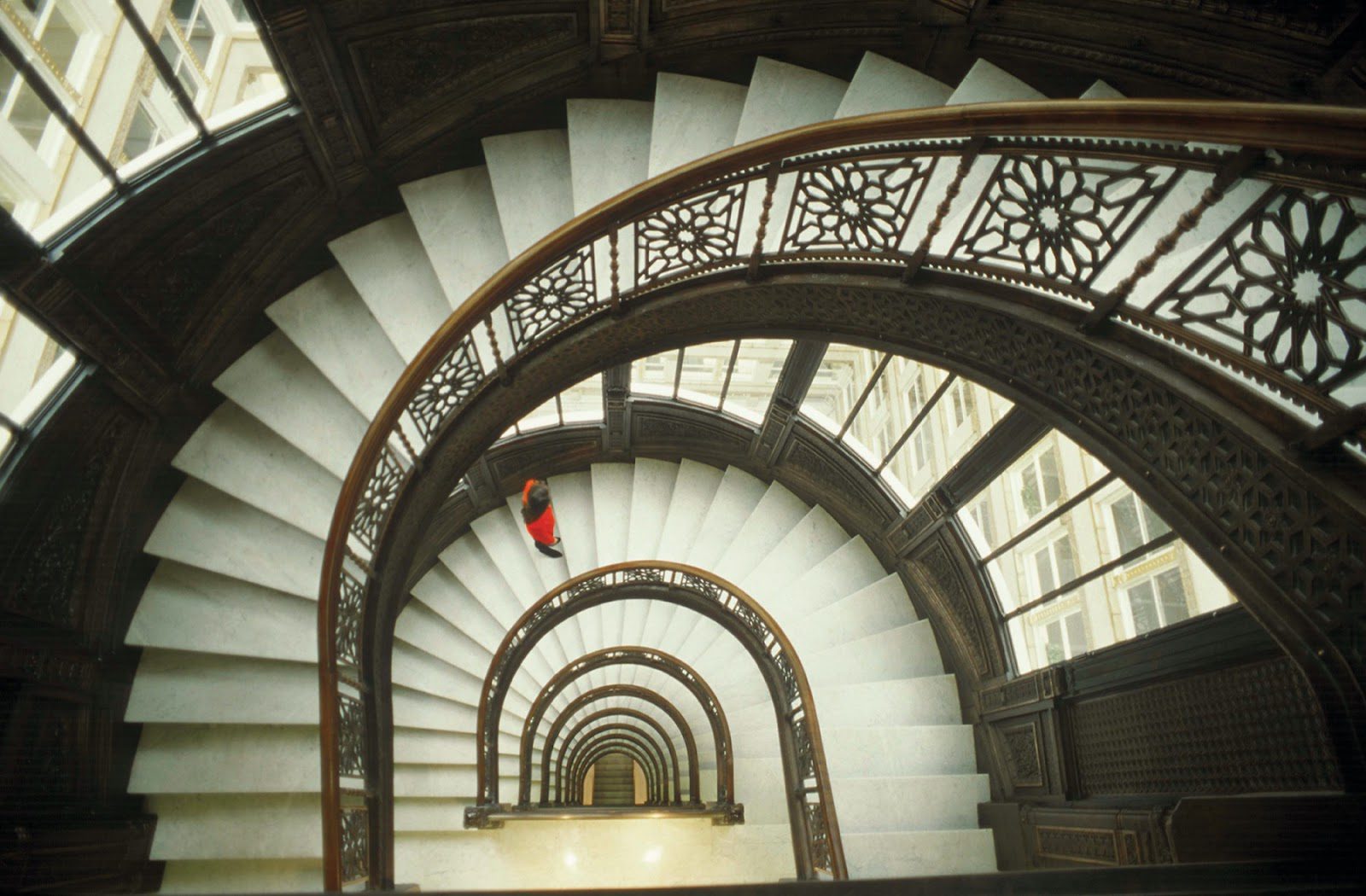
The Rookery Building, listed on the National Register of Historic Places, is located in the heart of Chicago’s financial district. It was designed by the renowned architectural partners Burnham and Root and was considered one of the grandest buildings in the world when its construction was completed in 1888. Inside, you must see the breathtaking spiral iron staircase. Another striking interior feature is the Light Court. Frank Lloyd Wright redesigned this stunning, two-story, glass-roofed lobby in his signature Prairie style in 1905. It is the only project Wright worked on downtown, so if you find yourself in the area, be sure to visit this magnificent building, steeped in history and featuring incredible architecture.
Chicago Cultural Center
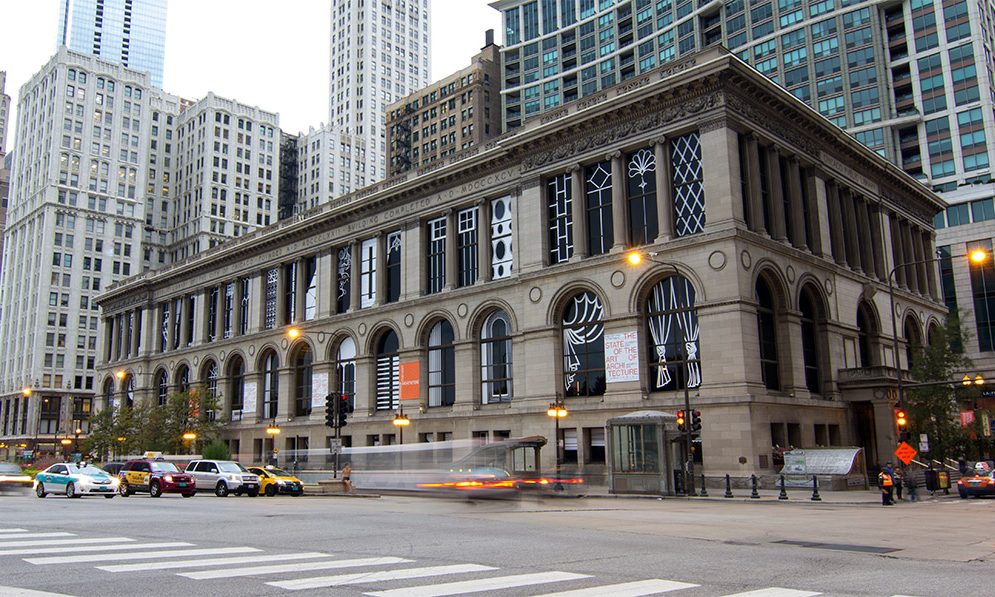
Across the street from Millennium Park, the People’s Palace opened in 1897, soon becoming the first permanent home for the Chicago Public Library. In 1991, it was renamed the Chicago Cultural Center, becoming the country’s first free municipal cultural center. It hosts concerts, art exhibitions, and other programs year-round.
This grand building with unparalleled architecture is listed on the National Register of Historic Places and is a Chicago Landmark. It was designed in the Classical Revival style, drawing inspiration from the monumental structures of Ancient Greece and Rome, as well as the intricately crafted buildings of the Italian Renaissance. When visiting this cultural center, step inside to admire the intricate mosaics of glass, gold, mother-of-pearl, and precious stones in the lobby. In the Preston Bradley Hall, look up at the glowing, 38-foot diameter dome—the largest Tiffany glass dome in the world, containing approximately 30,000 individual pieces of glass.
Wrigley Building
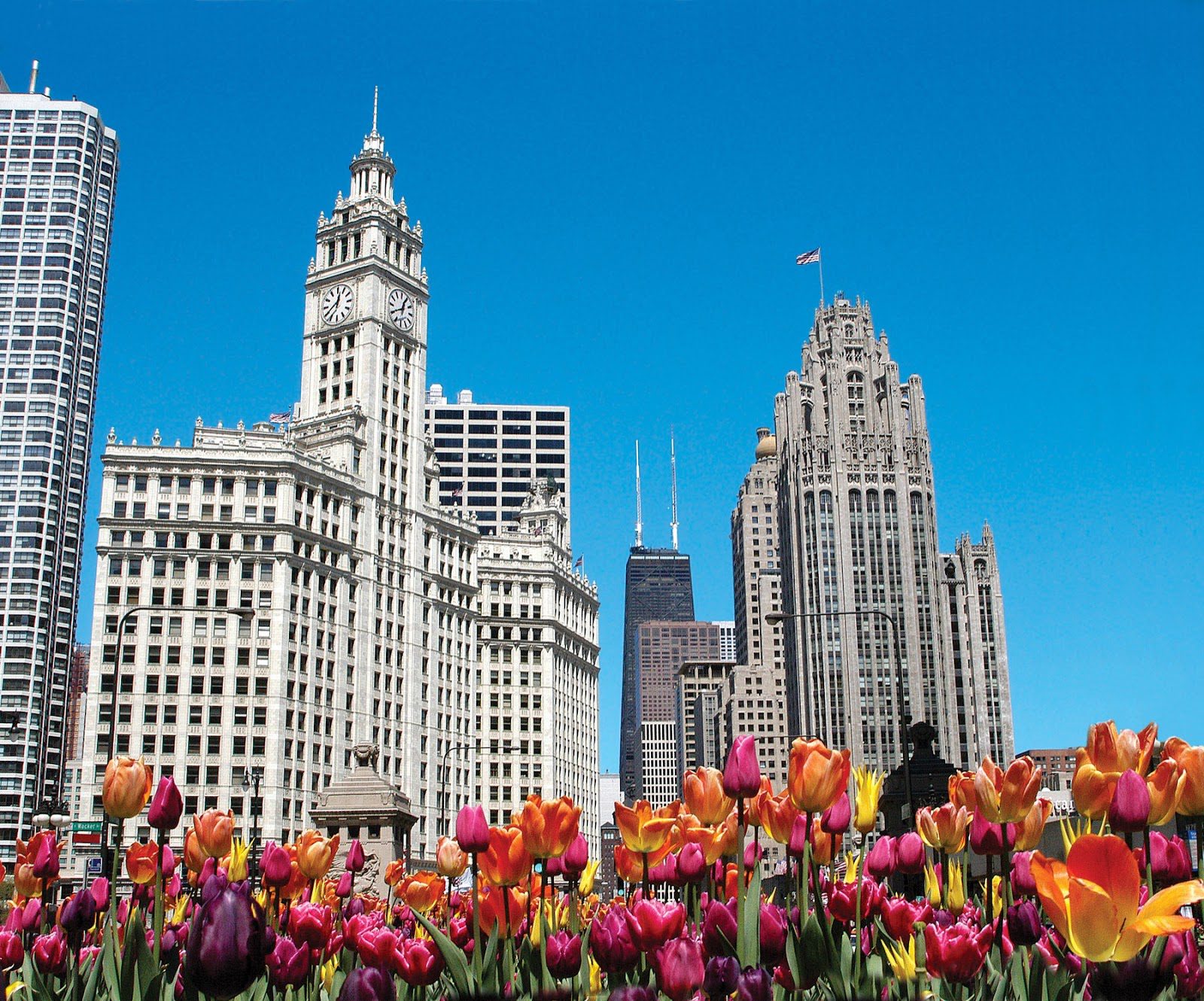
Located on the waterfront, the Wrigley Building draws inspiration from the Spanish Seville Cathedral, combined with French Renaissance details. The building consists of two towers of different heights, connected by pedestrian walkways, and clad in glazed terra cotta. The brilliant white facade was inspired by William Wrigley’s visit to the 1893 World’s Columbian Exposition in Chicago, known as the “White City.”
The building is one of the most recognizable on the Magnificent Mile, standing proudly on Michigan Avenue along the bank of the Chicago Riverwalk.
Tribune Tower
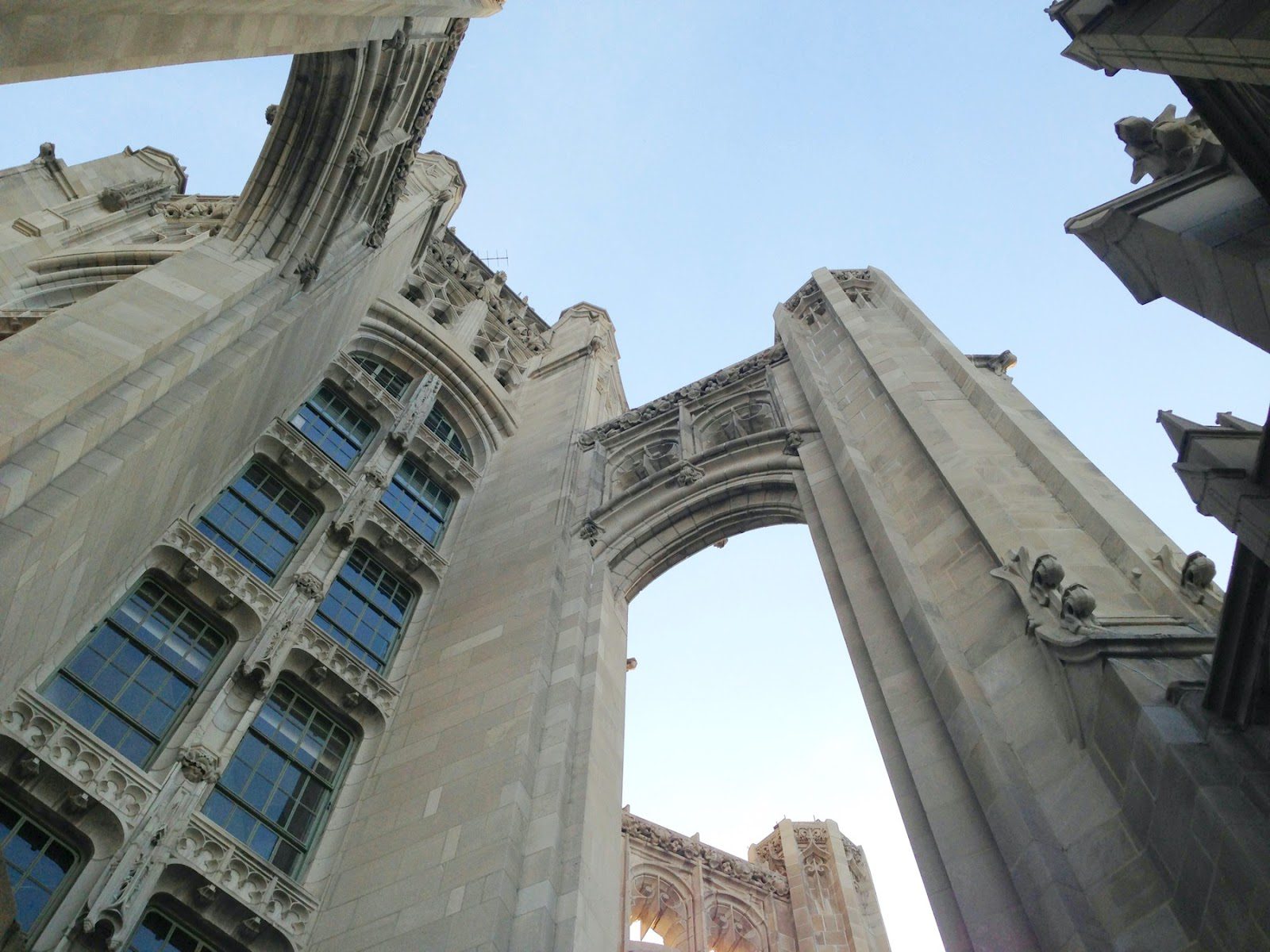
Tribune Tower, located across from the Wrigley Building, was erected as a result of a competition held by the Chicago Tribune newspaper for the world’s most beautiful building for its new headquarters. The New York firm of Hood and Howells beat out more than 250 competitors, presenting a Gothic Revival design featuring limestone walls, elegant buttresses, elaborately carved stonework, and Art Deco touches. The building’s crown was inspired by medieval European spires, such as the 13th-century Rouen Cathedral in France.
In line with a concept of borrowing from the past, the tower’s facade incorporates around 150 fragments of historical buildings and sites, such as the Winter Palace in Beijing, Westminster Abbey in London, the Great Pyramid of Giza, the Great Wall of China, and the Parthenon in Athens.
Willis Tower
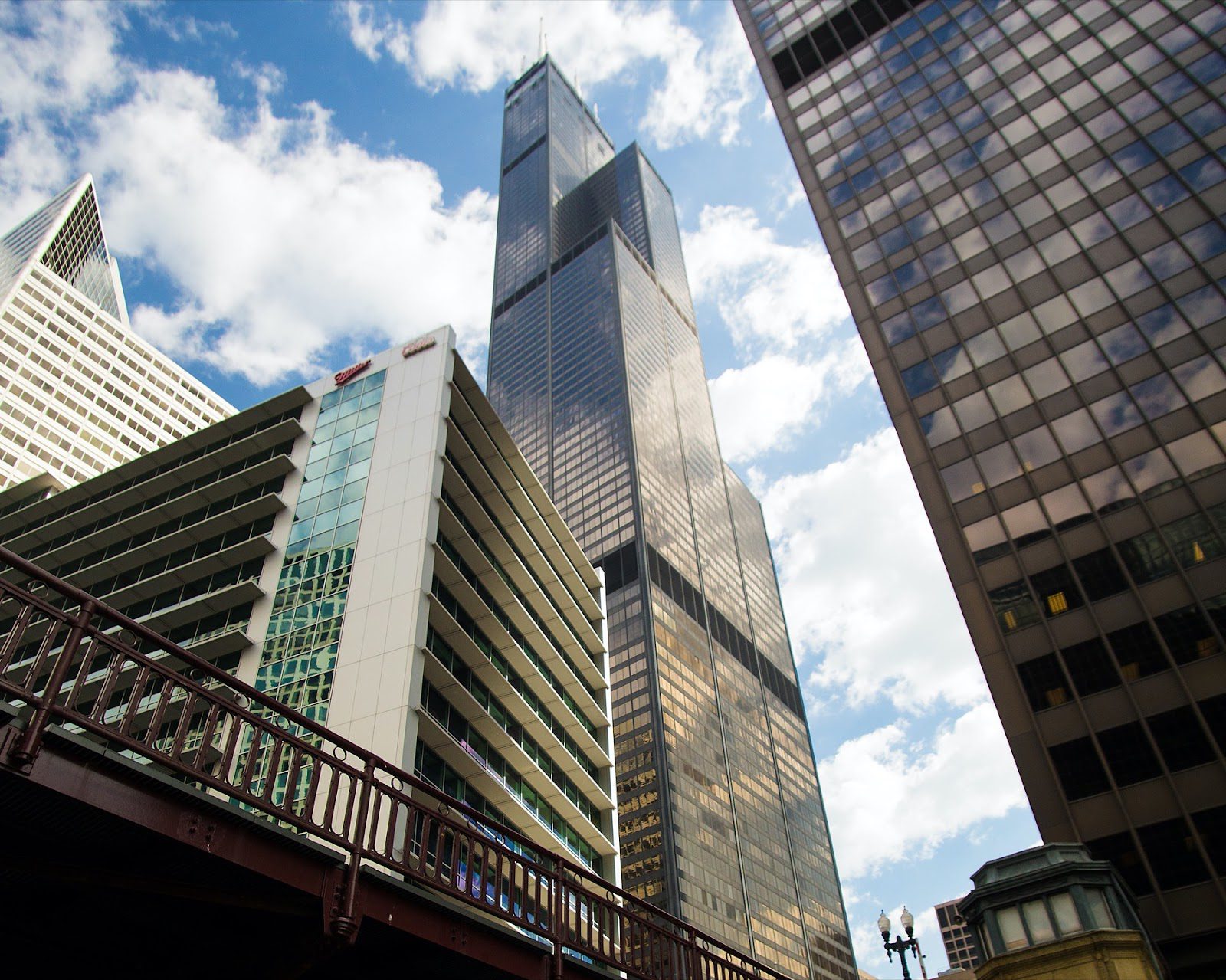
The 110-story skyscraper, standing 413 meters (1,353 feet) tall, is impressive in its scale and beauty. It is the tallest building in the city and the second tallest structure in the Western Hemisphere.
The building, known for its black and bronze facade, consists of 9 distinct tubes that reinforce the overall structure and reduce wind load. Construction of this innovative project was completed in 1973, ushering in a new era of skyscrapers.
When visiting Willis Tower, you can admire the stunning views from the ChiSkydeck Chicago observation deck, located on the building’s 103rd floor. Also located there is The Ledge—a series of all-glass bays that extend out from the building, giving visitors an unobstructed view of Chicago and the ground below. In addition, the new observation deck features museum-level interactive exhibits.
Robie House
Located in Hyde Park, this house is a hidden gem, one of the best-preserved examples of Frank Lloyd Wright’s signature style. Considered a masterpiece of modern architecture, the house is a UNESCO World Heritage site. Built in 1910, the building underwent comprehensive restoration, which helped reveal the architect Wright’s original vision.
The Mart
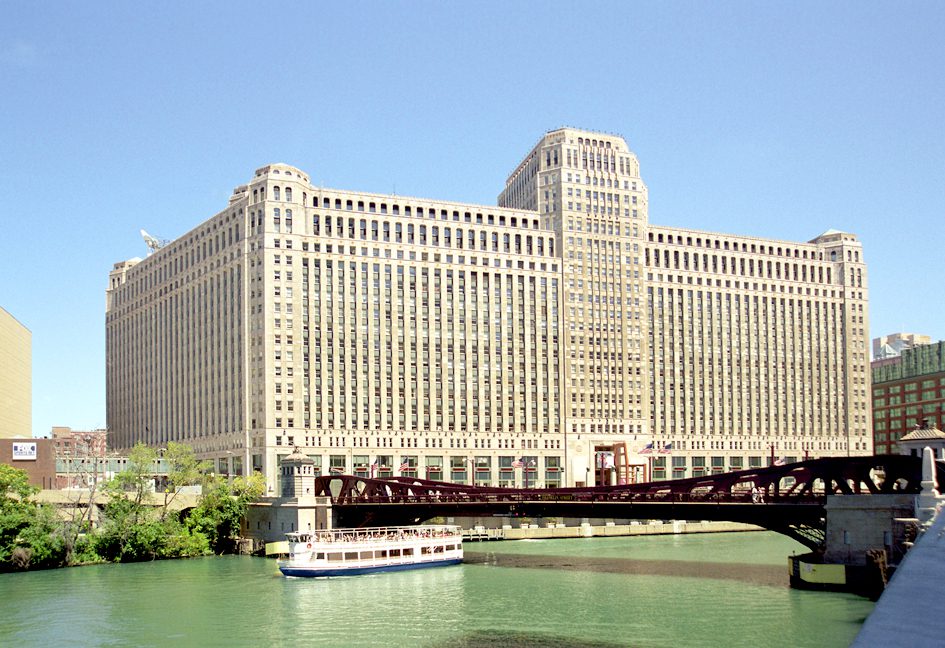
This building was originally called The Merchandise Mart. It spanned two city blocks and rose 25 stories above the Chicago River. Built in 1930, it was the largest building in the world at the time. With over 4 million square feet of space, this building is so massive that it previously had its own zip code.
Today, The Mart hosts Art on the MART—the world’s largest digital art projection. The first-of-its-kind exhibition features a carefully curated series of digital artworks projected onto 2.5 acres of the facade, nightly from April to December.
Marina City
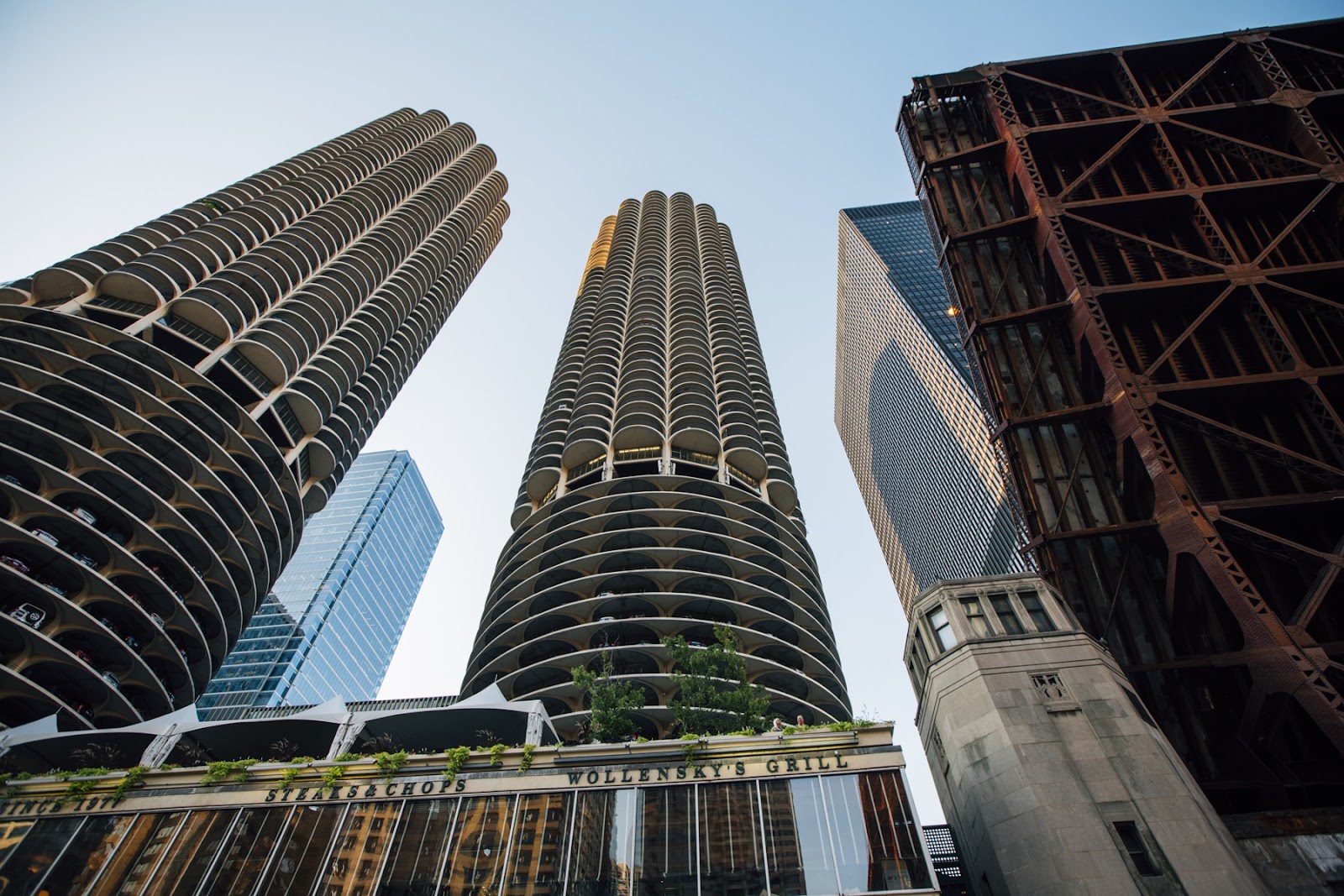
These towers frequently appear in pop culture—from films and TV shows to album covers. Their unique design was first unveiled in 1963. Located along the main branch of the Chicago River, this landmark features two cylindrical towers that strikingly resemble corncobs. Upon opening, it was the tallest residential building and the tallest concrete structure in the world. Additionally, Marina City offered amenities including a theater, gym, pool, ice rink, bowling alley, retail shops, and much more.
875 N. Michigan Ave Skyscraper
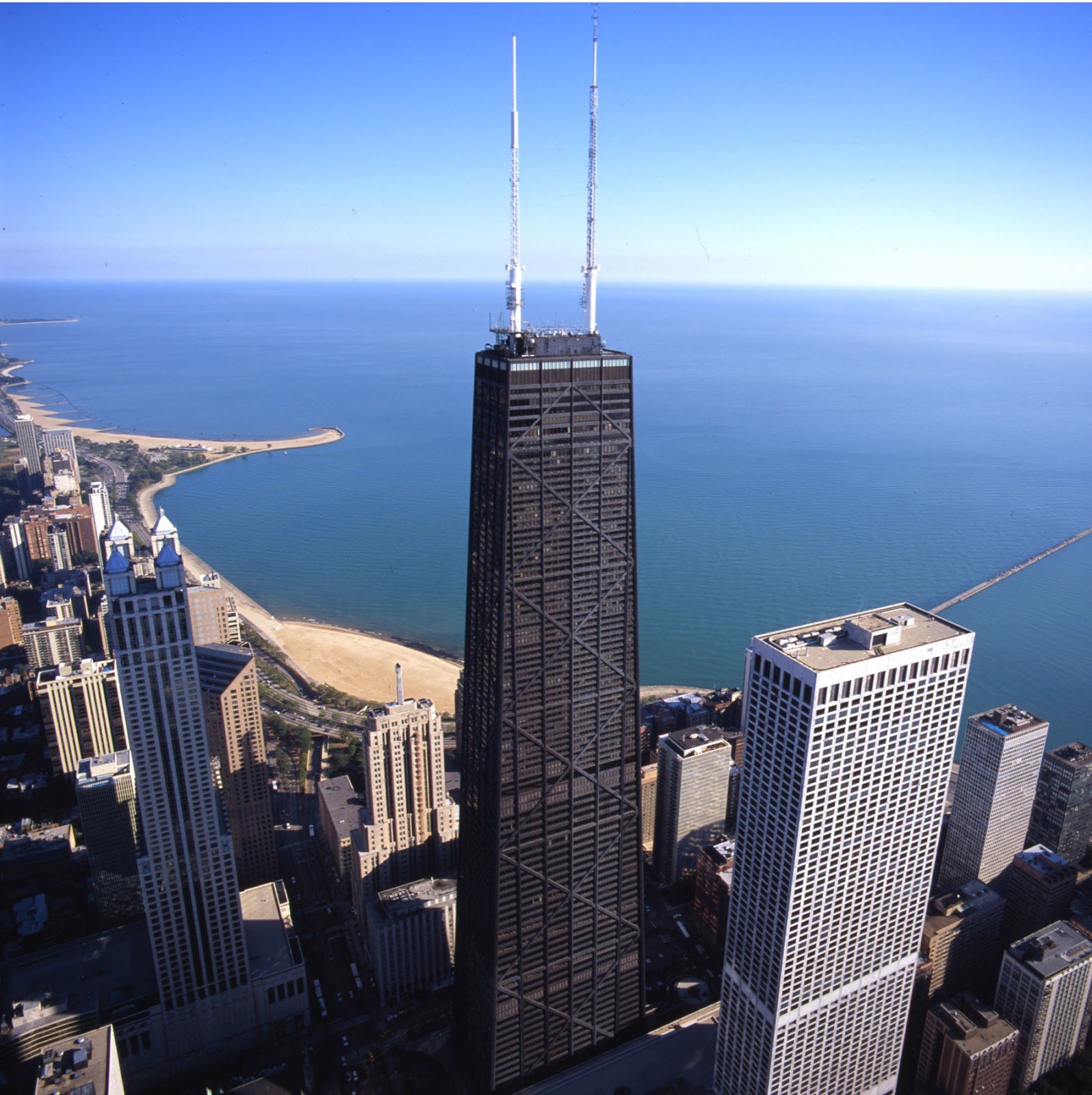
It is one of the most recognizable skyscrapers in the world and an iconic example of late 20th-century Chicago architecture. It was built as a result of pioneering engineering developments that opened up new possibilities for constructing buildings over 100 stories tall.
The building has a tapering shape, designed to create smaller residential floors on the upper levels, which allowed for more windows with excellent views of the city.
When visiting this building, be sure to head to the 360 CHICAGO observation deck, located 1,000 feet above the famous Magnificent Mile, to admire panoramic views of the Chicago skyline and Lake Michigan. If you dare, try TILT—an enclosed, moving platform that literally tips you out over Michigan Avenue from the 94th floor.
One Illinois Center
One Illinois Center is one of Ludwig Mies van der Rohe’s last projects, towering above the former railway station and the site of Fort Dearborn. It is an example of the International Style, characterized by an emphasis on volume, the use of glass planes rather than brick or stone, and a focus on material elegance and technical perfection. This landmark building houses the Chicago Architecture Center, a state-of-the-art museum featuring vibrant and unique exhibits that tell the story of the past, present, and future of architecture, with windows overlooking the adjacent Chicago Riverwalk.
Aqua Tower
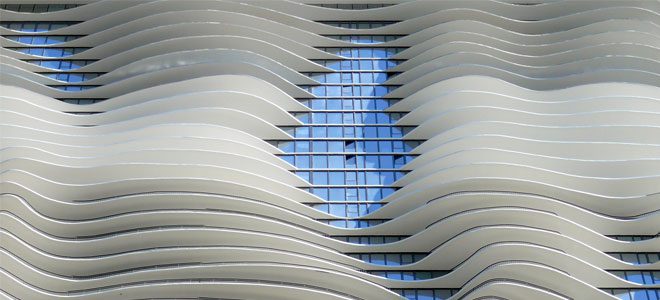
This mixed-use building includes the luxury Radisson Blu Aqua Hotel. The architecture of the 80-story tower is closely connected to the outside world: individual terraces (each unique in size and shape) give its exterior a wavy, fluid appearance. Aqua Tower was designed by architect Jeanne Gang.
As you can see, Chicago has a multitude of unique buildings with unparalleled architecture and fascinating history.