

The city of Chicago is known not only as a center of finance and trade but also as a place where art and culture thrive. Its picturesque parks and fountains are remarkable, providing cool relief in the neighborhoods and allowing people to relax beautifully during hot weather. Many of them are architectural masterpieces and fine works of art, as reported by chicago-future.com.
Crown Fountain
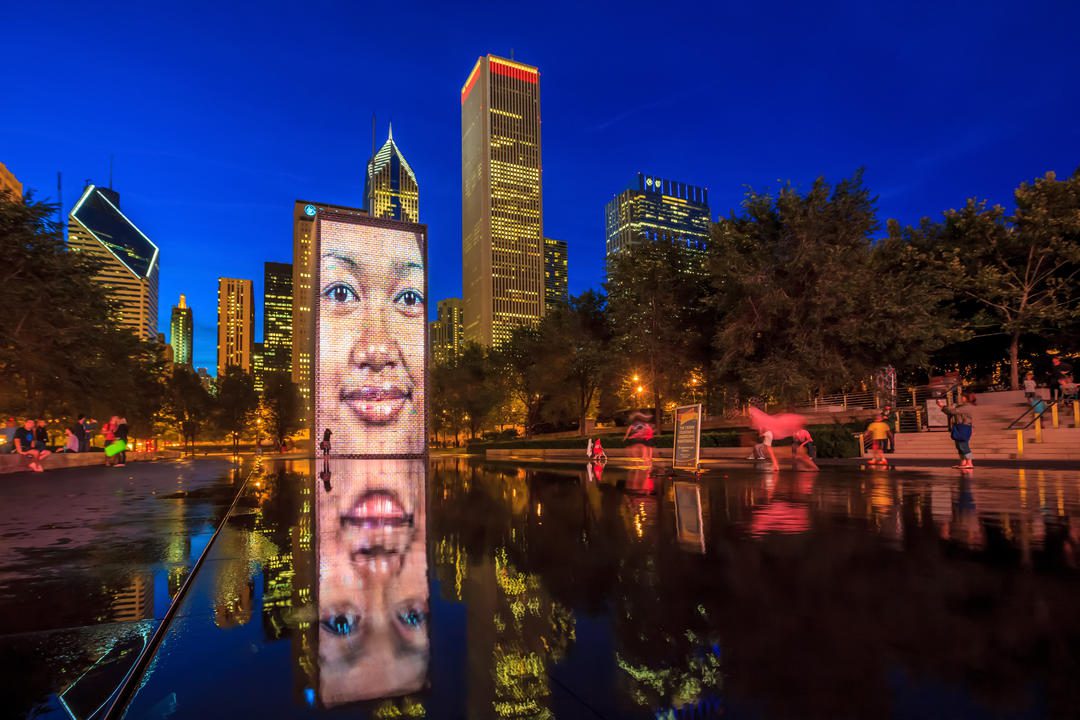
It is considered one of the most original fountains in the world—tall, vibrant, and dynamic, just like life in Chicago. The fountain is located in Millennium Park. This towering structure is an interactive art installation called “The Faces of Chicago,” created by artist Jaume Plensa. Portraits of local residents are projected onto large LED screens, and the movement of the water is synchronized with the projections. Crown Fountain invites viewers to interact with the water, making it a popular recreational spot in the spring and summer.
The fountain consists of two 50-foot translucent towers built from glass bricks, which are illuminated from within. Large LED video screens are situated behind the opposite faces of the two towers. A thin stream of water flows down their surfaces and onto the plaza. The area around the fountain is always filled with adults and children enjoying the crystal-clear water.
Buckingham Fountain
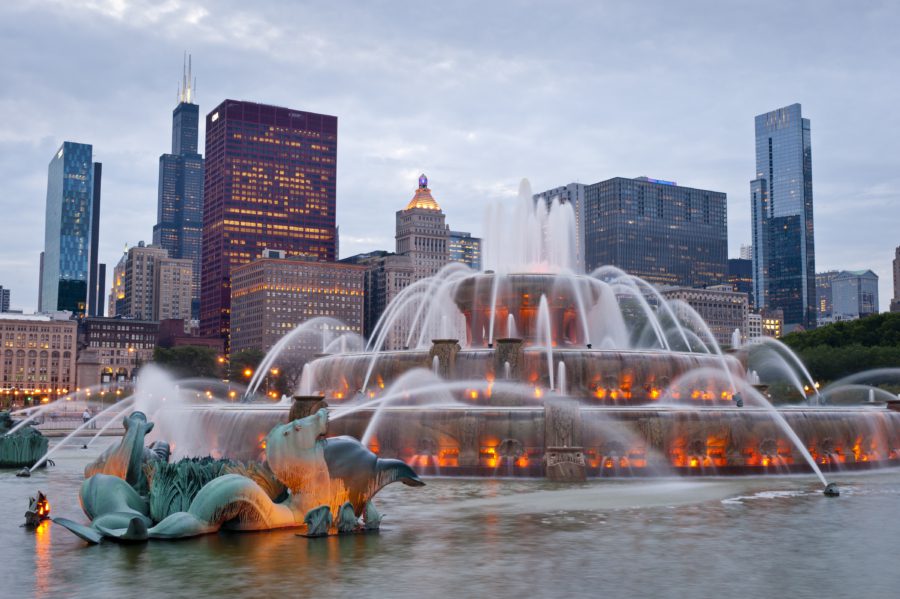
Buckingham Fountain was opened to the public back in 1927, commissioned by art collector Kate Buckingham in memory of her brother, Clarence. The Rococo-style architectural design was developed by Edward Bennett, and the fountain’s sculptures, including four groups of Art Deco-style sea horses representing the four states: Illinois, Wisconsin, Michigan, and Indiana, were created by French artist Marcel Loyau. The design is known to have been inspired by one of the richly adorned fountains at the Palace of Versailles in France, built for Louis XV. However, it is twice the size of the original.
Buckingham Fountain is located along Lake Michigan, is the jewel of Grant Park, and is one of the largest in the world. The water flow of Buckingham Fountain reaches 15,000 gallons per minute.
At dusk, it comes alive. After sunset, visitors are treated to an exciting light-and-music show. If you are there during the day, don’t miss the 20-minute water show, during which the fountain’s central jet shoots water 150 feet into the air. The fountain operates from May to October.
Rose Petal Fountain

This fountain is located in the picturesque Chicago Botanic Garden. It was designed by Perron Collaborative. It features 30 feet of cascading water with a base shaped like a single rose petal. Surrounded by blooming annuals, the fountain’s landscape undergoes many changes throughout the year. It is especially popular during the summer months when the flowers are in full bloom. Because the Rose Petal Fountain is set against a panoramic view of the Willamette Valley, it is an ideal location for photography.
Spirit of the Great Lakes Fountain
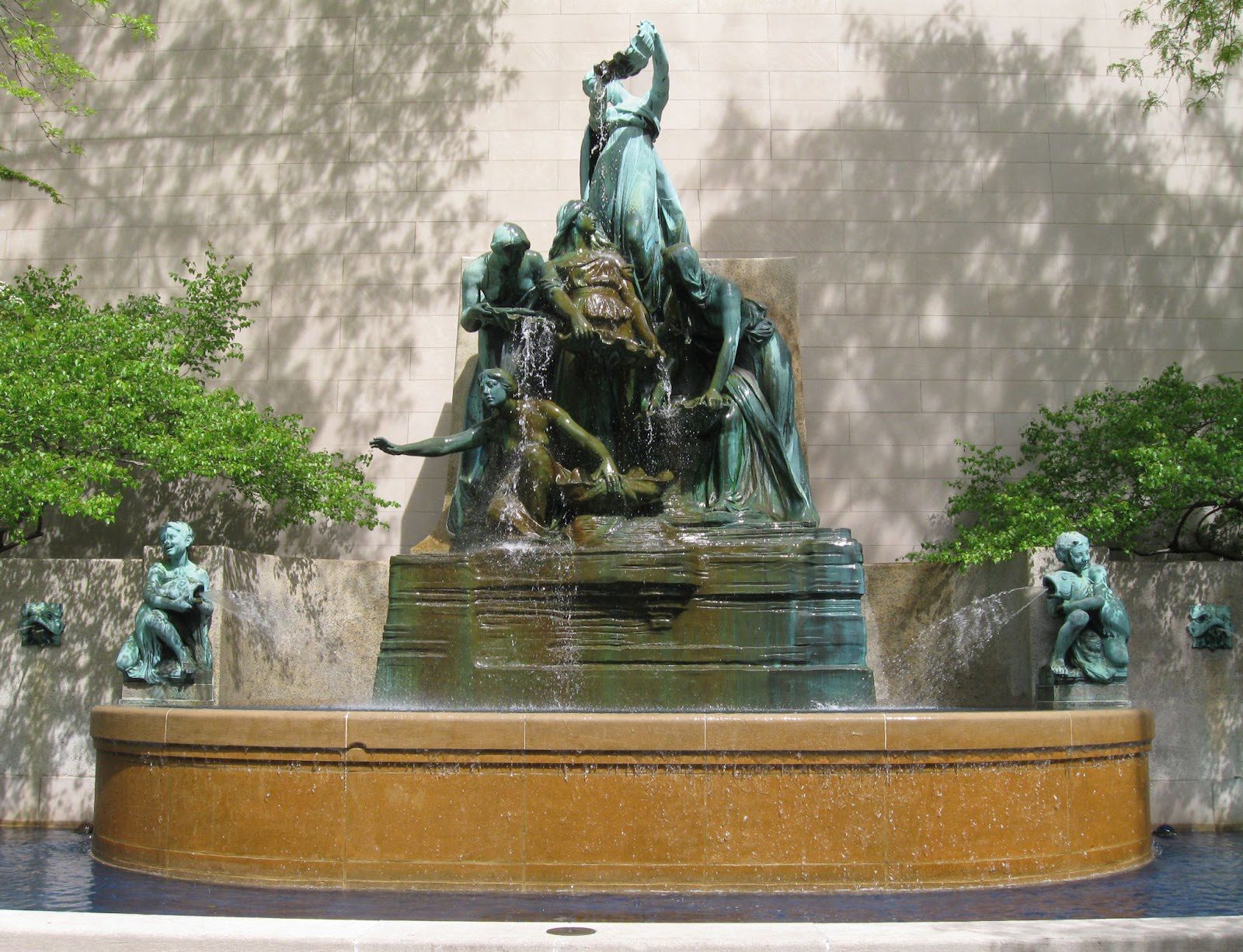
The story begins in the 1890s. That’s when famous Chicago sculptor Lorado Taft conceived the idea of creating a monumental fountain featuring nymphs and flowing water. In 1899, he commissioned his students to create a temporary plaster model of the fountain with nymphs on the lawn in front of the Art Institute of Chicago to gauge the public’s reaction. Chicagoans reacted to this artwork in different ways: some criticized the half-dressed female figures, while others reacted positively.
A few years later, Taft used the same theme when creating the Spirit of the Great Lakes Fountain. Five bronze nymphs, depicted in draped attire, represent each of America’s Great Lakes. Situated in the same configuration as the Great Lakes, the figures hold a shell and pour water into the next, mimicking the flow of the Midwest’s great freshwater system.
Completed in 1913, Taft’s fountain was the first commission of the Benjamin Ferguson Fund, which had been established a few years earlier to aid in placing sculptures and monuments along Chicago’s boulevards and in other public spaces. The fountain originally stood in front of the old south wall of the Art Institute, and in 1963, when the Institute completed the construction of the east wing, it was moved and installed against the west wall of the new wing.
Vietnam Veterans Fountain

The Vietnam Veterans Memorial was unveiled in 2005. The unique feature of this fountain is a rectangular pool whose stone walls are engraved with the names of those who died in the war. Thus, it serves as a worthy tribute to the fallen soldiers. Visitors can also learn more about the war through inscriptions and other details. The fountain was designed by Gary Tillery—a Vietnam veteran.
Fountain of the Tritons
This fountain is located in the South Stanley McCormick Memorial Court of the Art Institute of Chicago. It was designed by Carl Milles and opened in 1931. Surrounded by magnificent Dutch elms, the fountain was conceived as a tribute to John Ericsson, the creator of the first ironclad ship used in the Civil War, and other Swedish Americans.
Fountain Girl
This charming bronze fountain appears unremarkable at first glance, but it actually has a very interesting history. It was designed by George Wade in 1893 in an attempt to encourage park visitors to drink fresh water instead of alcohol. Unfortunately, this fountain was stolen from Lincoln Park over six decades ago. Its whereabouts remain unknown to this day. However, in 2013, a replica was installed thanks to the efforts of private sponsors and local authorities.
Drexel Fountain
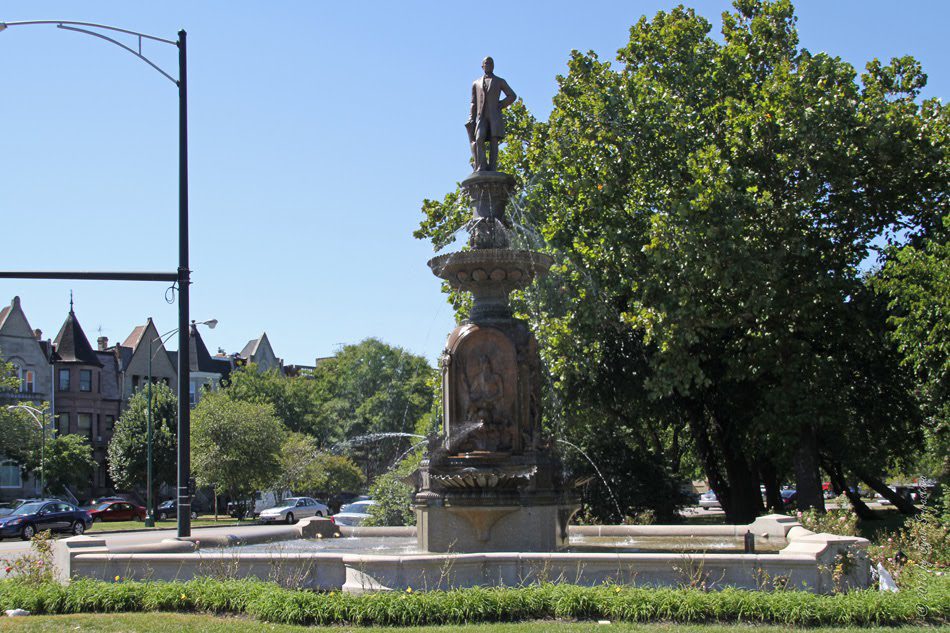
Drexel Fountain is the oldest public sculpture in Chicago, dedicated to the memory of Francis Drexel, an Austrian banker and real estate speculator who donated funds to the city of Chicago for the construction of what is now Drexel Avenue. Surrounded by lush foliage, the fountain features Neptune riding a dolphin and other symbols of water bodies. It is particularly beautiful at night when a light and water show begins against the Chicago skyline.
Wicker Park Fountain
This fountain was the main centerpiece of the park in the 1890s. It was designed and installed by the J.L. Mott Ironworks company. A distinctive feature of this two-tiered structure is the gigantic faces from which water flows, leading the fountain to be nicknamed the “Gargoyle Fountain.”
Eli Bates Fountain
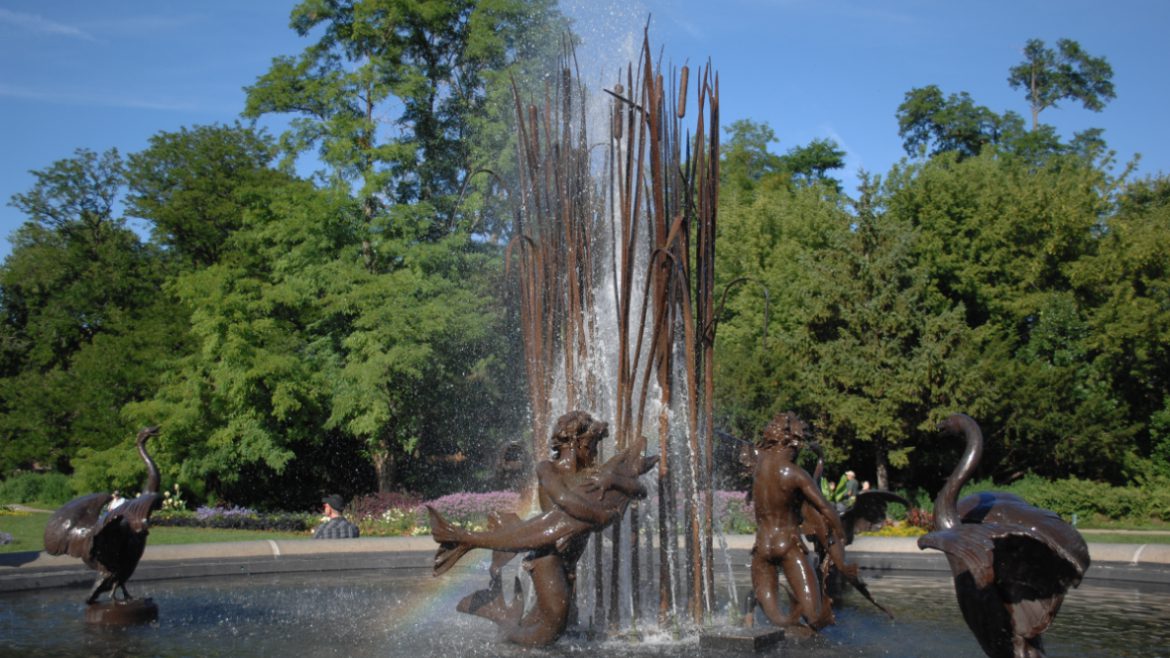
Located in Lincoln Park, the Eli Bates Fountain is considered the oldest fountain in the city. Its construction was funded by wealthy businessman Eli Bates. Completed in 1887 as the centerpiece of Lincoln Park’s formal garden, this fountain is adorned with a flock of whimsical birds that shoot water from their beaks.
McCormick Fountain
It is located in Washington Park, across from the beautiful Newberry Library, in the center of the square that most locals call the Bughouse. The fountain was erected in 1906 and was reconstructed in the Victorian style in 1999. Like many things in Chicago, it was named after Colonel Robert McCormick.
Analyzing all of the above, one can conclude that Chicago is a very beautiful city with a large number of fountains where you can relax in the summer heat and take great photos.