

Chicago is a very beautiful and engaging city, home to a large number of the country’s biggest museums. They house unique collections that you won’t see anywhere else. Whether you are passionate about art or dedicated to science, these museums are definitely worth visiting when you are in Chicago. We’ll discuss them in more detail on chicago-future.com.
Art Institute of Chicago
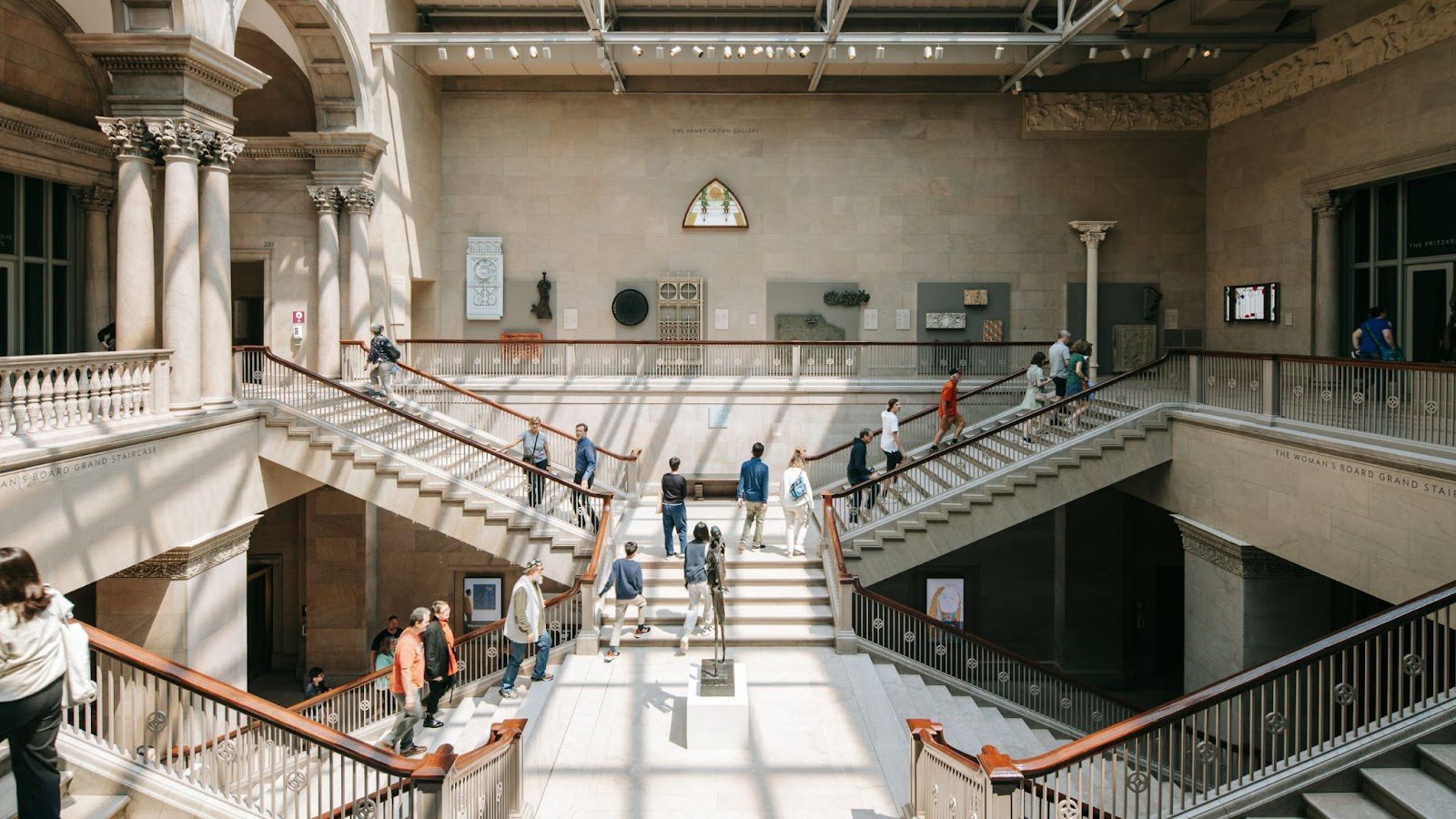
This largest art museum in the country has been recognized as one of the best in the world. It holds one of the largest collections of Impressionist and Post-Impressionist works outside the Louvre in Paris. Here you can see famous paintings, including Picasso’s “The Old Guitarist,” Edward Hopper’s “Nighthawks,” and others. The museum was designed in the Beaux Arts style. Its main walls are clad in limestone, and the building’s two-story central portico is framed by symmetrical wings. The ornamentation shows the influence of Ancient Greece and Rome, including Corinthian columns, a frieze copied from the Parthenon, a triangular pediment with acroteria, and statues of goddesses on the north and south facades. By visiting this museum, you can definitely not only gain new knowledge but also take great photographs against the backdrop of the superb architecture.
Adler Planetarium and Astronomy Museum
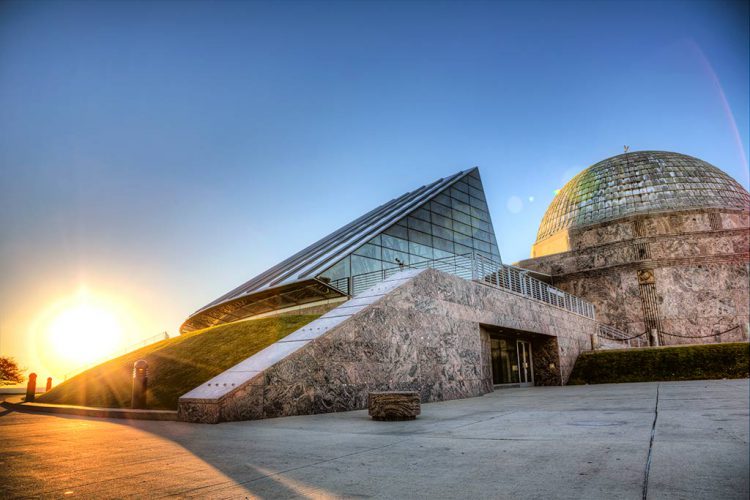
By visiting this place, you can explore the history of the universe, view ancient telescopes, and marvel at the stars. The Adler Planetarium is part of Chicago’s Museum Campus alongside the Field Museum and the Shedd Aquarium. It is considered the oldest planetarium in the Western Hemisphere. Unique programs, adult after-hours series, and amazing shows are just some of what makes the planetarium one of Chicago’s main attractions.
The planetarium was built in 1930. As part of the Museum Campus, it was intended to maintain architectural significance and assert itself as a world-class astronomy museum celebrating the magic of the sky. The planetarium is a twelve-sided structure clad in rainbow granite, an Art Deco masterpiece by architect Ernest Grunsfeld Jr. In 1998, the 64,000 sq ft Sky Pavilion was constructed, unifying the exhibition spaces and including a new planetarium theater and a 200-seat restaurant.
Driehaus Museum
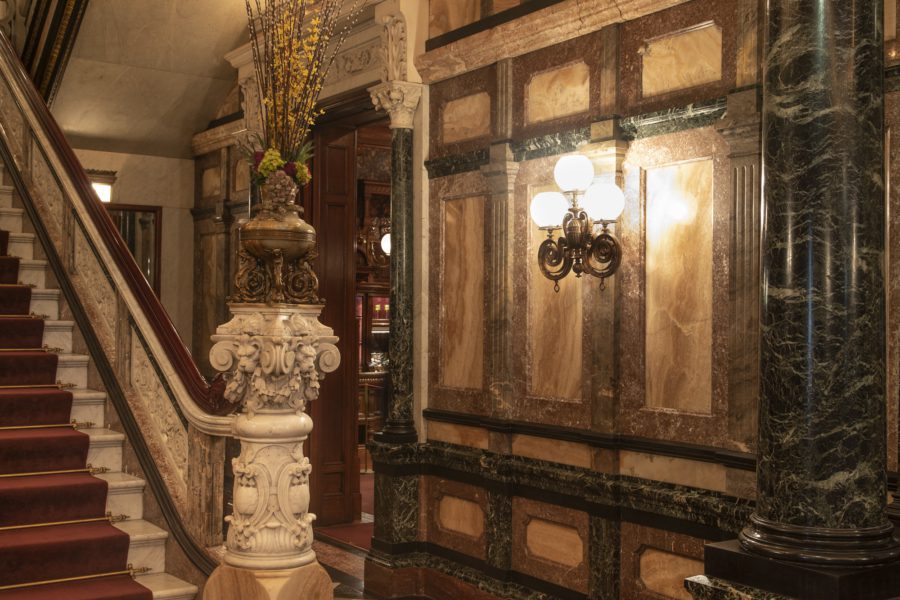
As soon as you cross the threshold of this museum, you will be amazed by the gleaming marble floors, majestic staircases, significant fireplaces, antique furniture, and incredible decorative arts.
The museum is housed in the former Nickerson Mansion, which became known as the Marble Palace. Importantly, it reflects the art, architecture, and design of the late 19th and early 20th centuries. Rotating exhibitions and special events are held here throughout the year.
Field Museum
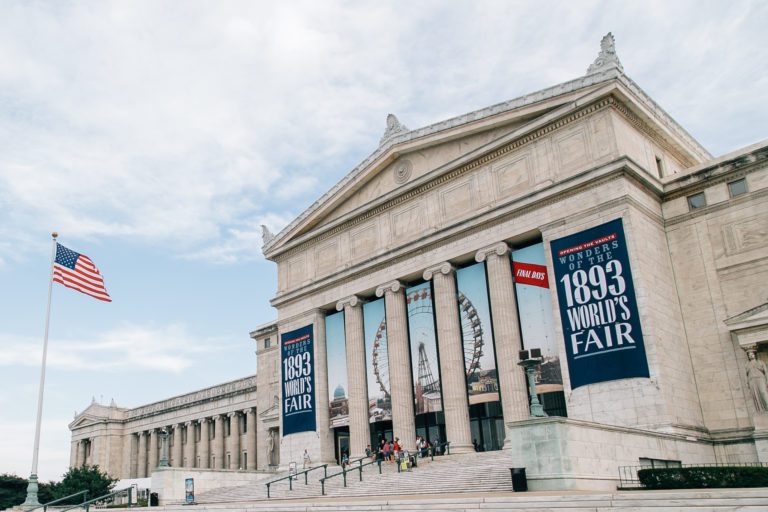
In 1905, the Field Museum needed a new home. Its original building, the Palace of Fine Arts, was rapidly deteriorating. The design for a new building was drawn up in 1909. Construction began in 1915 and cost the city $7,000,000. The building was finished with 350,000 cubic feet of white Georgia marble and occupies 20 acres of space.
Upon visiting the museum, be sure to take a selfie with the largest creature that ever walked the Earth—Máximo the Titanosaur—who greets you at the front doors. Wander through the galleries and see man-eating tigers, mummified pharaohs, rare precious gems, and giant beetles. You can also participate in the “Dozin’ With the Dinos” program, where families and groups with children aged 6 to 12 visit the museum after the lights go out.
Shedd Aquarium
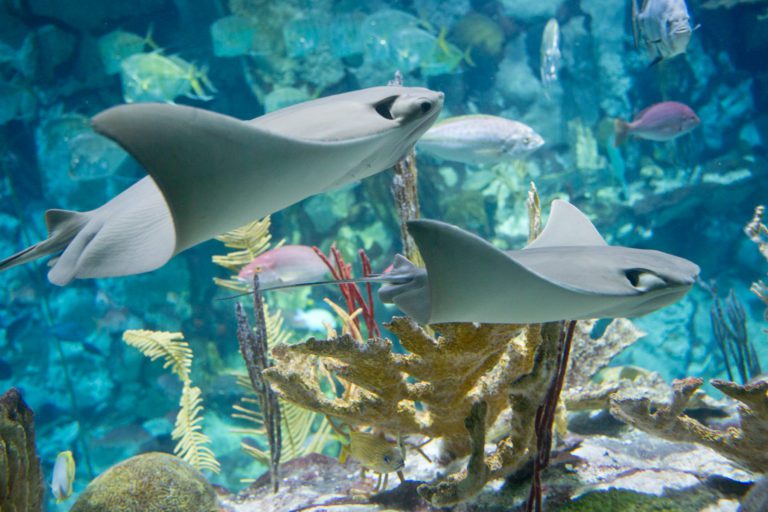
At this unique location, you can watch sharks being fed, sea otters playing, stingrays gliding, and dolphins performing. Although the aquarium is not a museum, it is part of Chicago’s Museum Campus. It offers picturesque views of Lake Michigan. You can embark on an amazing route by taking a boat ride that runs between the Shedd Aquarium and Navy Pier.
Museum of Contemporary Art (MCA)
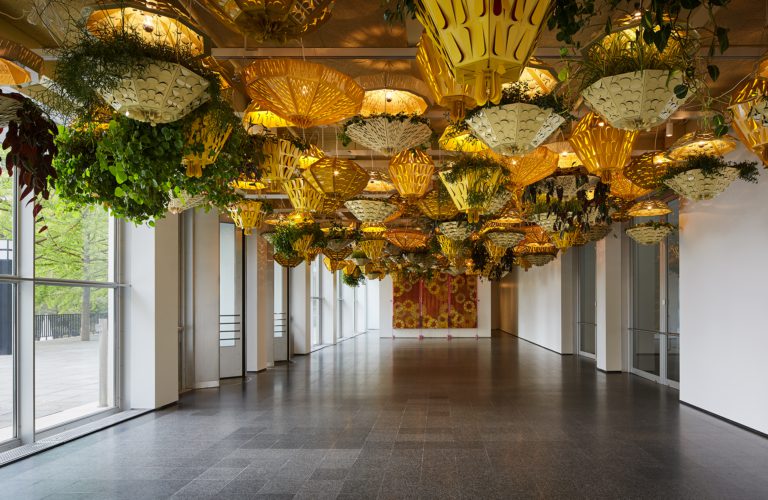
The MCA is located just one block east of the historic Water Tower Place on the Magnificent Mile. The museum’s collection spans over 2,500 rotating works, covering various media and movements from the 1920s to the present day. In the summer, you can enjoy free live jazz on the terrace every Tuesday in the museum’s gardens, and visitors are welcomed by farmers’ markets near the museum’s monumental stairs in the morning. Check out the MCA stage, which hosts provocative performances throughout the year.
In 1991, Josef Paul Kleihues designed a new building for the museum; it was his first commission in the U.S. The museum is situated between Michigan Avenue and Lake Michigan. The most iconic feature of the museum’s facade is the main staircase, built from premium granite. Crowded with locals and guests in the summer, the main entrance is adorned with original propylaea. Kleihues’ design concentrates most of the exhibition space in the building’s center, the heart of the museum. He wanted the museum’s 45,000 square feet of galleries to enrich the visitors’ experience of the art. The flexible gallery design is astonishing: they are divided by temporary partitions and can thus be adapted for each exhibition. Thus, Kleihues’ versatile design pays homage to the traditions of modern Chicago architecture, conveying a clarity of structure and a spirit of innovation that successfully meets the museum’s evolving mission.
Chicago Architecture Center (CAC)
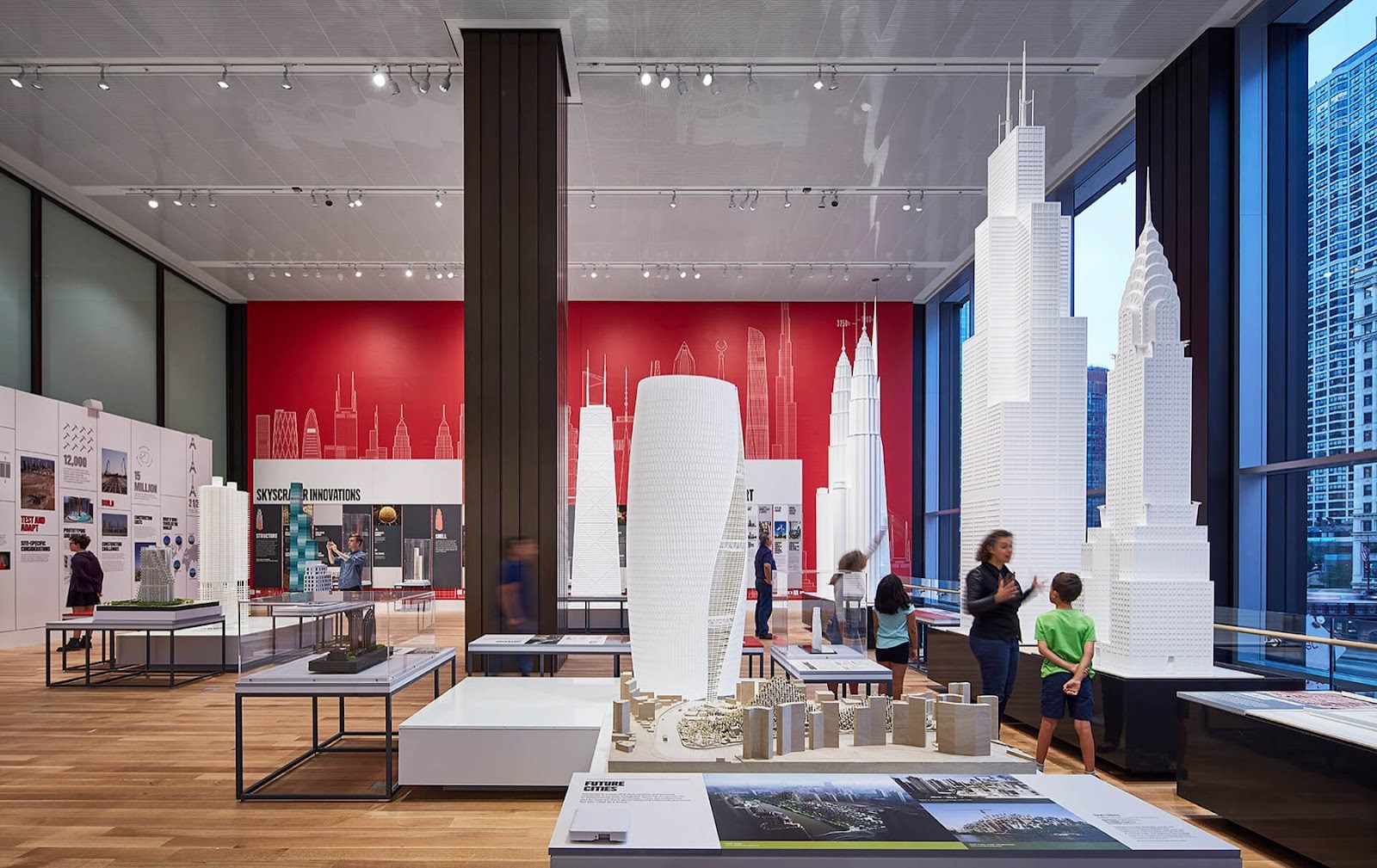
There is no better location for the Chicago Architecture Center than Ludwig Mies van der Rohe’s legendary skyscraper, overlooking the Chicago Riverwalk. This center offers over 85 walking, bus, and boat tours, including the river cruise aboard the First Lady of Chicago. However, before embarking on a journey, be sure to explore the center’s exhibits, including the Skyscraper Gallery with scaled models of the world’s tallest buildings and the Chicago city model, which recreates the Great Chicago Fire and other significant moments in the city’s history.
American Writers Museum
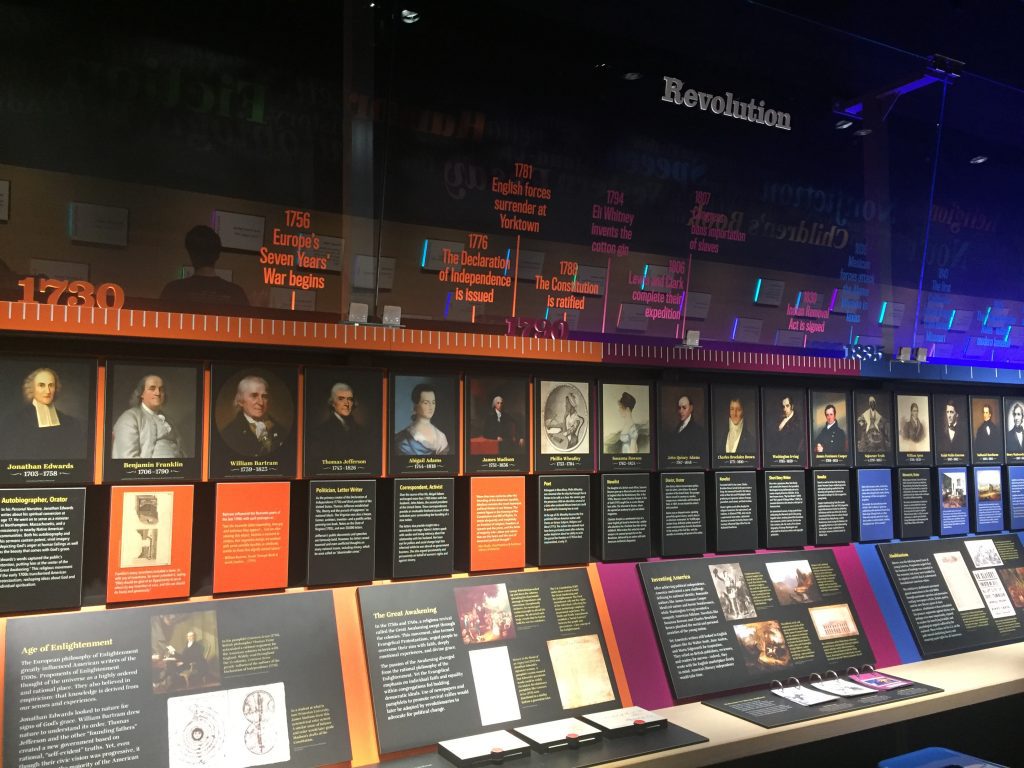
Everything in this museum is written on the wall—literally. Located just a few minutes’ walk from Millennium Park, it is the first museum of its kind in the country, with exhibits exploring the history of American writing in all its forms, including fiction, poetry, journalism, and much more. Among the highlights is a whimsical mural by Paul Zelinsky, depicting 42 reading squirrels, which reflects milestones in American children’s literature.
Money Museum at the Federal Reserve Bank of Chicago
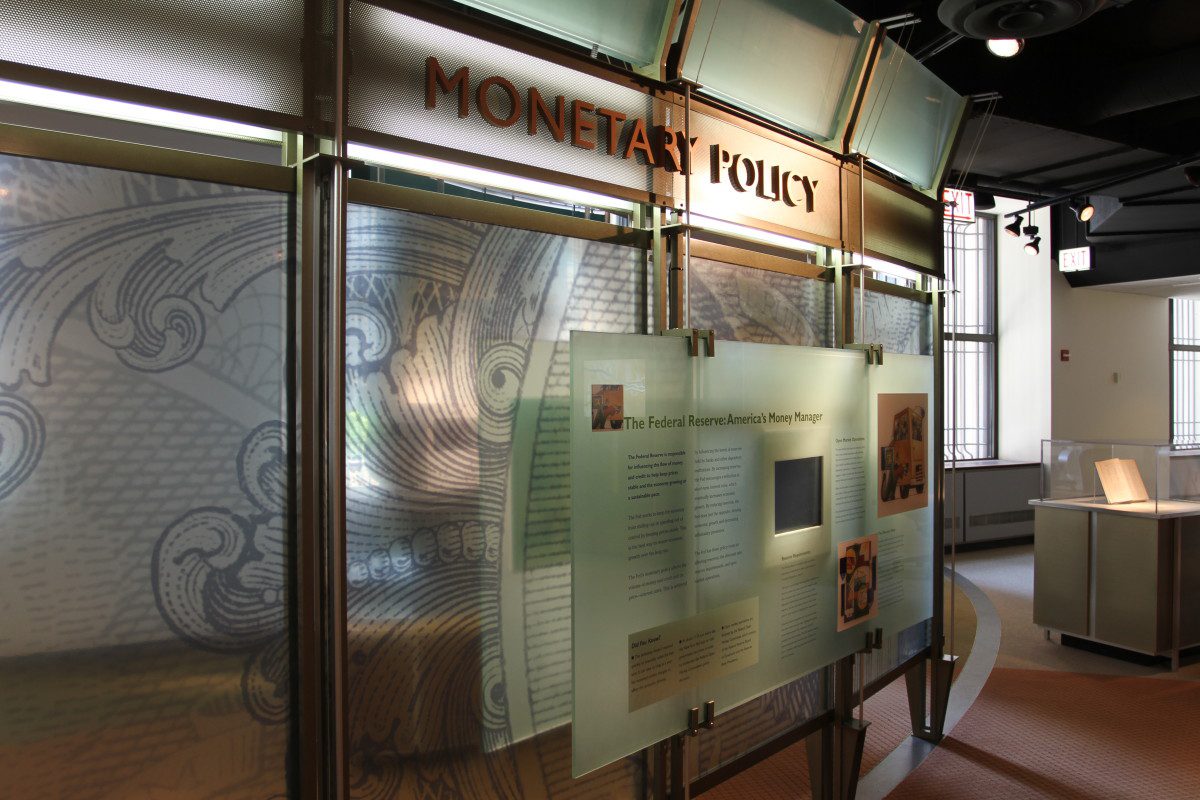
Admission to the museum is free. Its collection features historical currency and artifacts, so if you’ve always wanted to know what money looked like in colonial times, this is the place for you. It also features games and simulators, allowing you to learn how the Federal Reserve System works and try your hand at creating money.
Museum of Contemporary Photography (MoCP)
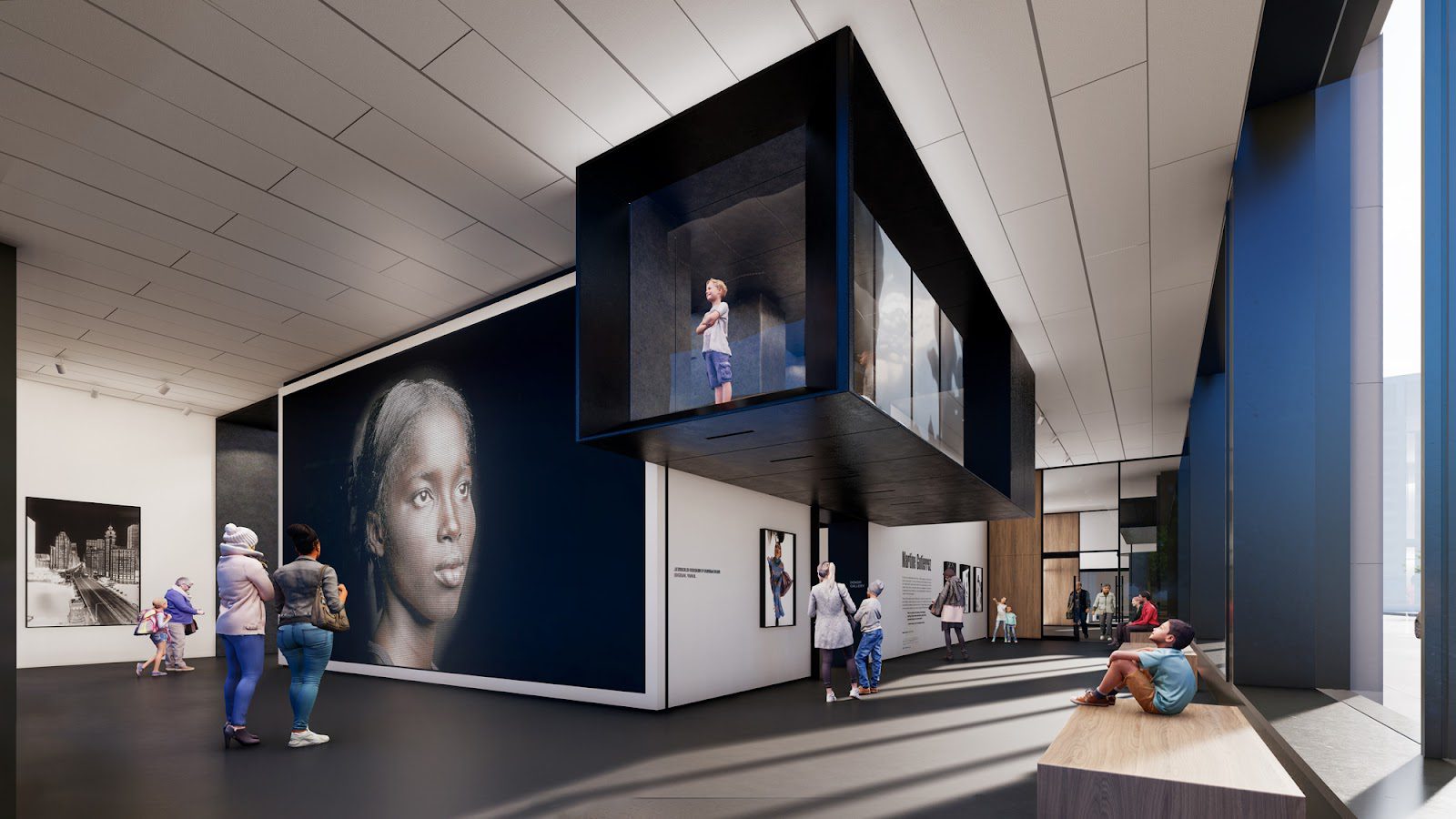
This museum’s permanent collection is a hidden gem. Vintage photographs, contemporary works, a large Dorothea Lange collection, and much more. But the centerpiece is the “Midwest Photographers Project,” where you can explore the portfolios of both new and established masters of photography. You can be sure that a visit to this museum will bring many positive emotions and a great mood.
As you can see, Chicago has a multitude of museums that deserve the attention of both residents and visitors.