

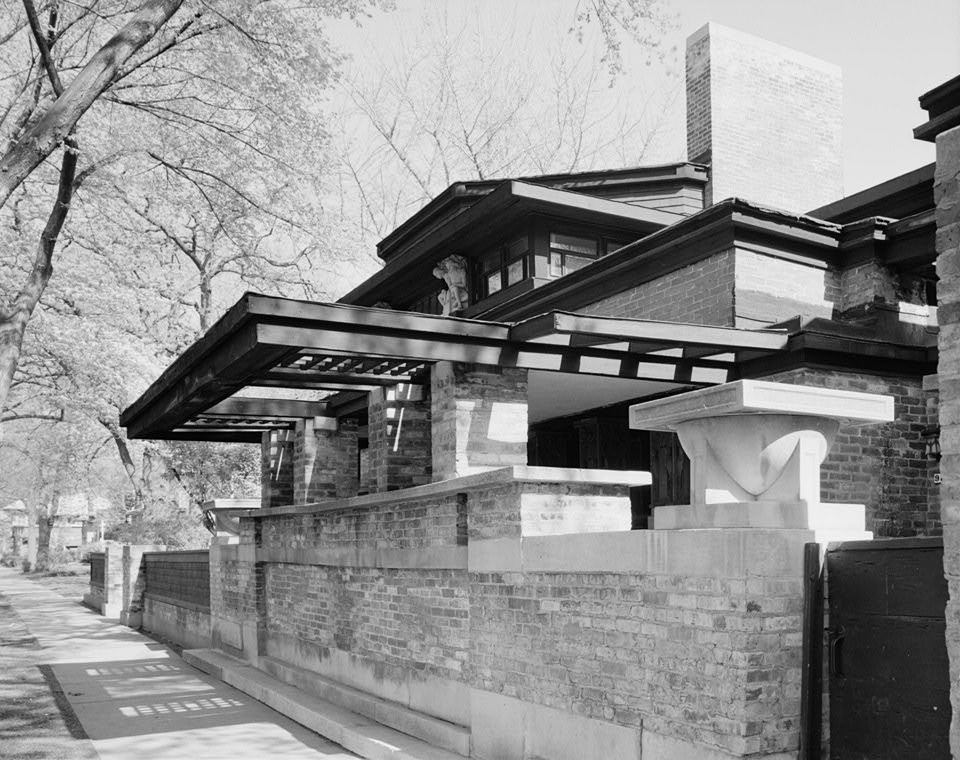
The Home and Studio was a perpetual, evolving project for Frank Lloyd Wright, one he actively developed and expanded over many years. He used it as a testing ground for his ideas, details, and architectural philosophy. The structure is a combination of four buildings constructed between 1899 and 1911, as reported by chicago-future.com.
Purchasing the Land
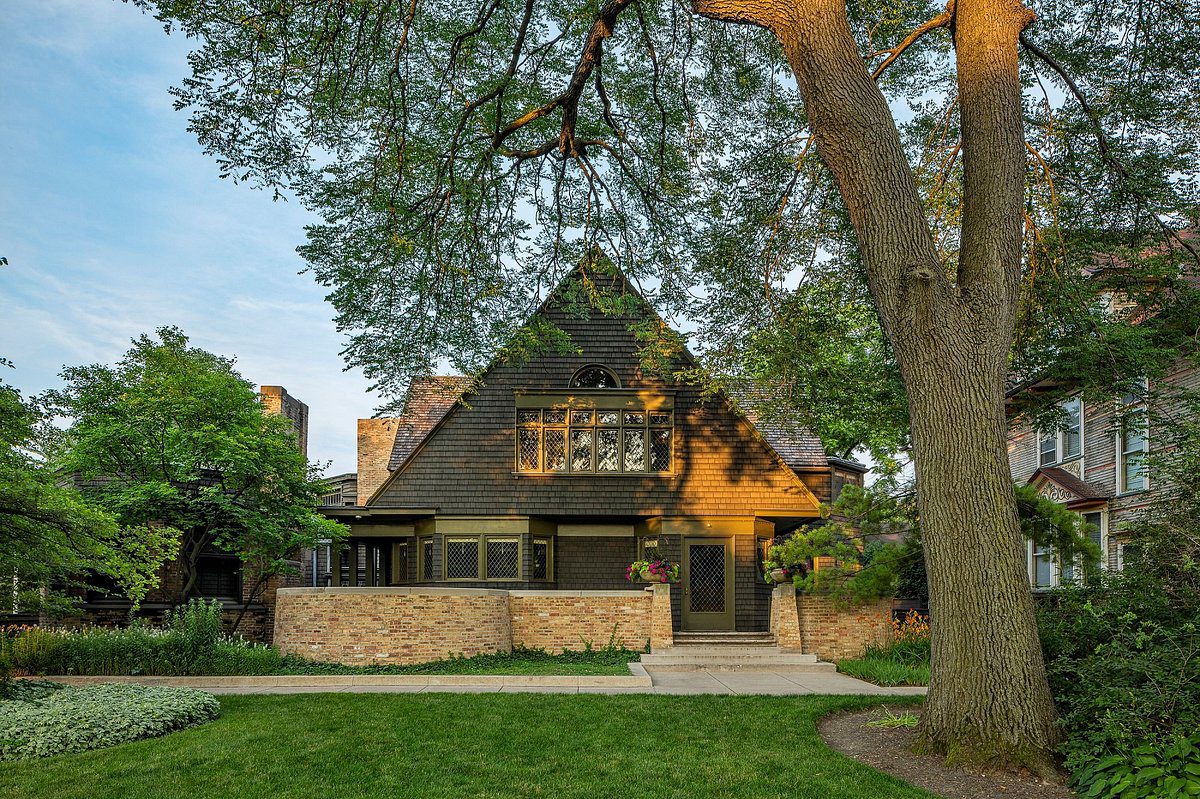
In 1889, Frank Lloyd Wright and his future wife, Catherine, purchased a small parcel of land in Oak Park. The money was loaned to him by his employer, Louis Sullivan. At the time, Wright was a young, relatively unknown architect looking to advance his career and build a family.
Wright designed a small, two-story home in the Shingle Style, featuring a typical gabled, shingled roof and a simple layout. In its original form, the house was modest. Over time, Frank installed eclectic decorations, details, and artwork, including Greek sculptures, Japanese paintings, and Chinese furniture.
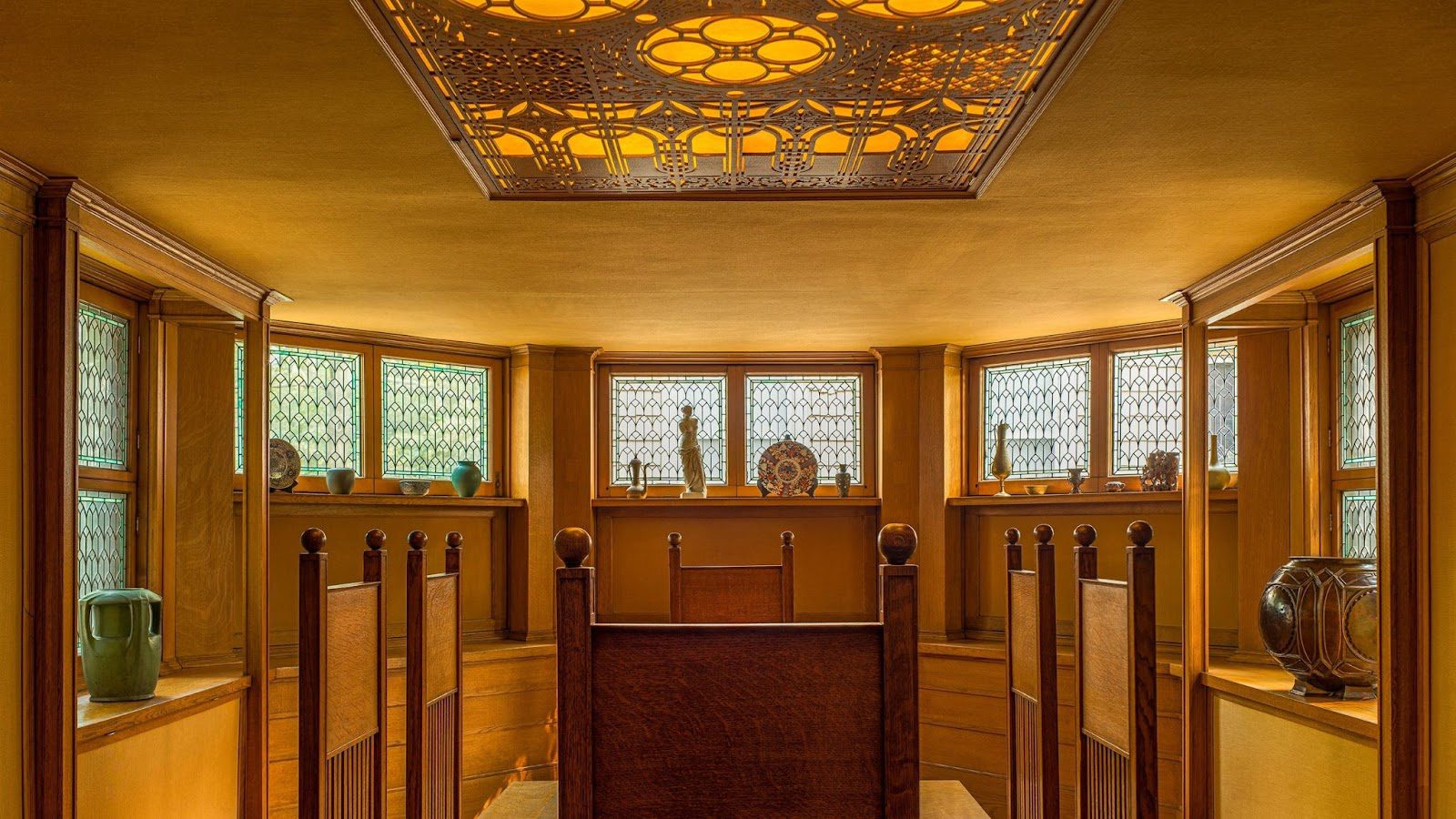
The house featured stained glass windows, leaded glass skylights, geometric patterns on the walls and ceilings, decorative fireplaces with brightly colored tiles, and custom-made furniture specifically designed for each room, including chairs with curved backs inspired by Japanese aesthetics, and many other innovative elements rare for the time. In the design, he also used natural materials, such as brickwork from nearby lake bluffs and limestone quarried near the Garfield Park Conservatory in Chicago.
To pay for the construction and support his growing family, Frank took on side jobs unrelated to his full-time employment at the “Adler and Sullivan” architectural firm. Wright soon opened a small office in Chicago, where he worked for the next few years.
Designing the Kitchen and Playroom
In 1885, as the family expanded, Wright decided he needed to renovate the house. He added a wing with a kitchen and servant’s quarters on the first floor. On the second floor, he planned to create a playroom for his six children, which became a space where he would later experiment with various architectural ideas. The children’s room turned out perfectly. It had a high, vaulted ceiling with low windows set about 2 feet from the floor. The room also featured a built-in piano, a mezzanine, and a library area with a large fireplace on the wall. Above the fireplace hung a large fresco depicting a fisherman and a genie from “Arabian Nights,” painted by Charles Corwin, a local Chicago artist. A massive skylight allowed natural light to flood the room. Wright took a strong interest in the development of his sons and daughters and designed the room to be convenient and comfortable. He believed that space had a profound influence on children’s development and imagination.
A New Studio Addition
With each passing year, Frank expanded his architectural practice, which led him to decide to add a studio to his home. Notably, its architecture differed markedly from the house. He no longer used a gabled roof. The new addition featured a flat roof in rectangular and octagonal shapes. The materials used during its construction were similar to those of the house, but the detailing and facade finishes were distinctly different.
The studio addition housed a driveway, a loggia, a reception room, a drafting room, a central office, and a library. The drafting room was two stories high with a large balcony overlooking the editorial area below. Office staff worked at drafting tables and stools designed by Wright, in rooms decorated with eclectic displays of artwork and artifacts.
As in many of Wright’s other projects, the entrance process is dynamic and highly memorable. The entrance to the studio is located on Chicago Avenue and is accessed via a raised terrace. A row of columns on the terrace led into a low-ceilinged loggia. At first glance, the columns might appear to be cast iron, but they are not. They are made of plaster and painted using a special technique. From the loggia, one could enter the studio vestibule.
Once inside the building, you could go left into the studio or right into the library. The vestibule is striking in its details, lighting, and wooden trim. Overall, the interior is beautiful and full of unusual touches.
The main feature of the studio was the drafting room. A series of chains supported a balcony from above, creating a workspace for artisans and sculptors. On the balcony, the plan transitions into an octagonal shape and is surrounded by windows that provide the second floor with natural light. Significantly, many talented young professionals passed through Frank’s studio. During the studio’s operation in Oak Park, Wright designed about 125 buildings.
In the fall of 1909, Frank left America for Europe, where he focused on publishing a monograph about his knowledge and projects, most of which he had designed in the Oak Park studio.
A year later, Frank returned to Chicago, where he began developing the design for a new home and studio, “Taliesin,” which he would later build on the green hills of Spring Green, Wisconsin.
Wright’s Oak Park studio closed in 1910, although he occasionally returned to visit his wife, Catherine, who remained in the house with their younger children until 1918. In 1974, the Frank Lloyd Wright Foundation decided to restore the house. The restoration took 30 years and cost nearly $3.5 million. Over the years, the Home and Studio remains a popular tourist destination, gladly visited by residents and tourists alike.