

In the heart of Chicago lies one of the most magnificent structures of its time, a building that combined a theater, hotel, and office center. This building became a symbol of the city’s aspiration for cultural revival, technical progress, and social openness. It not only changed America’s architectural landscape but also gave local residents a space where high art became accessible to all. Since its opening in 1889, the Auditorium Theatre has been a hub of music, opera, theater, and political life. It was the birthplace of the Chicago Symphony Orchestra and a stage for world-renowned stars. Read more at chicago-future.
The Birth of a Grand Project
The theater’s story began with the dream of entrepreneur Ferdinand Peck, who founded the Chicago Auditorium Association in 1886. His ambition wasn’t just to build a theater—he wanted to create the largest, most luxurious cultural center in the world, one that would rival New York’s Metropolitan Opera House. But most importantly, Peck sought to make “high art” accessible to the working classes. To realize this idea, he enlisted Chicago’s leading businessmen: Marshall Field, George Pullman, and Charles L. Hutchinson. They agreed to invest in a unique project—a multifunctional building where the opera would be subsidized by profits from a hotel and offices.
The architectural firm Adler & Sullivan was tasked with creating a structure that combined prestige and practicality. It was to house a grand theater at its core, a luxury hotel overlooking Lake Michigan, and office spaces to ensure the project’s financial stability.
Construction began ceremoniously on October 5, 1887, when U.S. President Grover Cleveland laid the cornerstone. Just two years later, on December 9, 1889, President Benjamin Harrison officially opened the theater, and the famous singer Adelina Patti performed “Home Sweet Home.” It was here that the Chicago Symphony Orchestra debuted in 1891, remaining in the theater’s walls until 1904. The Auditorium stage hosted the world’s most famous artists: Enrico Caruso, Nellie Melba, Ellen Terry, and Mary Garden.
The Architectural Concept
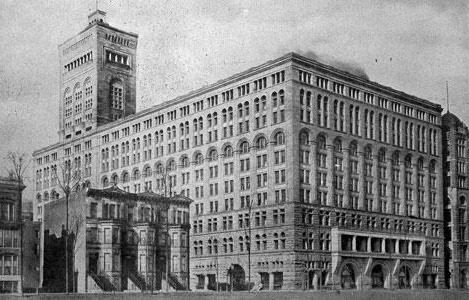
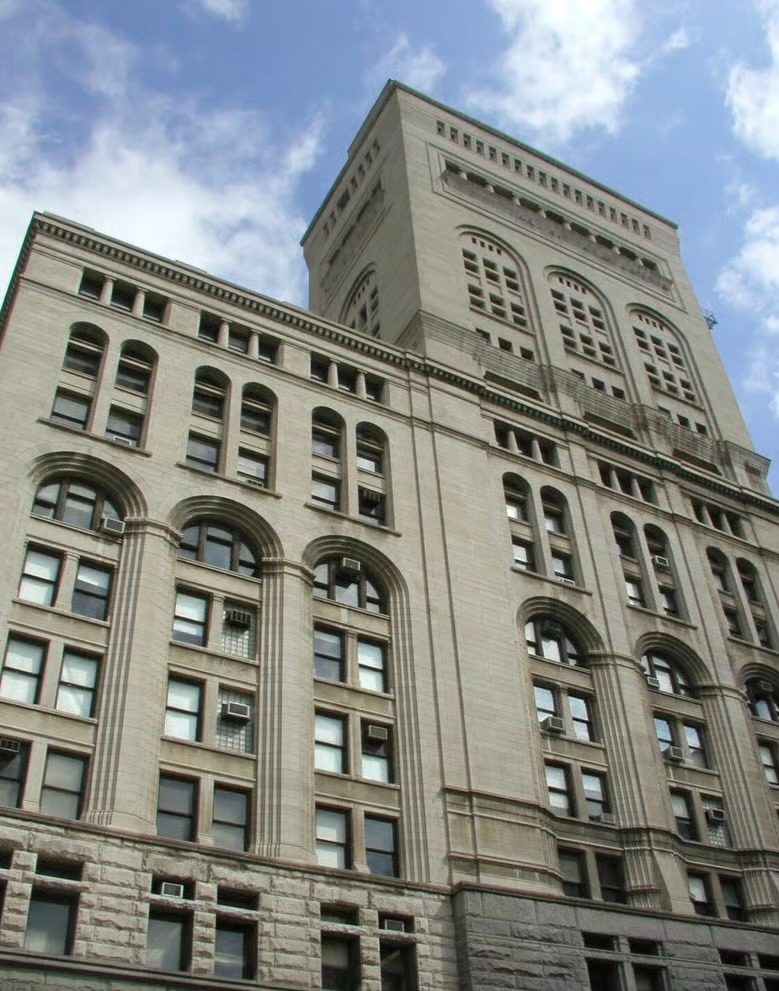
The building, which opened in 1889, was an architectural breakthrough for its time. Adler and Sullivan designed a 17-story structure—at the time the tallest in Chicago and the largest in the United States. The exterior was partly inspired by the style of Henry Hobson Richardson, particularly his famous Marshall Field Warehouse. Heavy stone facades, rhythmic arches, and monumental proportions created an impression of power and stability.
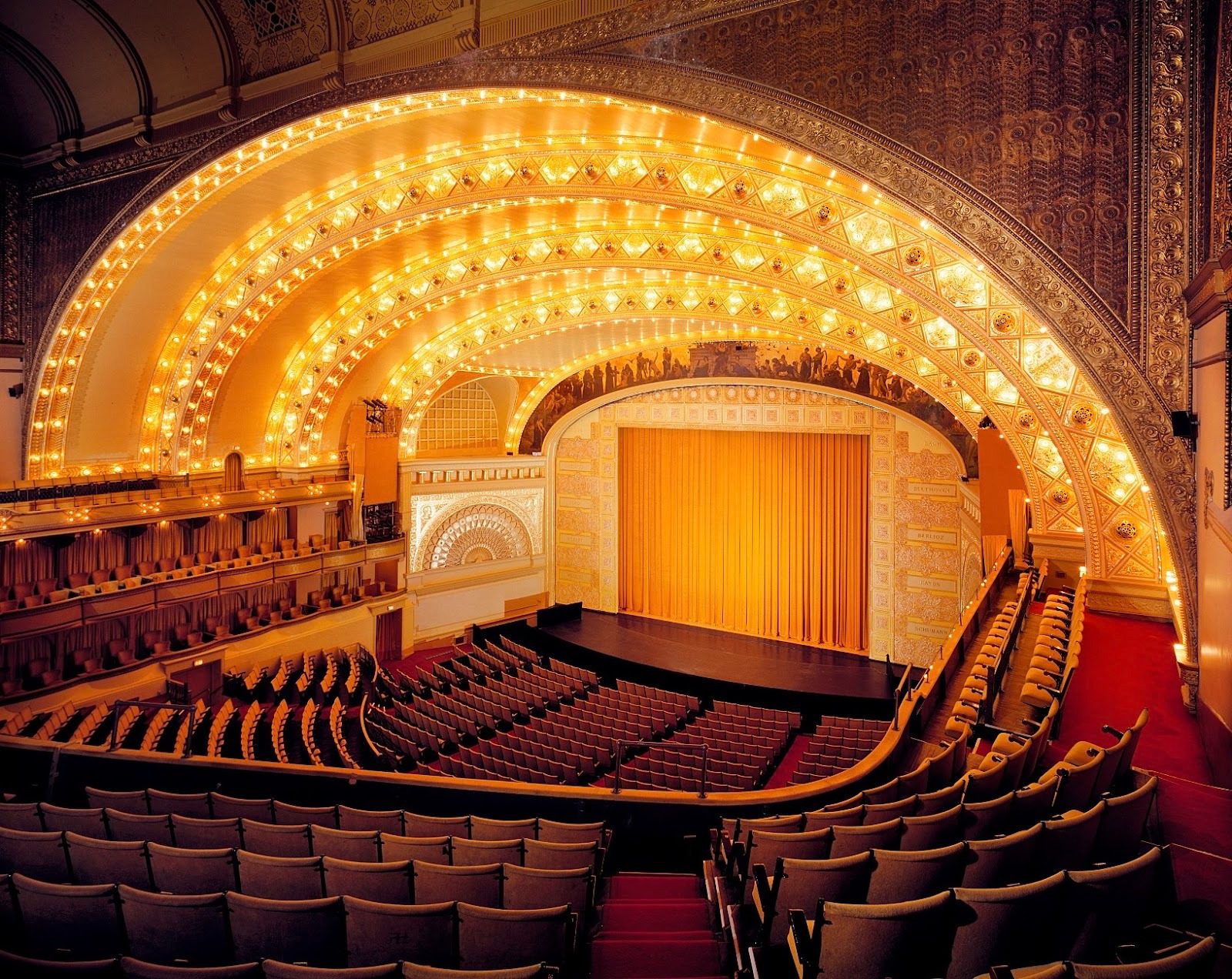
Simultaneously, Sullivan introduced a new interior aesthetic—organic ornamentation, flowing lines, and plant motifs that prefigured the Art Nouveau style. The theater was impressive not just for its scale, but for its harmony of color, light, and sound.
One of the most innovative solutions was the “raft foundation,” developed by Adler and engineer Paul Mueller. Chicago’s soil consisted of soft clay, making traditional foundations unsuitable. The architects created a “platform” from layers of railroad ties and steel rails, encased in concrete and coated with pitch. This design distributed the weight of the massive stone walls and prevented settling. Although the building eventually settled by almost 70 centimeters (28 inches), this wasn’t a mistake—a mid-construction change from lightweight terra cotta to heavy stone unbalanced the structure. This experiment became a crucial step in the development of modern engineering.
Inside the Building
The complex’s centerpiece is the grand 4,300-seat hall, created for opera, symphonies, and theatrical performances. Peck insisted that every audience member have the same quality of sound and visibility, regardless of ticket price. This was a revolutionary social decision—democratic art without elite box seats. The hall’s acoustics became legendary. Even in the 21st century, it is considered one of the best in the world. Over time, after renovations, the seating capacity was reduced to 3,901, but the essence remained: a theater for everyone.
Surrounding the theater were a 400-room hotel and 136 offices, intended to finance the cultural activities. The concept was visionary: profits from the business sector would support the artistic center without government dependence. However, within a few years, the hotel and offices began to lose profitability, and the financial model proved vulnerable. Still, the idea of a multifunctional building was ahead of its time—it became the prototype for modern complexes with theaters, hotels, and business centers under one roof.
Crisis and Revival
After the opera company moved to the Civic Opera House in 1929, the theater fell into decline. It was closed during the Great Depression and, in 1941, was converted into a servicemen’s center for World War II soldiers.
In 1947, the building was transferred to Roosevelt University, which saved it from demolition, but the theater remained shuttered. It wasn’t until 1958 that the university’s board decided to undertake a restoration. Under the leadership of architect Harry Weese and with the support of philanthropist Beatrice Spachner, the theater was restored to its original splendor. On October 31, 1967, the Auditorium Theatre triumphantly reopened with a performance of “A Midsummer Night’s Dream” by the New York City Ballet.
In the 1960s and 1970s, the theater became a popular concert venue. The Doors, Jimi Hendrix, and the Grateful Dead played here—symbols of a new era of freedom and counterculture. In 1975, the building was designated a National Historic Landmark, and it was also added to the National Register of Historic Places and the list of Chicago Landmarks. This recognized its unique architectural and cultural value.
In the 21st century, the Auditorium Theatre continues to be the heart of Chicago’s artistic life. It hosts concerts, opera performances, conferences, and ceremonies—from ballet to the 2015 NFL Draft. In 2001, a large-scale restoration began under the direction of Daniel P. Coffey and Associates. The team restored the original colors, ornamentation, and gilding of the interior. The building became part of Roosevelt University, housing classrooms, a library, and administrative offices.
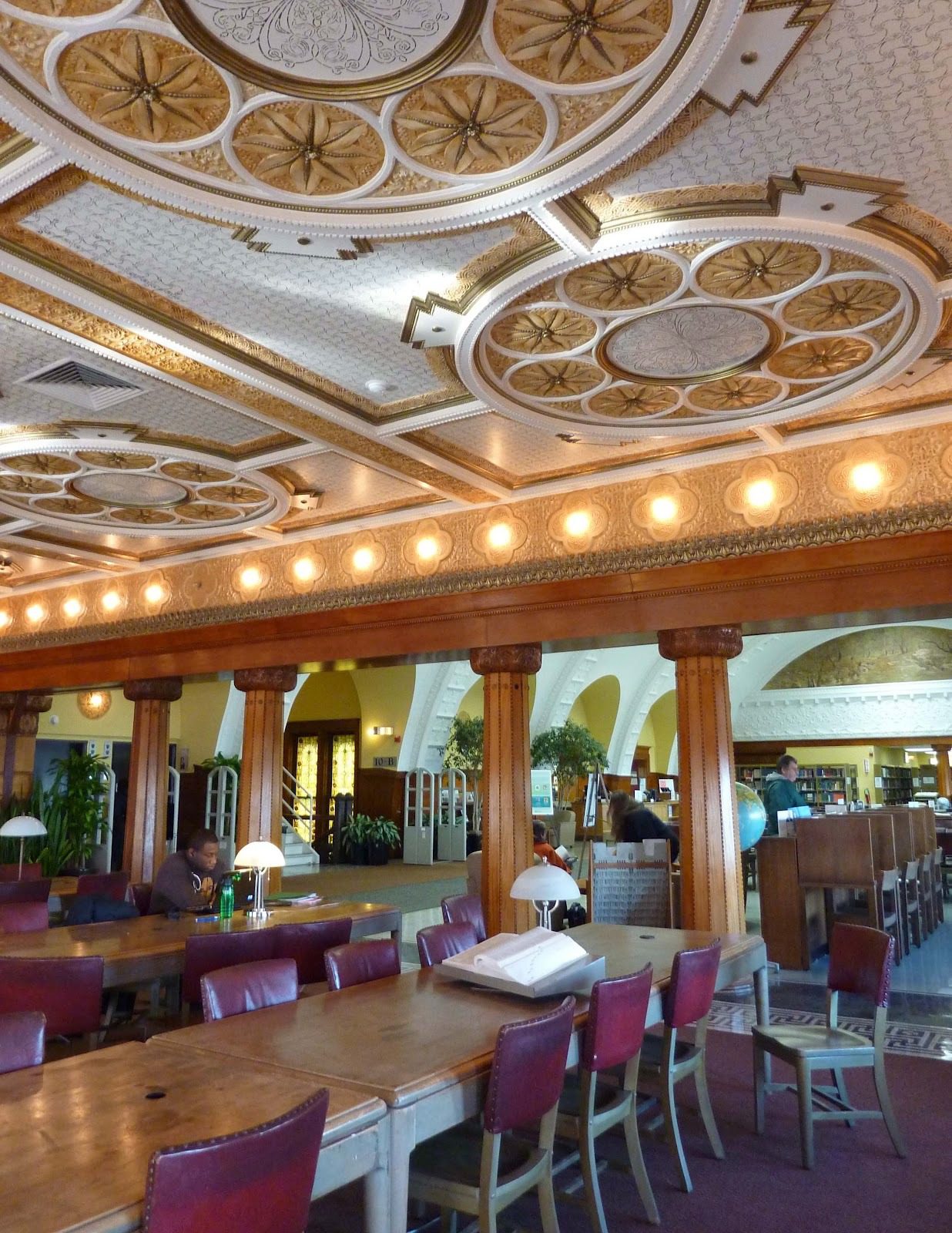
It also contains the Auditorium Reading Room. This reading room combines academic elegance, a spirit of intellectual inquiry, and a tranquil atmosphere conducive to reflection and creativity. The spacious room, with views of Chicago’s cityscapes, has become a favorite spot for meetings, presentations, and discussions. Its interior is meticulously designed to create a sense of harmony between history and modernity. At the center of the room is a majestic rectangular table surrounded by twenty comfortable, matching chairs. This arrangement fosters a feeling of intimacy, trust, and academic dignity. Adding special charm are bookcases crafted by Chicago artisans, which hold the university’s literary treasures. Classic details—a Replogle globe, an Art Deco-style lamp, and portraits of distinguished thinkers—create the authentic atmosphere of an old-world academy. Everything here, from the wood surfaces to the soft lighting, encourages immersion in the world of knowledge.
The Auditorium Theatre is more than a historic structure. It is a symbol of Chicago’s cultural ambition, proof that art and engineering can serve society simultaneously. It has survived economic crises, wars, and decline, yet it has preserved its primary mission: to unite people through music, beauty, and inspiration. When an audience member enters its gilded hall, they aren’t just watching a show—they are becoming part of a history that has continued for over 130 years.